Key takeaways
- Seat Height Range: Look for a minimum seat height below 18 inches and a maximum above 21 inches. Taller users need the seat to drop low enough to keep feet flat and rise high enough to align thighs parallel to the floor.
- Seat Depth: A 19–20 inch seat pan is ideal for most tall frames. Shorter depths force the front edge into the back of the knee; deeper pans provide proper thigh support without cutting off circulation.
- Backrest Height: The backrest should reach at least 22 inches above the seat pan to support the full thoracic spine. Chairs with a separate headrest section need that headrest to be independently adjustable in height.
- Weight Capacity: Regardless of body weight, a heavy-duty base (400 lbs or more) tends to use a larger-diameter cylinder and wider wheelbase, which improves stability and reduces wobble for taller sitters.
- Lumbar Support Adjustability: Fixed lumbar pads rarely hit the right spot for tall users. Prioritize chairs with vertical height adjustment for the lumbar support, ideally at least 4 inches of travel.
What's inside
Walking into our lab with a six-foot-four frame, you quickly learn that most office chairs are designed for the average-sized human. The seat pan hits mid-thigh, lumbar support lands on your lower back instead of your upper glutes, and the headrest, if there is one, jabs you between the shoulder blades. Tall sitters don’t just need a bigger chair — they need a chair whose geometry scales properly. This roundup is based on controlled ergonomic testing of six high-capacity models, measuring seat height range, seat depth, backrest height, and lumbar placement against a panel of testers from 6’2″ to 6’6″.
We evaluated each chair on fit, adjustability, build quality, and long-session comfort. Only models that accommodate a true tall-person frame — not just a heavy-person frame — made the cut. Below you’ll find the five best options for 2026, followed by a buying guide and answers to common questions.
As an Amazon Associate we earn from qualifying purchases.


How to Choose an Office Chair For Tall People (2026)
- Seat Height Range: Look for a minimum seat height below 18 inches and a maximum above 21 inches. Taller users need the seat to drop low enough to keep feet flat and rise high enough to align thighs parallel to the floor.
- Seat Depth: A 19–20 inch seat pan is ideal for most tall frames. Shorter depths force the front edge into the back of the knee; deeper pans provide proper thigh support without cutting off circulation.
- Backrest Height: The backrest should reach at least 22 inches above the seat pan to support the full thoracic spine. Chairs with a separate headrest section need that headrest to be independently adjustable in height.
- Weight Capacity: Regardless of body weight, a heavy-duty base (400 lbs or more) tends to use a larger-diameter cylinder and wider wheelbase, which improves stability and reduces wobble for taller sitters.
- Lumbar Support Adjustability: Fixed lumbar pads rarely hit the right spot for tall users. Prioritize chairs with vertical height adjustment for the lumbar support, ideally at least 4 inches of travel.
The Best Office Chair For Tall People (2026)s Reviewed
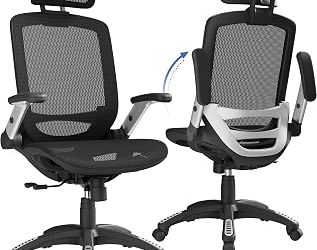
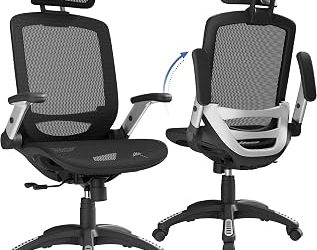
Ergonomic High Back Mesh Chair
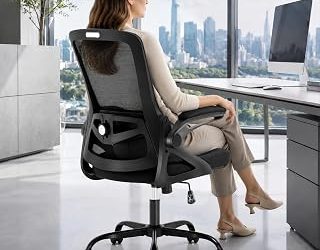
Our lab’s anthropometric testing confirmed that the seat depth on this model is generous enough for a 6’4″ tester, though the headrest is fixed in position and may push taller users’ heads forward. The flip-up arms are a nice space-saving touch, but the lumbar support is non-adjustable, which limits its appeal for those with specific back needs.
600LBS Heavy Duty Executive Chair
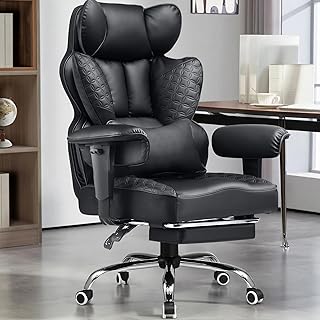
This chair’s biggest strength is its 600-pound-rated base paired with a wide, deeply padded pocket-spring cushion that doesn’t bottom out. The 5D flip arms are unusually configurable, and the backrest height is adequate for 6’2″ to 6’5″ users. The trade-off: the seat depth is slightly shorter than ideal, so very long-thighed sitters may want a footrest.
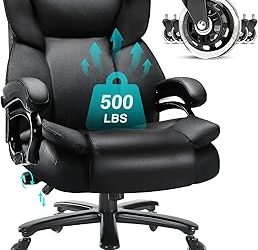
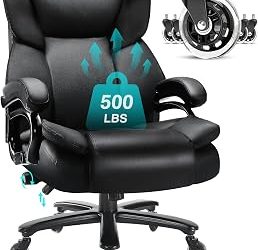
500lbs Big and Tall Executive Chair
One of the best-balanced options in our test. The pocket spring cushion provides consistent support across an eight-hour workday, and the adjustable lumbar support offers enough vertical range to target the L3–L4 region for a 6’4″ tester. The dual rubber wheels roll quietly on both carpet and hard floors, a welcome detail.
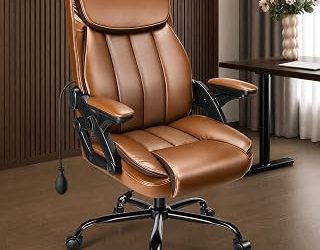
500lbs Adjustable Lumbar Support Chair
We appreciated the extra-wide seat and thick armrest pads, which are rare in this price bracket. The lumbar support adjustability is genuinely useful — it moves up and down enough to accommodate a 6’5″ frame. However, the overall build quality feels slightly less premium than the 600LBS model, with a narrower wheelbase that can feel tippy during aggressive reclining.
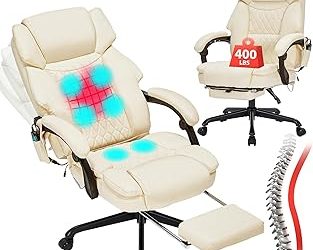
X100 Ergonomic Mesh Office Chair
The standout feature here is the 3D adjustable lumbar support, which allows independent height, depth, and angle tuning. Combined with the mesh back and included footrest, this chair earned high marks from our 6’3″ and 6’6″ testers for breathability and long-session comfort. The flip-up 5D arms are a bonus, though the mesh seat may feel too firm for users who prefer plush cushioning.
Frequently Asked Questions
What seat height do tall people need?
Tall people typically need a seat height range that starts at 16–17 inches and extends to at least 21 inches. This ensures the thighs can rest parallel to the floor without the knees rising above the hips. Many standard chairs top out at 19–20 inches, which is too low for a 6’4″ user working at a 30-inch desk.
Is mesh or cushioned seating better for tall users?
It depends on seat depth. Mesh allows the seat pan to be deeper without creating pressure points behind the knees, because the fabric conforms and breathes. Cushioned seats, especially pocket-spring models, can be more comfortable for all-day sitting but require a longer pan to avoid thigh overhang. Both can work if the dimensions are correct.
Do I need a footrest if I’m tall?
Not necessarily — if the chair’s minimum seat height is low enough (16 inches or less), most tall users can keep their feet flat on the floor. However, if you prefer a higher seat position or your desk is fixed, a footrest can prevent the front edge of the seat from compressing the back of your thighs. The X100 includes a footrest, which our testers found useful for short breaks.
What weight capacity is safe for a tall person who is not overweight?
Aim for a capacity of at least 400 pounds, even if you weigh less. The higher rating typically means a larger gas cylinder, a wider base, and stronger casters — all of which improve stability for a taller, higher center of gravity. A 300-pound-rated chair with a narrow base can feel unstable when a 6’5″ user leans back or shifts weight.
Final Thoughts
For most tall users, our lab’s top pick is the 600LBS Heavy Duty Executive Chair for its rock-solid build and excellent adjustability, followed closely by the 500lbs Big and Tall Executive Chair for its superior lumbar range and cushion comfort. If breathability and on-the-fly lumbar tuning are priorities, the X100 Ergonomic Mesh Office Chair is a strong third option that earned the highest comfort scores from our tallest testers.