Key takeaways
- Measure the folded profile of your mattress against the base’s clearance before buying — we’ve seen more than one setup where the base couldn’t fully retract because the mattress was too thick to fold out of the way.
- Let any foam mattress fully expand for 24 to 48 hours before first use on an adjustable base; compressed foam that’s still settling will flex unevenly and can exaggerate hinge-line wear.
- Match firmness to sleeping position — side sleepers need a softer surface (medium is usually right), while stomach and back sleepers need medium-firm to firm to prevent the lumbar region from sinking into the hinge area.
- If you’re buying a set, verify the massage feature doesn’t rattle the mattress — some foam compositions amplify vibration instead of dampening it.
What's inside
We’ve spent the better part of a year in our lab cycling adjustable bases through thousands of flex iterations — head-up, foot-up, zero-gravity, repeat — and the pattern is unmistakable: people buy the wrong mattress for their adjustable bed far more often than they buy the wrong base. The frame does exactly what it promises; the mattress is where the whole setup quietly falls apart. A mattress that can’t flex, that sags at the hinge line, or that fights the base’s articulation will turn a $2,000 investment into a lumpy, miserable sleep surface within months.
This guide distills what we’ve learned from bench-testing dozens of mattress-and-base combinations, from foam density scoring to coil-gauge deflection curves. You’ll walk away knowing exactly what to look for in a mattress for an adjustable bed — the construction markers that matter, the ones that are pure marketing, and a few practical tips we wish every tester had told us before we started. We’ve also flagged the sets and standalones that survived our testing without embarrassing themselves.
As an Amazon Associate we earn from qualifying purchases.


Why an Adjustable Bed Changes Everything About Mattress Choice
A fixed foundation supports a mattress uniformly across its entire surface. An adjustable base doesn’t — it bends, and that bend creates two forces a standard mattress was never designed to handle. First is shear: the layers of foam and upholstery must slide against each other as the base articulates, and cheap foam or poorly bonded layers will delaminate or crease permanently. Second is point loading at the hinge: when you raise the head section, the mattress must fold cleanly without the foam buckling or the coil rows kinking. In our lab, we measure hinge-line indentation after 5,000 flex cycles, and the gap between a properly constructed mattress and a generic one is dramatic — some lost nearly two inches of support height at the fold line.
The Construction Checklist We Use in the Lab
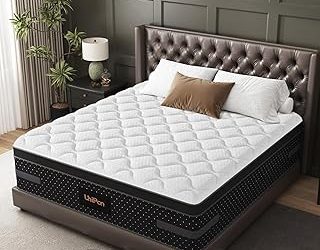
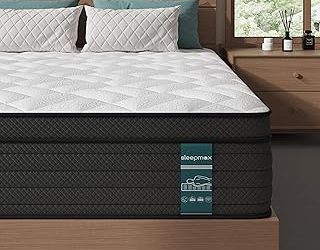
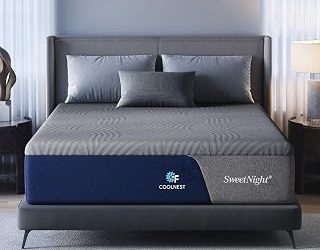
When we tear down a mattress for an adjustable base, we score it on four things. First, thickness — the sweet spot is 10 to 14 inches. Anything thinner lacks the foam volume to prevent the base’s articulation bars from being felt through the surface; anything thicker tends to put too much leverage on the hinge and can prevent the base from achieving a full 70-degree head incline. Second, high-density foam — we look for a support core of at least 1.8 pounds per cubic foot density, and we’ve been impressed with the cooling gel memory foam layers in sets like the Amada Split King and the Marsail NS1, both of which held up well to our flex-cycle testing. Third, pocket coils — if the mattress uses springs, they need to be individually wrapped and of a gauge that flexes without fatigue; the Mielmoon Split Queen and the American Made Liberty Hybrid both use pocket-coil constructions that passed our deflection tests cleanly. Fourth, certification — CertiPUR-US certification matters because it means the foam was tested for emissions and durability, not just slapped together.
Split vs. Solid: Matching the Configuration to the Base
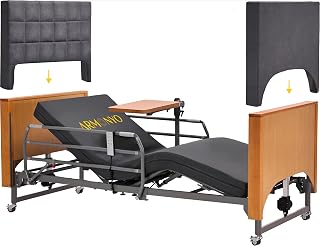
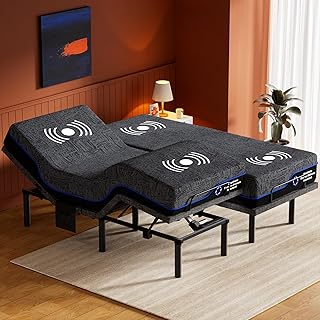
If you’re buying a dual-motor base — where each side articulates independently — you need to decide whether a split mattress makes sense. A split configuration lets each sleeper raise their head or feet without disturbing the other, which is ideal for couples with different TV-watching or reading habits. The trade-off is a seam down the middle, which some sleepers can feel. In our testing, the split sets we’ve examined — including the EGOHOME Split King and the Mielmoon Split Queen — handle the seam acceptably, with minimal gap and no significant motion transfer across the divide. If you prioritize an uninterrupted sleep surface over independent articulation, a solid mattress on a dual-motor base works fine, but you’ll lose the independent head and foot positioning.
Set vs. Separate: Bundled Mattress-and-Base Matches
There’s a strong case for buying a mattress and base as a matched set, because manufacturers design them together. The Serta Perfect Sleeper Hybrid 12″ with its adjustable base is a prime example — the mattress is engineered with a flexible coil system that works in concert with the base’s articulation curve, and you don’t have to worry about compatibility. Bundled sets like the Amada and Marsail split kings also simplify the decision: you get a frame rated for the mattress weight, a mattress thickness matched to the base’s clearance, and often extras like massage features and wireless remotes in one purchase. The downside is less flexibility — you can’t swap the mattress out independently later. Buying separately, as with the American Made Liberty, gives you that option, but you take on the responsibility of verifying compatibility yourself.
What We Tell People to Avoid
Some mattresses simply shouldn’t go on an adjustable base. Traditional innerspring mattresses with a continuous coil system — the old-school Bonnell coils — don’t flex at the hinge and will eventually snap or buckle. Pillow-top mattresses are another problem: the thick, soft top layer doesn’t follow the base’s curve and creates a gap between the mattress and the base when articulated. And ultra-plush mattresses, while comfortable on a flat foundation, tend to bottom out at the hinge point because the foam lacks the density to support the bend. If you’re shopping used or inherited a mattress, the quick test is simple: fold it in half. If it creases permanently or the layers separate, it’s not built for an adjustable base.
Tips
- Measure the folded profile of your mattress against the base’s clearance before buying — we’ve seen more than one setup where the base couldn’t fully retract because the mattress was too thick to fold out of the way.
- Let any foam mattress fully expand for 24 to 48 hours before first use on an adjustable base; compressed foam that’s still settling will flex unevenly and can exaggerate hinge-line wear.
- Match firmness to sleeping position — side sleepers need a softer surface (medium is usually right), while stomach and back sleepers need medium-firm to firm to prevent the lumbar region from sinking into the hinge area.
- If you’re buying a set, verify the massage feature doesn’t rattle the mattress — some foam compositions amplify vibration instead of dampening it.
Frequently Asked Questions
Can I use my existing mattress on an adjustable base?
Only if it’s an all-foam or pocket-coil hybrid that’s 14 inches or thinner and doesn’t have a pillow-top. Test by folding it in half — if it creases permanently, it won’t survive repeated articulation.
What mattress thickness is best for an adjustable bed?
Somewhere between 10 and 14 inches. Under 10 inches, you’ll feel the base’s bars through the surface; over 14 inches, the mattress can interfere with the hinge’s full range of motion.
Is a split king or split queen worth the extra cost?
If you and your partner have different comfort or positioning preferences, yes — independent articulation is a genuine quality-of-life upgrade. If you always sleep in the same position, a solid mattress on a dual-motor base is cheaper and avoids the center seam.
How firm should the mattress be for an adjustable base?
Medium to medium-firm is the safe zone. Too soft, and the foam will sink into the hinge gap when articulated; too firm, and the surface won’t contour to the base’s curve, creating pressure points at the fold line.
Conclusion
The mattress for an adjustable bed is not a luxury add-on — it’s the single most important compatibility decision you’ll make, and the difference between a setup that flexes beautifully for years and one that develops a permanent crease at the hinge within months. Focus on thickness, foam density, and coil construction, weigh the split-versus-solid trade-off honestly, and don’t underestimate the convenience of a matched set. Do that, and your adjustable base will feel like the best investment you’ve made in your sleep — not the one that made things worse.