Key takeaways
- How to Choose Central Vacuum System for Large Homes: What Actually Matters
- How to Choose Electric Pressure Washers for Small Homes: What Actually Matters
- How to Choose Home Vacuums: What Actually Matters
- How to Choose a Lightweight Vacuum Cleaner for Everyday Use: What Actually Matters
- How to Choose Roborock Vacuums: What Actually Matters
What's inside
Outfitting a sprawling residence with a built-in vacuum network requires looking far past glossy marketing brochures and flashy storefront claims. When you are mapping out a whole-house cleaning architecture, premium central vacuum systems demand a calculated approach based on engineering realities rather than superficial power metrics. Large multi-story properties introduce complex challenges, including extensive vertical pipe runs, multiple living zones, and diverse flooring types that can severely degrade suction performance if the hardware is poorly matched to the infrastructure.
Navigating the high-end market successfully means understanding the critical variables that separate a mediocre setup from a truly transformative cleaning experience. From motor durability and filtration mechanics to pipe sizing and acoustic dampening, every component plays a vital role in long-term reliability. This decision guide breaks down the core specifications that genuinely matter, helping you avoid costly design mistakes and determine precisely when a higher financial investment translates into superior performance.
Understanding Air Watts Versus Sealed Suction
Many buyers make the fundamental error of judging a central vacuum entirely by its peak air watts. While air watts provide a useful baseline combining airflow and suction, they do not tell the whole story for large homes. Sealed suction, measured in inches of water lift, represents the motor’s ability to pull air vertically through long pipe networks. For expansive floor plans with multiple stories, prioritizing a higher water lift metric ensures that the system maintains adequate pull even at the furthest inlet valve from the power unit. Airflow volume matters immensely for clearing lightweight surface dust, but suction lift is what prevents performance drops when running specialized power brushes on dense carpeting.
Sizing the Power Unit for Square Footage and Pipe Runs
Manufacturers often rate power units by maximum square footage, but these ratings usually assume ideal, straight-line installations with minimal bends. In a large home, your actual pipe run may twist through crawlspaces, drop down interior walls, and span hundreds of linear feet. To account for friction loss and pressure drops, always step up one tier higher in power capacity than your home’s footprint strictly requires. Over-specifying the motor ensures it operates well within its thermal limits, extending its lifespan and preventing premature burnout under heavy, continuous use across multiple expansive levels.
As an Amazon Associate we earn from qualifying purchases at no extra cost to you. Product prices and availability are accurate as of the date shown and are subject to change.

Filtration Technologies: Bagged Systems Versus True Cyclonic
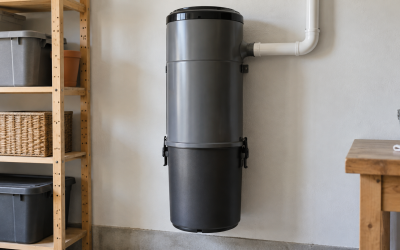
Filtration design dictates both maintenance frequency and indoor air quality throughout your living spaces. Bagged high-end systems utilize disposable microfiber filtration bags that trap fine dust particles while keeping the internal canister completely clean, making disposal hygienic and straightforward. True cyclonic systems, on the other hand, spin heavy debris to the bottom canister while venting microscopic dust outside the home via an exterior exhaust. If you suffer from allergies, a bagged system with a certified HEPA secondary filter often provides superior protection inside the living space by capturing microscopic allergens before air is exhausted back into utility areas.
Low-Voltage Wiring and Hose Management Integration
A seamless user experience hinges on how well your system handles low-voltage control wiring and hose storage. Premium installations typically feature direct-connect low-voltage inlets that power the motorized brush roll the moment the hose clicks into the wall. Alternatively, hose-management systems like hidden hose variants retract directly into the PVC piping network when not in use, eliminating the need to haul bulky hoses from room to room. When evaluating these advanced options, verify that your wall inlets align with your preferred hose type—whether that means traditional lightweight crush-proof hoses or modern flexible solutions stored in dedicated utility closets.
Avoiding Common Layout and Installation Mistakes
Poor placement of the central power unit is one of the most frequent errors made during large home installations. Locating the canister inside a primary living area or a tightly enclosed utility room can create unbearable noise levels and thermal buildup during extended cleaning sessions. Always position the power unit in a remote, well-ventilated space like a basement, garage, or dedicated mechanical room, and ensure the exhaust is vented directly outdoors. Additionally, map your inlet locations carefully so that a standard thirty-foot hose can reach every corner of a room without stretching tightly around sharp furniture corners or door frames.
Related Guides
To further refine your equipment research and compare top-tier options, explore these curated resources: read the Best Premium Central Vacuum Systems for Large Homes in 2026: Tested and Ranked for our top overall picks, review the Best Central Vacuum System for Large Homes in 2026: Tested and Ranked for alternative budget-to-performance tiers, or cross-reference exterior cleaning needs with the Best Electric Pressure Washesr for Small Homes in 2026: Tested and Ranked guide.
FAQ
How do I know if my current central vacuum pipe network can handle a high-power upgrade?
Most standard two-inch PVC pipe networks can handle increased airflow from a premium motor upgrade, provided the existing layout is free of crushed sections or sharp ninety-degree elbows. However, if your pipe system utilizes old thin-wall tubing or shows signs of chronic clogging, an inspection by a professional installer is recommended before installing a high-suction motor.
Is venting a central vacuum system outdoors mandatory?
While not strictly mandatory for every single model, venting outdoors is highly recommended for all high-performance units installed in large properties. It expels microscopic dust particles, micro-allergens, and motor carbon dust completely outside your living environment, drastically improving overall indoor air quality.
What is the difference between a filtered cyclonic unit and an inverted bag model?
Filtered cyclonic units use permanent self-cleaning filters or screens to separate debris, whereas inverted bag models capture fine dust inside a disposable synthetic bag. Inverted bag models generally require much less hands-on maintenance and prevent fine dust exposure during routine disposal.
Can I install a premium central vacuum system in an already finished home?
Yes, retrofitting a finished home is entirely possible by routing PVC tubing through cold air returns, closets, pantries, and crawlspaces or attic spaces. Professional installers specialize in hiding lines behind walls with minimal drywall disruption, though it requires more strategic planning than a new construction build.