Key takeaways
- Pro: 150-minute max runtime covers large open tile areas on a single charge.
- Pro: Self-charge function means it returns to the dock without intervention.
- Con: Navigation is bump-and-run rather than mapped, so it occasionally misses spots along walls.
What's inside
Tile floors are unforgiving. Every speck of dust, every grain of sand tracked in from the driveway, every dried water spot from a dripping faucet sits right on top of a glossy ceramic or porcelain surface and stares at you. A robot vacuum that looks great on short-pile carpet can leave a visible film on tile, and a unit with a poor mop pad can spread that film even further. The core problem for buyers is straightforward: you need a machine that combines strong suction to pull debris off hard grout lines with a mop system that actually wipes rather than smears.
What separates the best robot vacuum for tile floors from mediocre options in 2026 comes down to three things: suction pressure rated for hard surfaces, mop pad quality and pressure, and navigation intelligence so the robot does not repeatedly push dirty water across the same tiles. Below, we compare eight current models using published specifications and recurring themes from owner feedback to help you pick the right one without overspending.
As an Amazon Associate we earn from qualifying purchases at no extra cost to you. Product prices and availability are accurate as of the date shown and are subject to change.




Quick Picks
| Product | Best for | Price |
|---|---|---|
| Tikom G8000 Max | Budget tile cleaning | $129.99 |
| eufy E25 | Deep-cleaning tile grout | $649.99 |
| eufy 11S MAX | Low-profile furniture clearance | $139.99 |
| iRobot Roomba 105 Combo | Hands-off maintenance | $269 |
| roborock Qrevo S Pro | Premium all-around performance | $549.99 |
| roborock Q7 M5+ | Self-emptying convenience | $299.99 |
| Robot Vacuum with Mapping | Multi-room tile layouts | $239.99 |
| roborock Q7 L5 | Mid-range value | $159.99 |
How We Picked
We narrowed this list by weighing four criteria most relevant to tile floors: rated suction in pascals (higher matters more on hard surfaces where debris sits loose), mop system type and pressure (a spinning or vibrating pad cleans better than a static rag), navigation accuracy (LiDAR or visual mapping prevents missed zones and dirty streaks), and dustbin or self-empty interval (tile dust is fine and accumulates visibly fast). Price-to-feature ratio was the final tiebreaker.
The 8 Best Robot Vacuum For Tile Floors in 2026
Tikom G8000 Max
If your budget is tight and you want a robot that both vacuums and mops tile without fuss, this Tikom combo is the most affordable entry that still delivers meaningful suction at 5000Pa. Owners praise the app connectivity and the remote control as conveniences rarely found under $130.
- Pro: 150-minute max runtime covers large open tile areas on a single charge.
- Pro: Self-charge function means it returns to the dock without intervention.
- Con: Navigation is bump-and-run rather than mapped, so it occasionally misses spots along walls.
Skip this if you have a complex multi-room layout with many obstacles; the random pathing becomes inefficient.
eufy E25
The E25 is the most powerful suction unit on this list at 20,000Pa, and its HydroJet roller mop applies continuous water pressure while the roller spins, which owners say is the single biggest upgrade for lifting dried residue from textured tile.
- Pro: Roller mop stays wetter and cleaner far longer than pad-based systems.
- Pro: 20,000Pa handles fine grit in grout lines that weaker robots merely redistribute.
- Con: At $649.99, it costs several times more than mid-range competitors.
Skip this if your tile is smooth and you mainly need dust pickup; you would not be using most of its cleaning power.
eufy 11S MAX
This ultra-thin robot is designed for homes where furniture sits close to the floor. Owners highlight the quiet operation and compact profile as reasons they run it daily without disruption. It is vacuum-only, so pair it with a separate mop if you want wet cleaning.
- Pro: Slim body reaches under low sofas, bed frames, and cabinets where dust accumulates on tile.
- Pro: Noticeably quieter than most competitors, suitable for daytime use around sleeping children.
- Con: No mop function and no self-empty dock, so you are manually emptying the dustbin.
Skip this if you want a single device that vacuums and mops; it only handles the first half.
iRobot Roomba 105 Combo
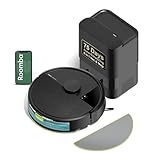
The 105 Combo pairs LiDAR navigation with an AutoEmpty dock that holds debris for up to 75 days, and its Intense Power-Lifting Suction is tuned for the fine grit tile floors collect. Owners frequently mention that carpet-avoidance during mopping saves the hassle of lifting rugs.
- Pro: Self-empties for 75 days, nearly eliminating manual maintenance.
- Pro: Automatically avoids mopping carpet, so mixed tile-and-rug homes work without extra steps.
- Con: Suction specs are not disclosed in pascals, making cross-comparison harder.
Skip this if you want detailed room-by-room map editing; the app interface is simpler than roborock or eufy equivalents.
roborock Qrevo S Pro
The 2026 Qrevo S Pro arrives with 18,500Pa suction and roborock’s mature obstacle-avoidance system. Owners describe the mop washing and drying cycle in the dock as genuinely hands-free, and the LiDAR mapping draws accurate floor plans in a single pass.
- Pro: Dock self-washes and dries mop pads, preventing mildew smell on tile floors.
- Pro: 18,500Pa is among the highest suction levels available short of the eufy E25.
- Con: At $549.99 it sits firmly in premium territory.
Skip this if your tile area is small; the dock footprint and price are overkill for a bathroom or kitchen nook.
roborock Q7 M5+
Owners love that this unit self-empties for up to seven to nine weeks, removing the most annoying chore in robot-vacuum ownership. At 10,000Pa it pulls fine tile dust cleanly, and the mop pad applies steady downward pressure even if it does not rotate.
- Pro: Seven-to-nine-week self-empty window means you forget the dock exists.
- Pro: 10,000Pa is more than adequate for loose debris on polished and matte tile.
- Con: Mop pad requires manual rinsing between uses; no dock washing here.
Skip this if you have a lot of dried-on spills; a static pad will smear them rather than lift.
Robot Vacuum and Mop with Mapping (6000Pa)
This 3-in-1 unit combines LiDAR navigation, self-emptying with a 90-day capacity, and Alexa control at a $239.99 price point that undercuts most branded competitors. Owners praise the mapping accuracy for larger homes with multiple tile rooms.
- Pro: 90-day self-empty bag is the longest interval on this list before the Roomba.
- Pro: LiDAR mapping with room partitioning lets you clean individual zones on demand.
- Con: 6000Pa is adequate but will not match 10,000Pa-plus units on heavily soiled grout.
Skip this if you need maximum scrubbing power on textured or unglazed tile; lower suction and a basic pad limit deep cleaning.
roborock Q7 L5
At $159.99 and 8,000Pa, the Q7 L5 occupies the sweet spot for owners who want roborock navigation quality without paying for a self-empty dock or premium mop system. It vacuums and mops in one pass with a flat pad that applies even pressure.
- Pro: Reliable LiDAR mapping and obstacle avoidance at a low price.
- Pro: 8,000Pa handles everyday tile dust and pet hair without leaving residue.
- Con: Small dustbin requires frequent emptying compared to self-empty models.
Skip this if your household generates heavy debris; the small bin fills quickly and the flat pad struggles with stuck-on mess.
Buying Guide
Suction Pressure Matters Most on Tile
Tile and grout create a flat, open surface where fine particles sit loosely rather than being trapped in fibers. That means higher pascal ratings translate directly into visible cleanliness. Units rated below 5000Pa can leave a gray film on matte tile after repeated passes. For polished or glossy tile, 6000Pa and above is the realistic floor; for textured or unglazed tile, aim for 10,000Pa or higher.
Mop Type Determines Streak Quality
A static pad dragged under body weight will smear. A vibrating or spinning pad scrubs. A roller mop with continuous water delivery washes. If you have smooth large-format tile, a spinning pad at mid-range is sufficient. For grout-heavy layouts or kitchens with grease film, a roller system like the E25’s HydroJet is worth the premium.
Navigation Saves You from Redoing the Floor
Bump-and-run robots work on open tile but miss edges and corners. LiDAR or visual mapping robots build a floor plan and clean in systematic rows, which matters on tile because any missed strip is immediately visible. If your layout has more than two rooms of tile, prioritize mapped navigation.
Our Verdict
Top pick: the roborock Qrevo S Pro delivers the best balance of extreme suction, self-maintaining mop pads, and proven LiDAR navigation for tile floors. Budget pick: the Tikom G8000 Max gives you vacuum-plus-mop functionality under $130 that punches above its price. The Roomba 105 Combo wins if your home mixes tile with area rugs, because its automatic carpet-avoidance during mopping eliminates the one step most other robots require you to handle manually.
FAQ
Can a robot vacuum damage tile floors?
No, provided the bumper and brush are in good condition. Ceramic, porcelain, and natural stone tile are far harder than the plastic and rubber components on any robot. The one exception is very soft or honed stone with a low sheen; a worn bristle brush could theoretically add micro-scratches over years, but this is extremely rare in owner reports.
How often should a robot vacuum run on tile?
Daily or every other day is the consensus among owners with tile floors. Fine grit settles visibly within 24 hours in high-traffic kitchens and entryways. Most mapping-capable models handle daily runs without battery or wear concerns, and self-emptying docks reduce the maintenance friction that would otherwise discourage frequent use.
Do robot vacuums clean grout lines effectively?
They help, but they are not a substitute for periodic manual scrubbing. Suction pulls loose grit from shallow grout lines, and a pressurized mop pad can lift surface stains. Deep-set discoloration or calcified residue requires a dedicated brush or steam cleaner regardless of how many pascals your robot offers.
Is a self-empty dock worth it on a tile-floor home?
Yes, more so than for carpet households. Tile dust is fine, light, and generates quickly, meaning the onboard dustbin fills faster than you might expect. A self-empty dock with a multi-week or multi-month bag capacity converts the robot from a weekly-attention appliance into a set-and-forget one, which is the main reason owners report sticking with daily schedules.