Key takeaways
- Check an integrated dishwasher panel’s finished weight, model-specific range and factory setup before fabrication, using a supplier approval worksheet.
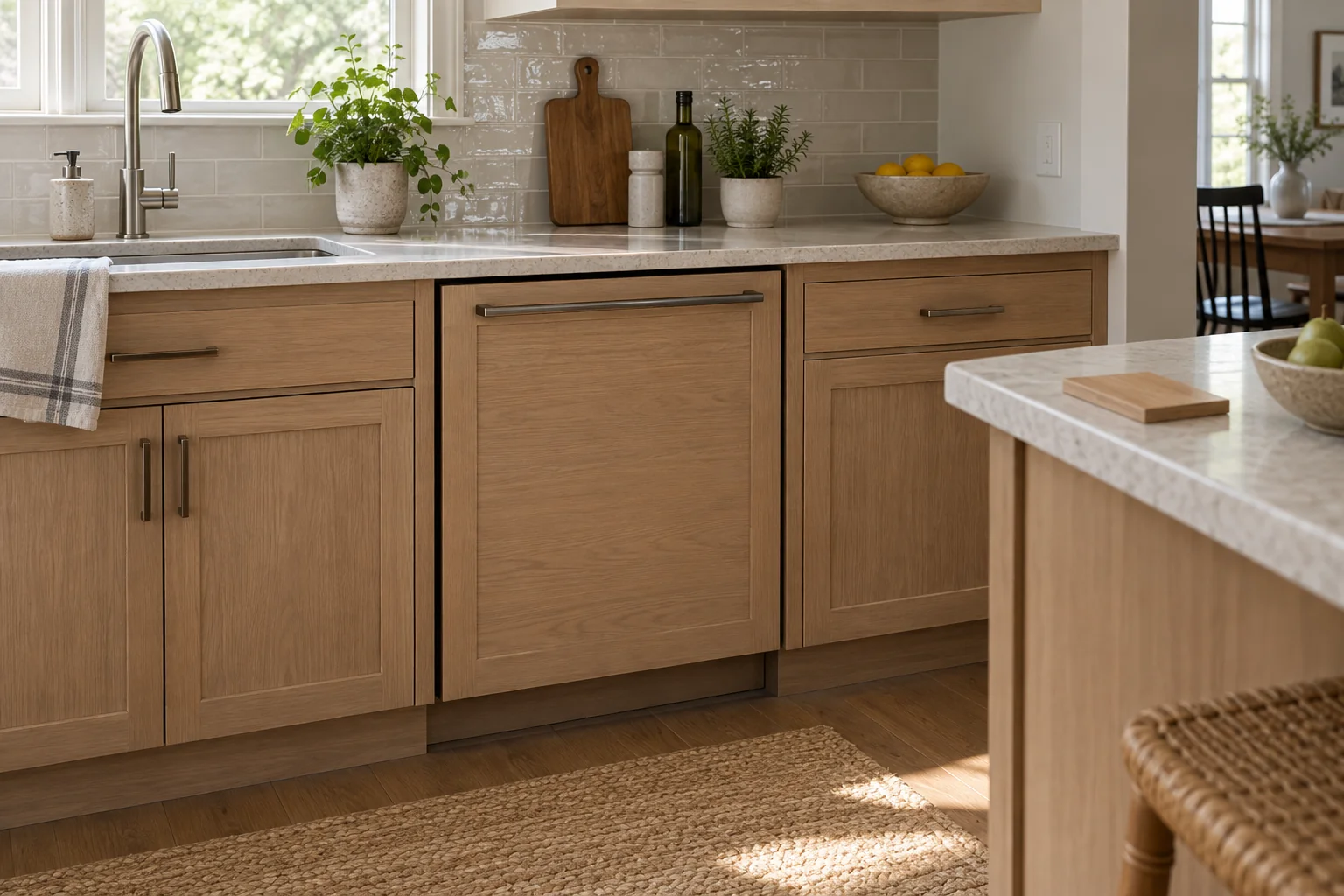
A fully integrated dishwasher needs a door panel that fits its specified dimensions and weight range. Matching cabinet color is only the visible part of the order. Before a cabinetmaker cuts the front, confirm the exact dishwasher model, what the quoted weight includes and whether the proposed panel needs an approved setup different from the factory configuration.
Separate three documents before comparing numbers
Gather the appliance specification sheet, its current installation instructions and the cabinetmaker’s panel proposal. A kitchen drawing may show the correct width while omitting weight. A listing may say “custom panel ready” without giving the allowed range. Neither description resolves the missing information.
Record the full model identifier, including its revision where supplied. Use documents for the same market as the appliance being delivered. A similarly named dishwasher sold elsewhere may have different installation details. Keep the document date with your record so a later specification change is visible.
This is an ordering check, not an instruction to adjust door springs. The installer must follow the exact installation procedure. Do not test a loose panel on an unsupported appliance or open an unsecured dishwasher simply to see whether its door stays in place.
Maximum range and factory-ready range can differ
The Bosch SHV9PCM3N specification sheet gives a model-specific example. It lists an accepted custom-panel range of 7–24 pounds, while saying the factory setup is ready for 11–18 pounds. It directs customers to contact service for panels outside that narrower range. Those figures apply to this document and model, not all integrated dishwashers.
A proposed panel can therefore be below the published maximum and still require further confirmation. “Under the limit” is not the same as “ready to install unchanged.” Where documents distinguish those categories, write both down. Where they provide only one range, do not invent a second range or borrow one from another model.
Ask what counts toward panel weight
Request a weight for the finished proposed assembly, not only a sample of its core material. Ask the appliance supplier whether the allowance includes the handle, decorative pieces and attached mounting components. Ask the cabinetmaker exactly what its quoted measurement includes. Resolve any mismatch before treating two numbers as comparable.
Material estimates can help during design, but they are not a final measured weight. Finishing, applied moldings and hardware can change the result. Label an estimated value as estimated and ask when the finished value will be verified. Do not round down a borderline measurement to make it pass.
Use a panel approval worksheet
| Field | Record | Who confirms it |
|---|---|---|
| Appliance identity | Full model, market and document revision | Appliance supplier |
| Panel geometry | Required width, height and thickness | Installer and cabinetmaker |
| Allowed weight | Range and any separate factory-ready range | Manufacturer document |
| Weight definition | Which attached components count | Manufacturer or support |
| Proposed assembly | Finished weight, included parts, measured or estimated | Cabinetmaker |
| Special requirements | Written next step if outside normal setup | Manufacturer and installer |
| Release decision | Confirmed, unresolved or incompatible | All parties before fabrication |
Worked example: within one range, outside another
Consider an illustrative proposal for the Bosch model above: a finished panel is reported as 20 pounds using the weight definition confirmed by the supplier. Twenty is within 7–24 but outside 11–18. The worksheet should say “manufacturer confirmation required,” not “approved because below 24.”
The household sends panel dimensions, weight and included-hardware information to support and the installer. If the manufacturer provides an applicable approved solution, they record it before fabrication. Otherwise they revise the panel design or choose a compatible appliance. They do not improvise heavier springs or alter the appliance based on a different model’s video.
Check fit separately from weight
A light enough panel can still be too tall, too thick or incompatible with the intended mounting arrangement. Check the installation template, adjacent cabinet fronts and opening path. A decorative handle adds another geometry question, especially near perpendicular cabinetry. Keep these checks separate so passing the weight comparison does not accidentally approve everything else.
Ask who will sign off the completed order and when. If the panel supplier and appliance installer are different businesses, send both the same revision of the worksheet. A verbal answer about a previous proposal should not silently carry over after the panel material or handle changes.
After delivery, have the installer compare the actual parts and documents with the approved proposal. If the panel differs from the order, pause installation and resolve it. Keep final confirmation with the appliance records; a future replacement front should be checked against the same requirements rather than copied by appearance alone.
Record any late change to the finish, handle or decorative trim as a new proposal. Ask whether the existing weight confirmation still covers it. This prevents a final aesthetic substitution from silently invalidating the specification the installer originally reviewed.