Key takeaways
- Weight near the blade, not the rear. Cordless models put the battery in the butt of the handle, which shifts balance backward. That’s fine for the trigger, but it makes the nose feel light and skittish on a roast.
- A trigger you can feather. Single-speed triggers are all-or-nothing. Models where blade speed follows finger pressure let you start slow at the skin (where slices tear) and speed up through the meat.
- Handle circumference. Handles over about 5 inches around are hard to control for smaller hands — a common complaint with cordless models carrying large batteries.
- Weight between 1 and 2 lbs. Under a pound usually means a weak motor; over 2.5 lbs causes fatigue across a full bird breakdown.
The short answer
The best electric knife for carving turkey for most home cooks is a corded model with a 9-inch reciprocating blade, a trigger that gives you variable speed, and a handle that keeps the weight near your wrist — the Cuisinart CEK-40 has occupied that spot for years, with the BLACK+DECKER EK700 as the budget alternative. If you want cordless freedom at the carving board, the Bubba Li-Ion cordless fillet knife is the standout, though it costs roughly four times more.
What actually separates a good carving knife from a mediocre one isn’t motor wattage — it’s blade length relative to the bird, vibration control, and how the handle sits in your hand for the ten minutes carving actually takes. Here’s how to read those three factors.
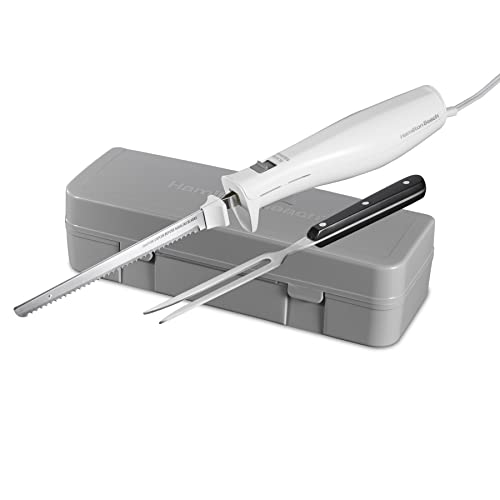
Hamilton Beach Electric Knife Set with Reciprocating Serrated Blades, Storage Case, Fork - For Carving Meats, Bread, Foam, More
Included for 'Best Electric Knife for Carving Turkey and Roasts' because the listing specifies Storage Case and Fork, details this guide uses to compare options.
View on Amazon
Black+Decker Comfort Grip Electric Knife with 7-Inch Stainles Steel Blades & Safety Lock Button, Ideal for Carving, Slicing & Cutting Meats, Turkey Bread & Craft Foam, Dishwasher Safe
Included for 'Best Electric Knife for Carving Turkey and Roasts' because the listing specifies Ideal for Carving and Slicing & Cutting Meats, details this guide uses to compare options.
View on Amazon
Proctor Silex Easy Slice Electric Knife With Serrated Stainless Steel Blade
Included for 'Best Electric Knife for Carving Turkey and Roasts' as a relevant option in this category; details come from the product listing.
View on Amazon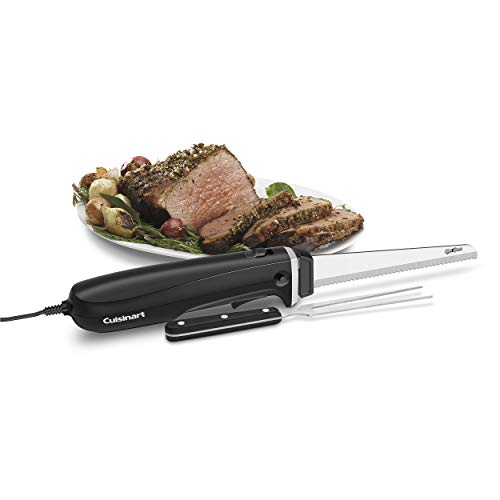
Cuisinart Electric Knife Set with Cutting Board, Electric Knife for Meat Slicing and Bread Slicing, Includes Bamboo Cutting Board for Kitchen and Serving Fork, CEK-41, Stainless Steel/Black
Included for 'Best Electric Knife for Carving Turkey and Roasts' because the listing specifies Electric Knife for Meat Slicing and Bread Slicing and Includes Bamboo Cutting Board for Kitchen and Serving Fork, details this guide uses to compare options.
View on AmazonThe three things that determine clean slices
Blade length: match it to the bird, not the marketing
Most electric knives ship with 7–9 inch blades. That number matters more than it sounds. When you carve a turkey breast off the bone, you want the blade to span the full width of the breast so you cut in one drawing stroke instead of sawing back and restarting. On a 14–18 lb bird, the breast is typically 7–8 inches wide — meaning a 7-inch blade is working at its limit, while a 9-inch blade has clearance.
| What you’re carving | Typical width | Minimum blade length | Ideal blade |
|---|---|---|---|
| Chicken, game hen | 4–5 in | 6 in | 7 in |
| Turkey 10–14 lb | 6–7 in breast | 7 in | 8–9 in |
| Turkey 15–22 lb | 7–9 in breast | 8 in | 9 in |
| Rib roast / prime rib | 6–8 in | 7 in | 9 in |
| Bone-in ham (spiral aside) | 8–10 in | 9 in | 9–10 in |
A rule of thumb: pick a blade at least one inch longer than the widest cut you’ll make. Blades shorter than 7 inches are fine for bread and small roasts but will leave ragged edges on a Thanksgiving bird.
Vibration: the spec nobody lists
Electric knives work by two serrated blades sliding against each other. Cheap models vibrate hard enough that your hand fatigues and your slices wander — you can see the wobble in the cut surface. Vibration control comes from two places: how tightly the blades seat in the housing (loose blade-to-handle fit is the main culprit), and whether the handle has any dampening material rather than bare hard plastic.
You can’t find a vibration spec on a box, but you can check it in under a minute: run the knife for 10 seconds while gripping it the way you’d hold it at the board. If your fingertips tingle afterward or the blades visibly chatter against each other, slices will be uneven no matter how sharp the blades are. Also check for side-to-side blade play at the mounting point — more than about 1/16 inch of lateral wiggle translates directly into wavy slices.
Handle control: weight placement beats weight
Carving happens blade-down and blade-angled, not blade-horizontal like filleting fish. A handle designed horizontally — like most cordless fillet-style knives — forces your wrist into an awkward angle at the cutting board. Look for:
- Weight near the blade, not the rear. Cordless models put the battery in the butt of the handle, which shifts balance backward. That’s fine for the trigger, but it makes the nose feel light and skittish on a roast.
- A trigger you can feather. Single-speed triggers are all-or-nothing. Models where blade speed follows finger pressure let you start slow at the skin (where slices tear) and speed up through the meat.
- Handle circumference. Handles over about 5 inches around are hard to control for smaller hands — a common complaint with cordless models carrying large batteries.
- Weight between 1 and 2 lbs. Under a pound usually means a weak motor; over 2.5 lbs causes fatigue across a full bird breakdown.
Picks by situation
Best all-around: Cuisinart CEK-40
The CEK-40 pairs a roughly 9-inch carving blade with a bread blade, runs on a corded motor that doesn’t bog down in dense breast meat, and has a wood storage block that keeps blades from rattling in a drawer (loose blades dull faster). The handle is ergonomic enough for a 15–20 minute carve session, and the blade lock prevents the blades from releasing mid-cut — a real failure mode on cheaper knives. It typically sells in the $40–$60 range. The trade-off: it’s corded, and the body is on the larger side for small hands.
Best budget: BLACK+DECKER EK700
Usually found under $25, the EK700 covers the basics: 9-inch blade, safety lock, comfortable grip. Vibration is noticeably higher than the Cuisinart and the trigger is essentially on/off, so expect slightly rougher edges on the first few slices until you calibrate your pressure. For twice-a-year carving, the value is hard to argue with. For weekly roast duty, the handle fatigue and chatter get old.
Best cordless: Bubba Li-Ion Cordless Fillet Knife
Built for fish but excellent on poultry, the Bubba ships with multiple blade lengths (7-inch and 9-inch flex blades among them) and a brushless motor that runs smooth enough to produce genuinely even slices. Battery life covers several birds per charge. Two caveats: it usually runs $100–$130, and the handle is thick — check the grip in person if your hands are small. It’s the right call if you carve at the table, outdoors, or anywhere a cord is a hazard.
Best for heavy, frequent use: Rapala Heavy Duty Electric Fillet Knife
The Rapala runs a longer duty cycle than most kitchen-branded knives — fillet-knife motors are built to run for an hour, not ten minutes — and its 7.5-inch blades handle turkeys up to about 16 lb comfortably. Usually $40–$60. Choose this if you process multiple birds, smoke large briskets, or carve for a crowd where the knife runs continuously.
Decision matrix
| Your situation | Best fit | Why |
|---|---|---|
| Thanksgiving once or twice a year | BLACK+DECKER EK700 or similar sub-$30 corded | Low cost; vibration quirks don’t matter at this frequency |
| Carve at the dining table | Bubba cordless | No cord across plates; quiet enough for table use |
| Birds over 18 lb, or bone-in hams | Cuisinart CEK-40 with 9-inch blade | Blade length covers wide cuts in one stroke |
| Smoker/BBQ regular, brisket weekly | Rapala Heavy Duty | Longer duty cycle, won’t overheat mid-session |
| Small hands or grip-strength issues | Lighter corded model under 1.5 lbs | Cordless battery handles are thick and rear-heavy |
| Also want a bread knife | Any model with a second blade included | Offset serrated bread blades are a genuine bonus, not filler |
What listings won’t tell you
- Blades wear out before motors do. The reciprocating blades lose their edge after roughly 2–4 years of holiday use and can’t be realistically sharpened at home. Replacement blade sets run $10–$20 — check that replacements exist for your model before buying.
- Cord length matters at a crowded counter. Most cords are 4–5 feet. If your carving station isn’t near an outlet, that’s a real constraint — measure it, don’t assume.
- Dishwasher claims are optimistic. Most blades are technically dishwasher-safe, but the edges dull faster and the rivets corrode. Hand-wash and dry them; it adds one minute.
- Storage is an afterthought. Blades stored loose in a drawer knock against other tools and dull. A model with a case or block (like the CEK-40’s tray) measurably extends blade life.
- Noise is a table-carving issue. Corded kitchen knives run loud — loud enough to pause conversation. Cordless fillet-style knives are typically quieter, if carving in front of guests matters to you.
FAQ
Can an electric knife cut through turkey bones?
No, and don’t try. Electric knives are for meat and cartilage, not bone — attempting joints or the keel bone will damage the blades and can kick the knife sideways. Cut around bones; use poultry shears or a chef’s knife for joints.
Is cordless worth the extra cost?
Only if the cord is genuinely a problem — carving at the table, tailgates, or a kitchen layout with no outlet near the board. Otherwise a corded knife gives you better balance and no battery anxiety for less money.
What blade works on brisket versus turkey?
The same carving blade handles both, but technique changes: brisket should be carved against the grain in thin passes with low trigger pressure, letting the blade do the work. Turkey breast takes slightly firmer pressure and longer strokes.