Key takeaways
- Choose a heavy, rigid 12-cavity coated steel pan if you want the easiest path to reliable French madeleines. Choose cast aluminum when shell definition and even browning matter most and you are willing to follow careful cleaning instructions. Choose a bare or aluminized metal pan…
The best madeleine pan for French madeleines is a heavy-gauge metal pan with sharply defined shell ridges, moderate cavity depth, and a reliable release coating—typically a premium dark nonstick or silicone-coated steel pan rather than a thin disposable-style tin.
Quick picks by baking situation
| Situation | Best pan type | What to prioritize | Likely compromise |
|---|---|---|---|
| First-time baker | 12-cavity coated steel pan | Easy release, simple cleaning, standard oven fit | Less browning control than light-colored metal |
| Classic crisp-edged madeleines | Heavy aluminized or plain metal pan, well prepared | Metal thickness and even heat distribution | Requires butter-and-flour preparation |
| Small kitchen or apartment | One compact 9- or 12-cavity pan | Storage footprint and rim rigidity | One batch may not be enough for a party |
| Frequent baking | Professional-grade coated steel or aluminized steel | Durability, flatness, and consistent shell detail | Usually costs more than $20–$30 |
| Children helping with cleanup | Quality nonstick pan with shallow-to-medium shells | Quick release and no scrubbing in narrow grooves | Coating can be damaged by metal tools or abrasive cleaners |
What makes a pan good for French madeleines?
French madeleines depend on more than the familiar scalloped outline. The pan controls the cake’s browning, shell definition, hump, and release. A good cavity has enough depth to create a recognizable plump cake while retaining crisp ridges. A very shallow cavity produces a thin, fragile madeleine; an oversized, deep cavity can leave the center underbaked while the edges become dark.
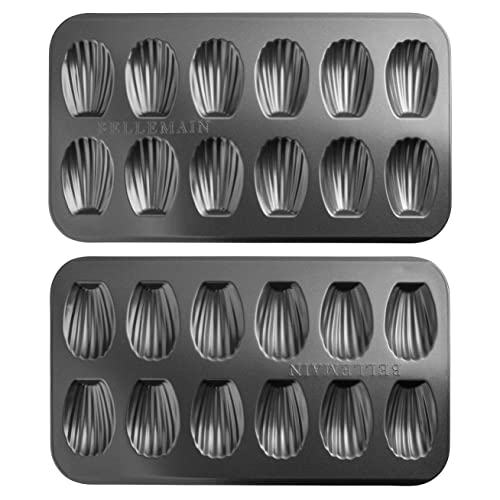
Bellemain Nonstick Madeleine Pans, 12-Cavity Carbon Steel, 2-Pack
Included for 'Best Madeleine Pan for French Madeleines' because the listing specifies 12-Cavity Carbon Steel and 2-Pack, details this guide uses to compare options.
View on Amazon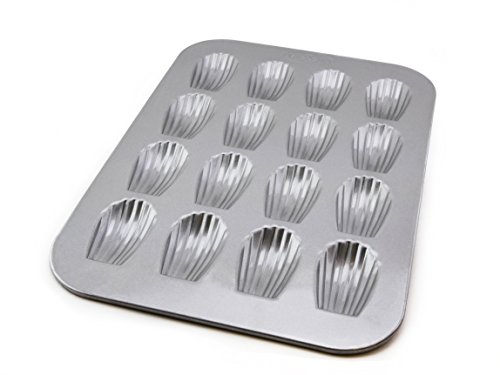
USA Pan Bakeware Nonstick Madeleine Pan, 16 Well
Included for 'Best Madeleine Pan for French Madeleines' because the listing specifies 16 Well, details this guide uses to compare options.
View on Amazon
Gobel - Tinplate Madeleine Pan, 12 Shells, 15.6 x 7.9 in
Included for 'Best Madeleine Pan for French Madeleines' because the listing specifies Tinplate Madeleine Pan and 12 Shells, details this guide uses to compare options.
View on Amazon
Chicago Metallic Professional 12-Cup Non-Stick Madeleine Pan, 15.75-Inch-by-7.75-Inch
Included for 'Best Madeleine Pan for French Madeleines' because the listing specifies 15.75-Inch-by-7.75-Inch, details this guide uses to compare options.
View on AmazonMost standard madeleine pans hold 9 or 12 cakes. A typical cavity is approximately 3 to 4 inches long, 2 to 2 1/2 inches wide, and around 3/4 to 1 inch deep, although manufacturers vary. Before buying, compare the cavity measurements rather than relying only on the number of shells. Two 12-cavity pans can produce noticeably different cakes.
Shell depth and definition
Look for distinct ridges with clean transitions between the shell and the flat “belly” of the cake. Deep, narrow grooves create a more traditional silhouette, but they also make release and washing more demanding. Rounded, shallow ridges are more forgiving and are suitable if you mainly want the shape without a strongly sculpted pattern.
Press the pan gently on a flat surface if you can inspect it in person. A rigid rim and a flat base help every cavity bake at the same angle. A pan that flexes easily can twist while being greased, causing uneven batter depth and inconsistent browning.
Head-to-head: the main pan materials
| Pan construction | Heat and browning | Release | Cleaning and longevity |
|---|---|---|---|
| Heavy aluminized steel | Fast, even heat with well-browned edges | Very good when buttered and floured | Durable; dry promptly to prevent corrosion at exposed edges |
| Plain aluminum | Even heating and moderate, attractive browning | Depends heavily on preparation | Lightweight, but can scratch, stain, or warp if mishandled |
| Dark nonstick steel | Strong browning and efficient heat absorption | Usually the easiest | Hand-washing and nonmetal utensils extend coating life |
| Light-colored nonstick steel | Gentler browning and more visual control | Very good if the coating is intact | Less likely to overbrown; still needs careful washing |
| Silicone | Slow, pale browning and softer edges | Easy after cooling | Flexible and easy to store, but shell definition is often weaker |
For the classic contrast—a lightly crisp, golden shell and a tender interior—metal is the better choice. Silicone is convenient, especially for delicate batters, but it does not transfer heat to the edges as decisively. It may also need support from a rigid baking sheet because a flexible filled mold is awkward to move safely.
Strong options to consider
USA Pan Madeleine Pan
USA Pan’s madeleine pan is a sensible choice for bakers who want sturdy construction and a coated surface. Its ridged cavities are designed for defined shells, and the pan’s substantial feel is useful when transferring it from counter to oven. The coating reduces sticking, but it should still be treated as nonstick cookware: use soft utensils, avoid aerosol cooking sprays that can leave residue, and wash by hand unless the product instructions specifically permit otherwise.
Nordic Ware Madeleine Pan
Nordic Ware is known for cast aluminum bakeware, and its madeleine designs are aimed at sharp, decorative detail. Cast aluminum can give the shells a clear pattern and even heat distribution while remaining lighter than thick steel. It is a good fit for someone who values appearance and repeatable shape. Because cast aluminum can be sensitive to harsh detergents and sudden temperature changes, follow the care instructions and avoid soaking for long periods.
De Buyer Elastomoule Madeleine Mold
De Buyer’s Elastomoule line uses a flexible silicone-based mold reinforced for baking performance. It suits bakers who prioritize easy release and compact storage. The trade-off is a softer crust and less forceful browning than a traditional metal pan. Place the mold on a rigid baking sheet before filling; do not try to carry a floppy, batter-filled mold across the kitchen.
Wilton nonstick madeleine pan
A Wilton nonstick pan is often a practical entry-level option for occasional baking. It is widely available in standard cavity counts and usually costs less than premium professional bakeware. It can produce attractive madeleines when the batter is chilled and the cavities are prepared carefully. Inspect the coating before purchase, because a thin or easily scratched surface will eventually undermine release and may cause the grooves to hold baked-on residue.
How pan size affects your batch
A 12-cavity pan is the most versatile size for home baking. It usually fits a standard oven rack with room around the sides for airflow, but measure if your oven is compact. Allow roughly 1 inch of clearance from the pan edges to the oven walls where possible, and avoid placing it directly against the rear vent or door.
A 9-cavity pan may be better for a small apartment kitchen or a household that rarely needs more than a dozen cakes. Two 12-cavity pans save time for parties but require enough oven width and storage space. If your oven rack is approximately 16 inches wide, check the pan’s outside dimensions rather than its cavity count; wide handles and rolled rims can add several inches.
Also consider batter volume. Fill each cavity about two-thirds full, leaving space for the characteristic center rise. Overfilling creates flat overflow between shells and makes the pan harder to clean. Underfilling produces thin cakes that may not develop enough structure to release cleanly.
Release performance: coating versus preparation
Even the best coating is not a substitute for correct preparation. For a traditional metal pan, brush softened butter into every ridge, dust lightly with flour, then tap out the excess. Excess flour can leave a pale, chalky surface, while missed grooves become sticking points. Some recipes use melted butter alone; that works best with a well-maintained nonstick pan and a batter containing enough fat.
Chilling matters too. Resting the batter in the refrigerator for at least 30 minutes, and often several hours, firms the butter and helps the madeleines hold their shape. A chilled batter placed into a properly prepared pan generally releases more cleanly than a warm, loose batter.
After baking, let the pan sit for a few minutes, then loosen each cake gently with a small flexible spatula or fingertip. Do not invert and bang a coated pan aggressively. If cakes repeatedly stick, check three things first: whether the butter reached the deepest grooves, whether the pan is overfilled, and whether the coating has been scratched or worn.
Cleaning and durability realities
Madeleine grooves collect butter, flour, and caramelized sugar, so cleaning requirements should influence your purchase. A pan with deep, narrow shells gives the prettiest definition but may require a soft pastry brush or wooden toothpick to clear residue. Soak briefly in warm water, use mild dish soap, and dry thoroughly. Avoid steel wool, abrasive powders, and metal scrapers.
Nonstick coatings usually wear first at the ridges and corners, where utensils or stacking can scrape them. Store the pan flat or place a towel between stacked pans. Bare aluminum may discolor without affecting performance, while rust is a more serious concern on exposed steel. Never put a hot pan under cold water; thermal shock can warp thinner metal.
Our buying verdict
Choose a heavy, rigid 12-cavity coated steel pan if you want the easiest path to reliable French madeleines. Choose cast aluminum when shell definition and even browning matter most and you are willing to follow careful cleaning instructions. Choose a bare or aluminized metal pan for the most traditional crisp edges, provided you will butter and flour it consistently. Choose silicone only when effortless release and flexible storage matter more than a deeply browned shell.
In short, the best madeleine pan for French madeleines is not necessarily the pan with the most cavities or the glossiest coating. Select the cavity depth and shell definition first, then compare metal thickness, outside dimensions, release method, and cleaning demands against how often you bake.