Key takeaways
- For a layer cake, use the recipe as written. Chill the cake layers before frosting and apply a thin crumb coat first.
- For cupcakes, use the frosting after a 20-minute chill. It will pipe more neatly through a large star or round tip than through a very narrow tip.
- For a thin sheet-cake layer, reduce the powdered sugar to 2½ cups if you prefer a softer finish, but chill the frosting before spreading.
- For a firmer filling, use 3½ cups powdered sugar and chill for 30 minutes. This is useful between cake layers, where a soft filling may squeeze outward.
- For a less sweet frosting, do not simply remove a large amount of sugar. Start with 2¾ cups, then add more as needed for structure.
This cream cheese frosting recipe uses 8 ounces of full-fat block cream cheese, ½ cup unsalted butter, 3 cups powdered sugar, and 1 teaspoon vanilla for a thick, smooth frosting that spreads easily without becoming runny.
Cream Cheese Frosting Recipe
This ratio makes about 3 cups of frosting, enough to fill and cover a two-layer 8- or 9-inch cake, generously frost 24 cupcakes, or cover a 9-by-13-inch cake in a single layer. Use block-style cream cheese rather than whipped or spreadable tub cream cheese, which contains more moisture and can make the frosting loose.
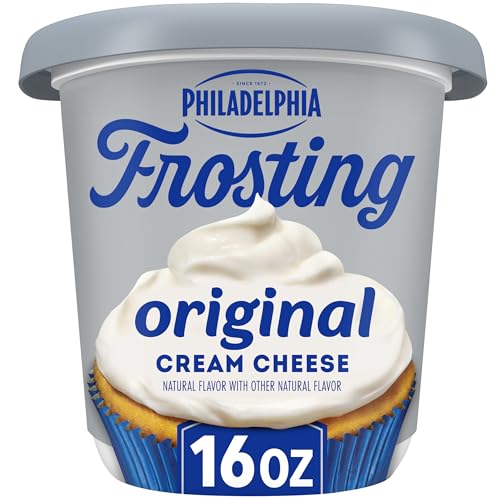
Philadelphia Original Cream Cheese Frosting, 16 oz Tub
Included for 'Cream Cheese Frosting Recipe: Smooth, Tangy & Easy' because the listing specifies 16 oz Tub, details this guide uses to compare options.
View on Amazon
Betty Crocker Rich & Creamy Cream Cheese Frosting, Gluten Free, 16 oz
Included for 'Cream Cheese Frosting Recipe: Smooth, Tangy & Easy' because the listing specifies Gluten Free and 16 oz, details this guide uses to compare options.
View on Amazon
Philadelphia Cream Cheese, Original Style, 8 oz
Included for 'Cream Cheese Frosting Recipe: Smooth, Tangy & Easy' because the listing specifies Original Style and 8 oz, details this guide uses to compare options.
View on Amazon| Ingredient | Amount | Purpose |
| Full-fat block cream cheese | 8 ounces, softened | Provides tang and structure |
| Unsalted butter | ½ cup, or 113 grams, softened | Adds body and helps the frosting hold its shape |
| Powdered sugar | 3 cups, or about 360 grams | Sweetens and thickens the mixture |
| Pure vanilla extract | 1 teaspoon | Adds flavor |
| Fine salt | ⅛ teaspoon | Balances the sweetness |
How to Make It
1. Bring the ingredients to the right temperature
Set the cream cheese and butter on the counter for about 30 to 45 minutes. They should be soft enough to indent easily with a fingertip but not warm, shiny, or partially melted. Ideally, the cream cheese should be around 65°F and the butter around 68°F.
Do not soften the cream cheese in a microwave unless necessary. Warm spots can release moisture and cause a thin frosting. If the butter is too firm, cut it into small pieces and leave it at room temperature; avoid using melted butter.
2. Beat the butter first
Place the softened butter in a mixing bowl and beat on medium speed for 2 minutes. Scrape the bowl once or twice. The butter should look smooth and slightly lighter, but it does not need to become extremely fluffy. Overbeating at this stage can incorporate excess air that later collapses in the frosting.
3. Add the cream cheese briefly
Add the softened cream cheese and beat on medium speed for 30 to 45 seconds, just until combined. Scrape the bowl and beat for another 15 seconds if any streaks remain. Stop as soon as the mixture is smooth. Cream cheese becomes softer and more fluid the longer it is mixed.
4. Add the sugar gradually
Sift the powdered sugar if it is lumpy. Add it in three additions, mixing on low speed for 20 to 30 seconds after each addition. Scrape the sides and bottom of the bowl before adding the next portion.
Add the vanilla and salt, then mix on low for 15 seconds. Increase to medium speed for no more than 30 seconds, just until the frosting looks even and spreadable. The complete mixing time after the cream cheese is added should be about 2 minutes.
Chilling Guidance for Thick, Spreadable Frosting
For the best consistency, refrigerate the finished frosting for 20 to 30 minutes before using it. Cover the bowl tightly so the frosting does not absorb refrigerator odors or develop a dry surface. Stir it by hand for 10 to 15 seconds after chilling, then spread it immediately.
If the frosting is still soft, chill it for another 15 minutes. Avoid leaving it in the refrigerator for several hours and then beating it vigorously, because extended mixing can make it slack. If it becomes very firm, let it stand at room temperature for 5 to 10 minutes before spreading.
| Frosting problem | Likely cause | Best correction |
| Too runny | Warm ingredients, tub cream cheese, or overmixing | Chill 20 to 30 minutes; add powdered sugar 1 tablespoon at a time only if needed |
| Too stiff | Cold butter, extra powdered sugar, or prolonged chilling | Rest at room temperature for 5 to 10 minutes and stir gently |
| Lumpy | Cold cream cheese or unsifted sugar | Let it rest briefly, then mix on low; do not add liquid immediately |
| Grainy | Coarse sugar or insufficient mixing | Use finely powdered sugar and allow the frosting to rest for 5 minutes before a short mix |
Adjust the Recipe for Different Uses
- For a layer cake, use the recipe as written. Chill the cake layers before frosting and apply a thin crumb coat first.
- For cupcakes, use the frosting after a 20-minute chill. It will pipe more neatly through a large star or round tip than through a very narrow tip.
- For a thin sheet-cake layer, reduce the powdered sugar to 2½ cups if you prefer a softer finish, but chill the frosting before spreading.
- For a firmer filling, use 3½ cups powdered sugar and chill for 30 minutes. This is useful between cake layers, where a soft filling may squeeze outward.
- For a less sweet frosting, do not simply remove a large amount of sugar. Start with 2¾ cups, then add more as needed for structure.
Why This Ratio Works
Cream cheese contributes water and acidity, while butter contributes fat and structure. Powdered sugar absorbs some moisture and gives the frosting enough body to remain on a cake. The 8-ounce cream cheese to ½-cup butter ratio keeps the tang noticeable without making the mixture excessively soft.
Adding more cream cheese can produce a sharper flavor, but it also increases moisture. Adding milk, cream, lemon juice, or other liquid is usually unnecessary in this recipe and makes runniness more likely. If you want more tang, add ½ teaspoon of finely grated lemon zest rather than lemon juice.
Spreading and Piping Tips
Apply the frosting to a completely cool cake. Even a slightly warm cake can soften the butter and loosen the cream cheese. For a layer cake, place about ¾ cup of frosting between two 8-inch layers, then use the remaining frosting for the top and sides.
For the smoothest surface, spread a thin crumb coat and refrigerate the cake for 20 minutes. Add the final coat with a warmed, dry offset spatula. Wipe the spatula clean frequently; crumbs dragged through the frosting create a rough finish.
If piping, chill the filled piping bag for 10 minutes if the frosting feels soft. Do not chill it so long that the frosting becomes difficult to squeeze. A large open-star tip generally works better than a small decorative tip because cream cheese frosting is denser than American buttercream.
Storage and Food Safety
Because it contains cream cheese, this frosting should be refrigerated. Store unused frosting in an airtight container for up to 5 days. Bring it out for 10 to 20 minutes, then stir gently before using. Frosted cake can usually be refrigerated for up to 4 days when covered well.
For serving, let a frosted cake stand at room temperature for about 20 to 30 minutes so the frosting softens slightly. Do not leave cream cheese frosting at room temperature for more than 2 hours, or 1 hour in a very warm room.
Frequently Asked Questions
Can I use low-fat cream cheese?
Full-fat block cream cheese gives the thickest result. Low-fat varieties generally contain more water relative to their fat content and may produce a softer frosting. If using one, chill the frosting thoroughly and expect a less stable finish.
Should I use salted or unsalted butter?
Unsalted butter gives you better control over the flavor. If salted butter is all you have, omit the additional ⅛ teaspoon of salt.
Can I make this cream cheese frosting recipe ahead?
Yes. Make it up to 5 days ahead and refrigerate it in a sealed container. Let it soften briefly and stir by hand before spreading. Avoid prolonged high-speed mixing after storage.
Why did my frosting become runny?
The most common causes are warm ingredients, spreadable tub cream cheese, too much liquid flavoring, or mixing for too long. Chill it first; if it remains loose, add powdered sugar one tablespoon at a time until it reaches a spreadable consistency.