Our Top Picks
The best way to sleep with neck pain is on your back or your side with your head level with your spine, using a pillow that fills the gap between ear and mattress without pushing your chin up or down. Stomach sleeping twists the neck for hours and is the position most often advised against. For pillows, the Royal Therapy contour is our top pick for people who switch between back and side, and the UTTU adjustable sandwich pillow is the runner-up because you can change its height as your needs shift. This guide covers the positions first, then six supportive pillows, and stays with what the listings state. A pillow is not a treatment, and ongoing neck pain deserves a conversation with a doctor.
Top Picks at a Glance
- Best Overall: Royal Therapy Memory Foam Contour Pillow, queen, 24x14x5 inches.
- Best Adjustable: UTTU Cervical Pillow, sandwich design with two heights (5.2 and 4.5 inches).
- Best Firm Option: Tri-Core Ergonomic Cervical Pillow, full size, firm.
- Best for Hot Sleepers: Osteo Cervical Pillow, hollow design with a cooling case.
- Best Two-Height Pillow: Missleep Cervical Pillow, 2 heights with an ice silk cover.
- Best Familiar-Brand Value: Sealy Dreamlife Contour Memory Foam Pillow, standard size, washable cover.
Quick Comparison
| Product | Best for | Key specs | Watch for | Price tier |
|---|---|---|---|---|
| Royal Therapy Queen | Back and side sleepers | 24x14x5 in, contour memory foam | One fixed height | Mid-range |
| UTTU Queen | Changing needs | 23.6×13.8×5.2/4.5 in, adjustable sandwich fill | Fill can need settling | Mid-range |
| Tri-Core Full Size Firm | People who want firm support | Full size, firm, cervical contour | Firm feel takes adjustment | Mid-range |
| Osteo Hollow Design | Warm sleepers | Hollow design, cooling case, adjustable | Size details vary by option | Mid-range |
| Missleep 2 Heights | Trying two heights without buying twice | Two heights, ice silk cover, memory foam | Cover feel is a personal call | Budget to Mid-range |
| Sealy Dreamlife Standard | Brand-name budget buy | Standard size, contour foam, washable cover | Not marketed as cervical-specific | Budget |
The Best Sleeping Positions for Neck Pain
The goal in every position is the same: keep the neck in line with the rest of the spine so muscles can relax overnight. What changes is how much pillow you need to fill the space between your head and the mattress.
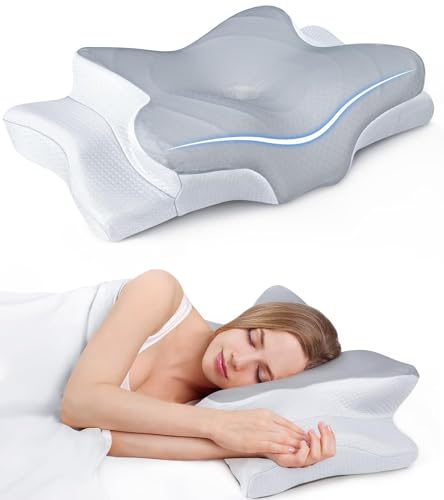
Ultra Pain Relief Cooling Pillow for Neck Support, Adjustable Cervical Pillow Cozy Sleeping, Odorless Ergonomic Contour Memory Foam Pillows, Orthopedic Bed Pillow for Side Back Stomach Sleeper
Chosen because it specifies Adjustable Cervical Pillow Cozy Sleeping and Odorless Ergonomic Contour Memory Foam Pillows.
View on Amazon
Missleep Cervical Neck Pillow, Memory Foam Pillows for Neck and Shoulder Pain Relief, 2 Heights Ergonomic Pillow with Breathable Ice Silk Cover, Neck Support Pillow for Side Sleepers, White
Chosen because it specifies Memory Foam Pillows for Neck and Shoulder Pain Relief and 2 Heights Ergonomic Pillow with Breathable Ice Silk Cover.
View on Amazon| Position | Neck alignment | Pillow height guide | Common problem |
|---|---|---|---|
| Back | Good, if the head is neither tipped up nor dropped back | About 3 to 4 inches, with a dip under the head and a lift under the neck | Pillow too thick pushes the chin to the chest |
| Side | Good, if the pillow fills the gap from ear to shoulder tip | About 4 to 6 inches, depending on shoulder width | Pillow too low lets the head sag toward the mattress |
| Stomach | Poor: the neck stays turned to one side | Very flat pillow or none; better to retrain to side | Hours of rotation strain the neck |
| Combination | Changes through the night | Adjustable or two-sided pillow works best | Single height rarely fits all positions |
These heights are rule-of-thumb figures widely used in sleep-comfort guidance, not medical prescriptions. A broader-shouldered person sleeping on their side may need more than 6 inches, and a petite person may need 3 inches or less. The simple test is a mirror or a helper: lie down in your usual position and see whether your nose points straight ahead and your chin is level.
Back sleeping with neck pain
Lying on your back lets the head rest in a neutral position, if the pillow is the right height. A cervical contour pillow with a lower centre and a raised neck roll cradles the curve of the neck while the head drops into the dip. The roll should sit under the neck, not the shoulders. Putting a thin pillow or rolled towel under the knees also eases the lower back, which can reduce the pull on the neck chain.
Side sleeping with neck pain
On your side, the issue is the gap between the ear and the mattress, which is your shoulder width. A pillow that is too thin lets the head tilt down, and one that is too thick pushes it up. Choose a pillow whose loft matches the distance from the side of your neck to the outer tip of your shoulder. Keep the chin slightly tucked in, hug a second pillow to keep the top shoulder from rolling forward, and place a pillow between the knees to keep the hips stacked.
Why stomach sleeping is usually avoided
Lying face down forces you to turn your head 60 to 90 degrees to breathe. Holding that rotation for six or eight hours is the opposite of what an irritated neck wants. If you cannot change, use a very thin pillow, or none, and put a pillow under the hips to reduce the arch in your lower back. Many people find that slowly training the body to a side position with a body pillow works over a few weeks.
1. Royal Therapy Memory Foam Contour Pillow: Best for Switching Between Back and Side
- Size: queen, 24x14x5 inches
- Memory foam contour design for neck and shoulder pain relief (as marketed)
- Suitable for side, back and stomach sleepers (listed)
- Cover and cooling details: not listed in the title
- Firmness: not stated
Best for: people who change position overnight and want a contour that supports the neck on the back and the side.
Skip if: you need a very high loft for broad shoulders, because the listing gives a single 5-inch height.
The queen size at 24 inches long and 14 inches wide suits a standard bed and gives the head room to turn without leaving the pillow. At 5 inches thick, it sits at the upper end for back sleepers and the lower-middle for side sleepers, which is why it works for a combination sleeper but not for people with very wide shoulders.
A contour pillow has a dip for the head and a ridge for the neck. On your back, the ridge cradles the neck curve. On your side, the ridge sits under the neck and the head rests on the lower edge, lining up the nose with the middle of the chest. The listing says it suits side, back and stomach sleepers. Stomach sleeping on any contour pillow is rarely advised, so treat that as marketing breadth.
The marketing language mentions pain relief, which is the maker’s claim. We cannot verify that, and no pillow replaces medical care. What we can say from the listing is the shape, size and material.
Pros
- Clear dimensions in the title
- Contour shape suits two common positions
- Queen size matches standard bedding
Cons
- Single fixed height
- Cooling and cover details not listed
2. UTTU Cervical Pillow: Best Adjustable Height
- Size: Queen, 23.6 x 13.8 x 5.2/4.5 inches
- Adjustable orthopedic sandwich pillow
- Memory foam with contour cooling design (listed)
- For side, back and stomach sleepers (listed)
- Two heights on the two sides: 5.2 and 4.5 inches
Best for: anyone unsure of their ideal height, or whose needs change from one night to the next.
Skip if: you want a single-piece solid foam pillow, because the sandwich design uses layers you can arrange.
The sandwich design is the key feature: the pillow is built in layers, and you can add or remove a layer to change the height. With listed dimensions of 5.2 and 4.5 inches on the two sides, you have two heights even before adjusting the layers.
This matters because the “right” height is hard to know in a shop. Shoulder width, mattress softness and pillow compression all change the number. An adjustable pillow turns the buying decision into a few nights of trial.
Layers can feel less cohesive than a one-piece contour, and some sleepers notice the seam. If you value a consistent surface under your cheek, check whether the layering bothers you in the first week.
Pros
- Two listed heights plus adjustable layers
- Contour shape for back and side
- Clear measurements in the title
Cons
- Layers can shift
- More parts to manage
3. Tri-Core Ergonomic Cervical Pillow, Full Size Firm: Best Firm Option
- Size: full size (exact inches not stated in the title)
- Firmness: firm (listed)
- Contoured cervical shape (listed)
- Maker: Core Products
- Fill and cover details: not listed in the title
Best for: readers who like a supportive, structured pillow and want a therapeutic-style shape.
Skip if: you prefer soft pillows that sink, since this one is listed firm.
Core Products is a name physical therapy offices often stock, and the Tri-Core is one of its best-known cervical pillows. The listing says full size and firm, and describes a contoured shape intended to support spinal alignment.
A firm contour tends to hold its shape through the night, which can help people whose pillows flatten and let the head drop. The trade-off is adaptation time. Firm pillows feel odd at first, and some people need a week or two before they know whether it works.
The exact thickness and fill are not in the listing title, so check the maker’s page for the version you choose. Core also sells softer and gentler versions, so make sure the one you add to your cart says firm.
Pros
- Established therapy-oriented brand
- Firm, shape-holding support
- Contoured cervical design
Cons
- Needs an adjustment period
- Exact dimensions not in the title
4. Osteo Cervical Pillow: Best for Hot Sleepers
- Hollow design memory foam (listed)
- Cooling case (listed)
- Adjustable orthopedic shape (listed)
- For side and back sleepers (listed)
- Dimensions: check the option you pick
Best for: people who find memory foam too warm and want a more airy structure.
Skip if: you want an ultra-soft sit-in feel, because hollow cutouts add firmness.
A hollow design means channels or cutouts in the foam that allow air to move and reduce the amount of foam under your head. In theory this reduces heat build-up, though the maker does not publish a temperature comparison, so view it as a design intention, not a measured outcome.
The cooling case is a separate layer that sits on top of the foam. Cases of this type feel cool when you first lie down but warm up as body heat transfers, so do not expect it to stay cold all night.
The pillow is listed as adjustable, so it likely has removable pieces to alter the loft. That is helpful when you are finding your height. Like any adjustable pillow, it asks for a few nights of experimentation.
Pros
- Hollow design for airflow
- Cooling case included
- Adjustable loft
Cons
- Cooling effect fades as it warms
- Dimensions vary by option
5. Missleep Cervical Neck Pillow: Best Two-Height Pillow With Cooling Cover
- Two heights (ergonomic design, listed)
- Memory foam
- Breathable ice silk cover (listed)
- For neck and shoulder pain relief, side sleepers (listed)
- Colour shown: white
Best for: side sleepers or mixed sleepers who want a high side and a low side in one pillow.
Skip if: you dislike silky covers, which feel slick for some people.
The two-height design uses the same concept as a classic cervical pillow: a higher edge for side sleeping and a lower edge for back sleeping. You flip the pillow to change. That makes it a good first cervical pillow because it covers the two most common positions.
The ice silk cover is a smooth, breathable fabric that feels cool to the touch. Some sleepers love it; some dislike the slippery surface. Because the cover is the part you touch most, read the care notes and consider whether you want to buy a spare cotton cover.
The listing does not give the heights in inches, so check the maker’s page for the version you pick. If they differ by only an inch, you may not notice a big change when flipping.
Pros
- Two heights in one pillow
- Breathable cover
- Good entry cervical pillow
Cons
- Heights not stated in the title
- Slippery cover for some
6. Sealy Dreamlife Contour Memory Foam Pillow: Best Brand-Name Budget Buy
- Size: standard
- Contour memory foam with Surface Guard Technology (listed)
- Removable, machine-washable cover (listed)
- Maker: Sealy
- Cervical-specific design: not claimed in the title
Best for: anyone wanting a gentle contour pillow from a mainstream brand without a specialised shape.
Skip if: you need an orthopedic neck roll, since this is a general contour pillow.
Sealy is a mattress and bedding brand that most readers already know. The Dreamlife is a standard-size contour memory foam pillow, which is a milder alternative to a stiff cervical pillow. It is less aggressive, so it is a sensible first step if a deep dip feels like too much.
The removable, machine-washable cover is a practical benefit. Neck pain sufferers often use the same pillow for years, and a cover that goes through the wash helps keep it fresh.
It is not marketed as cervical-specific, so it is not the pick for severe neck stiffness. For mild, occasional stiffness it is a low-cost trial.
Pros
- Mainstream brand
- Washable cover
- Mild contour is easy to adapt to
Cons
- Not cervical-specific
- Single standard height
Also Consider
EPABO Contour Memory Foam Pillow, Firm and Queen
A firm queen contour pillow for side, back and stomach sleepers, with a free pillowcase noted in the listing.
Bedsure Cervical Neck Pillow
A double-sided design listed by a well-known bedding brand, worth a look if you want to choose between two heights.
Utopia Bedding Cervical Neck Pillow
A cooling contour cervical pillow from a value-focused bedding brand, with fewer details listed in the title.
Sidney Sleep Adjustable Curved Pillow
A curved pillow with extra shredded fill so you can add or remove foam to match your shoulder width.
Neck-Friendly Sleep Habits Beyond the Pillow
A pillow is one piece. Your mattress, your pre-sleep routine and your daytime posture all feed into how your neck feels in the morning.
- Mattress firmness: a mattress that is too soft lets the shoulders sink and rotate the neck on the side; a very hard one pushes the shoulder up. Medium-firm is a common compromise.
- Screen posture: long hours with the head forward put load on the neck before bed. Raise your screen to eye level and take breaks every 30 minutes.
- Wind-down stretches: gentle neck rolls and chin tucks before bed can feel good for many people. Stop if anything causes sharp pain.
- Heat or cold: a warm pack on stiff muscles for 15 minutes before bed is a common comfort measure; do not fall asleep on it.
- Pillow replacement: foam pillows commonly last one to three years, and a pillow that has lost its loft will not hold the head in line.
If your neck pain is severe, follows an injury, or comes with numbness, tingling, weakness, headaches that are new or worsening, or pain that wakes you at night, see a doctor or physical therapist. A pillow cannot diagnose or fix these.
How We Chose
This guide is research-based. We did not personally use these pillows. We worked from the sizes, materials and features listed for each product, cross-checked against the maker’s descriptions and general sleep-position guidance from physical therapy and sleep-health sources. Where a detail was not in the listing, we marked it as not listed.
We looked for cervical or contour pillows aimed at neck support, then spread the picks across firmness, height adjustability and cooling features, with no more than two picks from one brand. We left out inflatable travel pillows, heated pillows and anything that makes a medical promise.
Price is shown as a tier because prices change. We did not rank on popularity, because the right pillow depends on your position, shoulder width and mattress.
Buying Guide: How to Choose a Pillow for Neck Pain
Match loft to your main sleeping position
Loft is the height of the pillow once your head compresses it. Back sleepers typically need 3 to 4 inches, side sleepers 4 to 6, and stomach sleepers under 3. If you shift positions, an adjustable pillow or a two-sided design saves you buying twice. Memory foam compresses by 20 to 30 percent under the head, so a 5-inch pillow may behave closer to 3.5 to 4 inches.
Choose a firmness you can live with
Soft pillows let the head sink, which can leave the neck bent. Firm pillows hold position but feel unforgiving. For most neck pain sleepers, medium to medium-firm is a safe first choice. A thin firm pillow on a very soft mattress can still tilt the head, so mattress and pillow are a pair.
Pick the fill for your climate and habits
Memory foam holds a contour, shredded foam is adjustable, latex is springy and cooler, and fibre is soft and cheap but flattens quickly. If you run warm, pick a hollow, perforated or shredded design with a breathable cover. If you sleep cold, solid memory foam is comfortable.
Check the cover and the care label
A removable cover that you can wash keeps the pillow fresher. Without it, sweat and skin oils break down foam sooner. Look for a zipper and a stated wash temperature.
Allow a trial period
Any new pillow takes one to two weeks to judge, because your neck muscles need time to adapt. Check the seller’s return window before you buy and keep the packaging until you are sure.
Frequently Asked Questions
What is the best way to sleep with neck pain?
The best way to sleep with neck pain is on your back or side with your head level with the spine, using a pillow that fills the gap between ear and mattress. Avoid stomach sleeping where possible.
What is the correct way to sleep with neck pain on your side?
Use a pillow whose height matches the distance from your neck to your shoulder tip, keep your chin slightly tucked, and put a pillow between your knees so the hips stay stacked.
What is the right way to use a pillow for neck pain?
Place the neck ridge or support under the curve of your neck, not under your shoulders, and let the head rest in the dip. On your side, the ridge goes under the neck and the head rests on the lower part.
How high should a pillow be for neck pain?
Roughly 3 to 4 inches for back sleepers and 4 to 6 inches for side sleepers, adjusted for shoulder width and mattress softness. The test is a straight line from nose to chest.
Is memory foam or latex better for neck pain?
Neither is universally better. Memory foam moulds to the head and neck and holds shape; latex is springier and often cooler. Choose based on whether you prefer sinking in or pushing back.
Can the wrong pillow cause neck pain?
A pillow that is too high, too low or too soft can leave the neck bent for hours, which may contribute to stiffness for some people. It is one of several factors alongside mattress, posture and stress.
When should I see a doctor about neck pain?
See a doctor if pain follows an injury, lasts more than a couple of weeks, or comes with numbness, tingling, weakness or severe headaches. A pillow does not replace medical advice.
Which One Should You Buy?
Pick the Royal Therapy if you switch between back and side and want a clear, fixed contour. Pick the UTTU if you are unsure of your ideal height and want adjustment. Pick the Tri-Core if you want a structured firm pillow with therapy-brand roots, the Osteo if heat is your issue, the Missleep if you want two heights in one affordable pillow, and the Sealy if you only want a mild contour from a known name. Whichever you choose, give it one to two weeks, and keep a record of how your neck feels each morning so you can tell whether it is working.
Sources
- Manufacturer product pages and listing details for Royal Therapy, UTTU, Core Products, Osteo, Missleep and Sealy
- Physical therapy and orthopaedic care guidance on sleeping positions for neck pain
- Sleep health organisation pages on pillow height and alignment
- Bedding industry mattress and pillow size standards
Last updated: October 2026