Our Top Picks
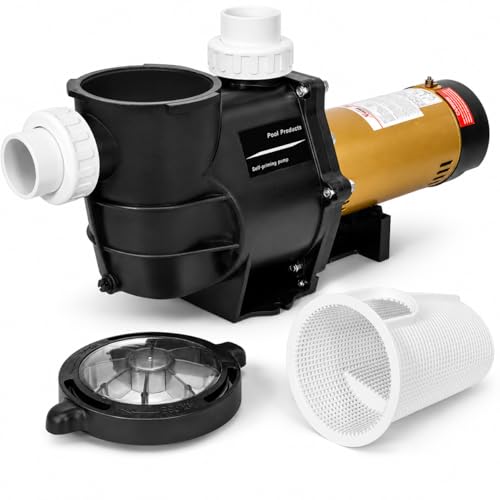 XtremepowerUS 2HP Dual Speed Swimming Pool Pump2HP Inground Pool Pump14.3 x 27.5 x 10.4 inches38.2 poundsCheck on Amazon
 AQUASTRONG 1 HP Sump Pump 4500 GPH Submersible1 HP Sump Pump6.3 x 9.85 x 11.03 inches8.51 poundsCheck on Amazon
The best pool pump for most backyard owners who want lower running costs is a variable-speed model, and our top pick is the Aquastrong 2 HP variable speed pump, with the VARMINPOOL 1.8 HP a close runner-up at a lower tier of spend. If you only need a simple, low-cost fix for an above-ground pool, a dual-speed pump such as the VIVOHOME 2.0 HP or a cartridge filter pump like the Bestway 1,500 GPH covers the job. This guide to the best pool pumps sorts energy-saving, dual-speed, inverter-driven variable-speed and above-ground filter pumps by what they actually do for your water, your wiring and your electric bill. This guide is research-based: we did not personally use these products, and every spec below comes from the listing details or is marked “not listed”.
Pool pumps are one of the biggest electricity users around a house with a pool, which is why the “energy saving” label matters so much. The catch is that a label is only a starting point. Savings depend on how many hours you run the pump, how fast it spins during those hours, how clean your filter is and what you pay per kilowatt-hour. We keep every claim qualified for that reason, and we never quote exact dollar savings.
XtremepowerUS 2HP Dual Speed Swimming Pool Pump, 5820 GPH High Flow 230V Pool Water Pump for In-Ground & Above Ground Pools, 2" Inlet, Strainer Filter Basket & Slip-On Fitting Adapter
Chosen because it specifies 2" Inlet and Strainer Filter Basket & Slip-On Fitting Adapter.
View on Amazon
Pentair EC-342001 - SuperFlo VS Variable Speed Pool Pump, 1.5 HP
Chosen because it specifies SuperFlo VS Variable Speed Pool Pump and 1.5 HP.
View on AmazonAQUASTRONG 1 HP Sump Pump 4500 GPH Submersible Water Pump for Water Removal | Thermoplastic Utility Pump High Flow Water Removal for Swimming Pool Garden Pond Basement Wells with 10ft Long Power Cord
Picked as a relevant option in this category.
View on Amazon
Little Giant APCP-1700 1/3 HP, 1745 GPH Automatic Pool Cover Pump, 25' Cord | Submersible, Removes water from pool covers, Shuts off automatically, Fits 3/4" Garden Hose, Light Blue, 577301
Chosen because it specifies 1745 GPH Automatic Pool Cover Pump and 25' Cord.
View on AmazonTop Picks at a Glance
- Best Overall: Aquastrong 2 HP Variable Speed Pool Pump (220V, 10566 GPH maximum flow per the listing).
- Best Value Variable Speed: VARMINPOOL 1.8 HP Variable Speed Pool Pump (220V inverter drive, up to 9114 GPH).
- Best Premium Brand Name: Pentair SuperFlo VS 1.5 HP Variable Speed Pump.
- Best Dual-Speed for Above-Ground Pools: VIVOHOME 2.0 HP 115V Dual Speed Pump.
- Best Budget Two-Speed: Zipool 2HP Two Speed Pump (6600/2640 GPH, 230V).
- Best Mid-Range Dual Speed With Timer: Aquastrong 1.5HP Dual Speed Pump (115V, 4795 GPH).
- Best Budget Filter Pump: Bestway 1,500 GPH Cartridge Filter Pump for above-ground pools.
Comparison Table
| Product | Best for | Key specs (from listing) | Watch for | Price tier |
|---|---|---|---|---|
| Aquastrong 2 HP Variable Speed | Larger in-ground or above-ground pools | 2 HP, 220V, 10566 GPH max, self-priming | Needs 220V wiring | Premium |
| VARMINPOOL 1.8 HP Variable Speed | Value-minded upgrade from a single-speed pump | 1.8 HP, 220V, up to 9114 GPH, inverter drive | Lesser-known brand, check warranty terms | Mid-range |
| Pentair SuperFlo VS 1.5 HP | Owners who want a known brand | 1.5 HP, variable speed | Other specs not listed in the title | Premium |
| VIVOHOME 2.0 HP Dual Speed | Above-ground pools on a 115V outlet | 2.0 HP, 115V, dual speed, 1.5 in and 1.25 in connections, DOE energy-saving label | Only two speed steps | Budget |
| Zipool 2HP Two Speed | Tight budgets | 2 HP, 230V, 6600 / 2640 GPH | 230V needed, listing thin on extras | Budget |
| Aquastrong 1.5HP Dual Speed | Mid-size pools, timer wanted | 1.5 HP, 115V, 4795 GPH, timer | Fixed speed pair | Mid-range |
| Bestway 1,500 GPH Cartridge Filter Pump | Soft-sided above-ground pools | 1,500 GPH, pools 300 to 8,400 gallons | Not for in-ground plumbing | Budget |
1. Aquastrong 2 HP Variable Speed: Best for Large Pools and Maximum Flexibility
- 2 HP motor, 220V.
- Listed at up to 10566 GPH maximum flow.
- Variable speed, described as energy efficient and self-priming.
- Rated for in-ground or above-ground pools per the listing.
- Strainer basket and union fittings: not listed in detail.
Best for: a bigger pool, a water feature, or a pool with a heater or salt system where you want to slow the pump way down for most of the day. Skip if: you only have a 115V outlet at the equipment pad and do not want to pay an electrician for a 220V circuit.
A variable-speed pump lets you choose the speed instead of choosing between “on” and “off”. That sounds small, but it changes how the pool is filtered. The usual approach is to run the pump low and long for filtering, then raise the speed for short bursts to skim, vacuum or run a feature. The maximum GPH figure is the maker’s claim at the top of the range with minimal resistance. In a real pool, with a dirty filter, a long pipe run and a heater, the flow you see will be lower.
The reason variable speed saves energy is basic pump physics. When you cut the motor speed in half, flow drops by about half, but the power needed drops to roughly one eighth in an ideal system. Real pools do not hit that perfect number because of plumbing friction and motor losses, but the principle holds: slower is dramatically cheaper per hour, and running twice as long at half speed uses far less energy than running half as long at full speed. Used the way it is meant to be used, a pump of this size can save a large share of the energy a single-speed motor would burn.
Pros: wide speed range, high maximum flow for big jobs, works with in-ground and above-ground setups, energy-efficient design claim. Cons: needs 220V, a larger up-front cost than dual-speed models, warranty details not listed here.
2. VARMINPOOL 1.8 HP Variable Speed: Best Value for a Variable-Speed Upgrade
- 1.8 HP, 220V inverter pump.
- Listed at up to 9114 GPH.
- For above-ground and in-ground pools per the listing.
- Exact motor type and pump curve: not listed.
Best for: an owner who wants variable-speed behavior without the top-tier price. Skip if: you want a long-established brand with a dealer network nearby for service.
The VARMINPOOL listing describes an inverter drive, which is the electronic part that lets the motor run at many speeds. Compared with a two-speed motor, an inverter gives you finer control: you can set a quiet low speed for overnight filtering and a medium speed for a heater cycle. The 1.8 HP rating is smaller than the Aquastrong, but for most residential pools a lower horsepower motor run at lower speed is plenty. Horsepower is also a poor shorthand for performance. The number that matters is flow at your pool’s head pressure, which manufacturers publish on a pump curve. If the listing does not show the curve, ask the seller or check the manual before you buy.
Pros: variable speed at a more approachable tier, strong maximum flow claim, suits both pool types. Cons: brand has less track record, pump curve not shown in the listing, 220V required.
3. Pentair SuperFlo VS 1.5 HP: Best for Buyers Who Want a Familiar Brand
- 1.5 HP variable speed pump.
- Pentair is a well-known pool equipment manufacturer.
- Maximum flow, voltage and port sizes: not listed in the title; check the manufacturer sheet.
Best for: an in-ground pool where a pool store can service the unit and the equipment pad is already set up for a standard pump. Skip if: you just want the lowest-cost route to a lower electric bill.
Brand-name pumps cost more mainly because of the service network, replacement-part availability and detailed technical documents. A pool professional can usually find a seal kit, a basket or a controller quickly for a major brand. That matters because pumps are one of the first pieces of equipment to need a repair after several seasons. The 1.5 HP rating is modest, which can be an advantage with older plumbing, since very high flow rates in small pipes can raise noise and wear.
Pros: recognizable manufacturer, parts and manuals easy to find, variable speed. Cons: premium tier, fewer specs in the title, sized for ordinary residential use rather than very large pools.
4. VIVOHOME 2.0 HP Dual Speed (115V): Best Dual-Speed Pump for Above-Ground Pools
- 2.0 HP, 115V, dual speed.
- 1.5 in and 1.25 in inlet and outlet connections.
- Strainer basket included.
- Listing mentions a DOE energy-saving label; confirm the certification on the maker’s documentation.
Best for: an above-ground pool on a standard 115V outlet that needs a straightforward upgrade over a single-speed pump. Skip if: you want more than two speed steps or app and timer control.
A dual-speed pump has a high speed and a low speed. You run low for most hours of the day and switch to high when you vacuum or after a heavy swim day. That alone gives much of the saving of a variable-speed pump, at a lower purchase cost, because the low speed uses a fraction of high-speed power. If you leave the pump on high all day out of habit, the savings disappear, so setting a simple timer is a real part of the value.
Pros: budget tier, 115V friendly, two speeds, standard connection sizes. Cons: only two speeds, less efficient than variable-speed models, specs beyond those listed are not available here.
5. Zipool 2HP Two Speed: Best Budget Pump With Real Speed Control
- 2 HP, 230V two-speed motor.
- Listed flow of 6600 GPH on high and 2640 GPH on low.
- For in-ground and above-ground pools per the listing.
Best for: a budget replacement where the pool already has 230V supply. Skip if: you need an included timer or remote.
The useful detail in this listing is the pair of flow numbers. 2640 GPH on low equals about 44 gallons a minute, enough to turn over a typical 15,000 to 20,000 gallon pool in around eight hours under light resistance. The high setting at 6600 GPH is far more than most pools need for filtering and works best for vacuuming and surface skimming. The ratio between the two speeds also shows why the low setting is so economical: it is roughly 40 percent of the flow, and in a typical pump the electric draw falls much further than that.
Pros: budget tier, clear high and low flow figures, versatile for in-ground or above-ground. Cons: 230V only, no timer in the title, support and warranty depth not listed.
6. Aquastrong 1.5HP Dual Speed With Timer: Best Mid-Range Dual-Speed Choice
- 1.5 HP, 115V, dual speed.
- Listed at 4795 GPH maximum flow.
- Timer included per the listing.
- For in-ground and above-ground pools per the listing.
Best for: a pool owner who wants a timer built into the pump rather than a separate box, and who has a 115V supply. Skip if: your pool is large and fed through long, narrow plumbing, where more horsepower helps.
A built-in timer is a convenience that directly supports energy saving, because most waste comes from pumps that run on high speed all day. You can set a schedule, such as eight hours on low and a short high-speed window, and leave it. At 4795 GPH maximum, the pump is well sized for typical backyard pools up to a mid-size volume, but the maker’s compatibility range is something to read in the manual instead of assuming from horsepower.
Pros: timer included, 115V, two speeds, mid-range tier. Cons: lower top flow than larger models, same brand as pick 1 so little spread of options, limited detail on warranty.
7. Bestway 1,500 GPH Cartridge Filter Pump: Best Budget Option for Soft-Sided Pools
- 1,500 GPH flow rating.
- Compatible with pools from 300 to 8,400 gallons per the listing.
- Cartridge filter pump designed for above-ground pools.
- Marketed as energy efficient; no speed control.
Best for: inflatable or frame pools that came with a small filter pump and need a replacement or a higher-flow upgrade. Skip if: your pool has in-ground plumbing, a skimmer or a heater.
This is a different category from the in-ground style pumps above. A filter pump of this kind combines the pump and a cartridge filter in one unit and attaches with hoses. It is simple, light and inexpensive to replace. It is not a variable-speed product, so the energy-saving angle comes from low power draw and right-sizing, not speed control. Match the pump’s gallon range to your pool, because underpowered pumps leave water cloudy and oversized ones can strain hoses and fittings.
Pros: budget tier, easy hose connection, matches a wide volume range. Cons: no speed control, cartridge needs rinsing and replacing, only for above-ground pools.
Also Consider
VEVOR FlashPure Sand Filter Pump, 16 in, 1 HP
Listed at 4400 GPH for above-ground pools and bundled with a sand filter, which can mean less frequent filter changes than cartridges. Check the weight and sand requirements in the manual before ordering.
TURBRO 530 GPH Cartridge Filter Pump
A small ETL-certified cartridge pump with a GFCI plug per the listing, aimed at small plunge and kiddie pools. Too small for large frame pools.
GXW Variable Speed Pool Pump
A lower-cost variable-speed option for in-ground and above-ground pools. Exact horsepower and flow numbers are not listed in the title, so read the full product sheet.
FOTING 13 in 1 HP Sand Filter Pump
A 3800 GPH sand filter system with a 24-hour timer for above-ground pools. Good if you want the sand filter included and a schedule built in.
How We Chose
We built this guide from manufacturer-style listing details, published U.S. Department of Energy efficiency rules for dedicated-purpose pool pumps, and the ENERGY STAR program page for pool pumps. We also drew on general pool-service guidance from industry groups such as the Pool and Hot Tub Alliance. We did not personally use these products, and we did not measure flow or power draw ourselves. Each pick had to meet three standards: it had to be a real pump for sale from a clear maker, it had to cover an energy-saving feature such as two-speed or variable-speed operation (or be an honest low-draw filter pump), and the listing had to state enough specs, such as voltage and flow, for you to compare it. We used price tiers rather than exact prices because prices move constantly, and we avoided claims about exact savings because those depend on local electricity rates and run time.
Buying Guide: How to Choose an Energy-Saving Pool Pump
Match the pump type to the pool
In-ground pools have permanent plumbing, a skimmer and often a heater or salt system. They need a pump that connects to pipe unions and can lift water from a basket. Above-ground pools range from inflatable rings that use a small cartridge filter pump to hard-sided pools with pipe-style equipment. If your pool has a hose-style connection, a filter pump is likely the right class. If it has threaded or union pipe, shop in-ground style pumps, many of which also list above-ground use.
Choose between single speed, dual speed and variable speed
Single-speed pumps run at one speed and are the least efficient. Dual-speed pumps give you a low setting for daily filtering and a high setting for cleaning. Variable-speed pumps let you pick many speeds and are generally the most efficient. In recent years, U.S. rules for many replacement pumps in residential pools have pushed the market toward multi-speed or variable-speed motors. Rules vary by pump size and type, so check the current Department of Energy guidance and any local requirements.
Size by turnover rate, not by horsepower
Take your pool volume in gallons, divide by the hours you want for a full turnover, then divide by 60 to get gallons per minute. A 20,000 gallon pool turned over once in eight hours needs about 2,500 gallons an hour, or roughly 42 gallons a minute. A low-speed setting such as the Zipool’s 2640 GPH would be a match. Add headroom for a heater, a long pipe run or a water feature, which add resistance and cut real flow.
Check voltage and the electrical setup
115V and 230V pumps are not interchangeable. Many variable-speed models need 220V or 230V. If you are changing voltage, hire a licensed electrician. Pool equipment must be properly grounded and bonded and protected by a ground-fault circuit interrupter. Do not use an extension cord with a permanently installed pump.
Think about the whole system
A pump cannot overcome a clogged basket, a dirty filter or crushed hoses. Before replacing a pump for energy reasons, clean the filter, check the basket and look for air leaks on the suction side. If your pump runs loud or loses prime, plumbing issues are often the cause.
Common Mistakes to Avoid
- Buying on peak GPH alone: peak flow is measured with almost no resistance and will not be your real flow.
- Running a dual-speed pump on high around the clock: the saving comes from low-speed hours.
- Ignoring the filter: a dirty cartridge or sand bed forces the pump to work harder.
- Oversizing a pump for a small pool: it can strain old plumbing and cost more than it should.
- Skipping the manual’s compatibility range for above-ground filter pumps.
Frequently Asked Questions
What is the best energy-saving pool pump?
A variable-speed pump is usually the most energy-efficient choice, because it can run at low speeds for long hours. Dual-speed models are a lower-cost way to get part of that benefit. Real savings depend on your run time and local electricity rates.
Are Energy Star pool pumps worth it?
For many owners, yes, because certified pumps meet efficiency criteria set by the program. Look for the certification on the manufacturer’s documentation instead of relying on a listing title alone, and compare against your pump’s current run hours.
Is a dual-speed pool pump good enough?
For many pools it is. A dual-speed pump is simpler and cheaper than a variable-speed model, and it still lets you run on low most of the day. If you want fine control, a heater cycle, or a quiet overnight speed, variable speed is better.
Can I use an energy-saving pump on an above-ground pool?
Yes. Many dual-speed and variable-speed pumps list both in-ground and above-ground use, and there are also filter pumps made specifically for above-ground pools. Match the connections and flow to your pool’s equipment.
What are the best filter pumps for above-ground pools?
Choose a cartridge or sand filter pump rated for your pool’s gallons. Small cartridge pumps suit inflatable pools, while sand filter systems with 1 HP or higher motors suit larger frame pools. Always follow the manufacturer’s volume range.
What does a DC or inverter pool pump mean?
These terms usually describe a pump whose motor speed is controlled electronically, as in many variable-speed pumps. The details differ by maker, so read the specification sheet for motor type and speed range.
How long should I run my pool pump each day?
It depends on pool size, sun, swimmer load and pump speed. Many owners aim for about one full turnover of the water per day, then adjust. Ask your pool professional for advice that fits your pool, and check water quality regularly.
Which One Should You Buy?
If you have 220V at the pad and want the largest efficiency gains, choose the Aquastrong 2 HP variable speed or the VARMINPOOL 1.8 HP, depending on how much flow you need. If you want a brand name for support, look at the Pentair SuperFlo VS. If you have an above-ground pool and a standard outlet, the VIVOHOME 2.0 HP dual-speed or the Aquastrong 1.5HP with a timer give you a simple schedule. If you are on a tight budget, the Zipool two-speed pump stretches farthest. For inflatable and soft-sided pools, the Bestway cartridge filter pump is the straightforward fix. Whichever you pick, confirm voltage, connection sizes and manufacturer warranty before you buy, and have a licensed electrician handle any wiring.
Sources
- U.S. Department of Energy: dedicated-purpose pool pump efficiency standards
- ENERGY STAR: certified pool pumps program page
- Pool and Hot Tub Alliance: general pool equipment guidance
- Pentair product documentation: SuperFlo VS pump
- Manufacturer listing details for Aquastrong, VARMINPOOL, VIVOHOME, Zipool and Bestway
Last updated: October 2026