Key takeaways
- PSI vs. GPM balance: Detailing needs enough pressure to break up road film but not enough to etch paint. Target 1,800–2,500 PSI with at least 1.2 GPM; a high-PSI unit with weak flow cleans slower, not better.
- Chemical draw and foam cannon fit: Verify the machine has a detergent siphon and a bayonet-style connection that accepts standard foam cannons. Many cheap units starve the soap draw and produce watery foam that does nothing.
- Power source honesty: Corded units deliver steady pressure; battery units trade that for portability but fade as the pack drains. Match your choice to water access and typical session length.
- Hose and wand ergonomics: A kink-prone hose and a wand that vibrates in your hand ruin an otherwise capable machine. We test hose memory at working temperature and wand balance at full extension.
- Duty cycle and thermal protection: A unit that trips after ten minutes is useless for a full detail. Check the rated duty cycle and whether the pump has thermal overload protection before you buy.
What's inside
Most buyers shopping for a pressure washer to detail their car make the same mistake: they chase the biggest PSI number on the box, then discover the spray pattern is a violent fan that drives grit straight into the clear coat. The opposite mistake is just as common — buying a contractor-grade rig that atomizes paint and strips wax in one careless pass. In our lab, detailing is a fundamentally different test than construction cleanup, and what we measure at the nozzle often disagrees with what the marketing claims.
We ran every unit through a full wash protocol: foam cannon coverage, chemical draw consistency, rinse behavior at arm’s length, hose memory, and cold-start reliability across repeated sessions. This guide covers the machines that earned a permanent spot in our detailing bay, the buying criteria that actually matter, and the questions we hear most from weekend detailers.
As an Amazon Associate we earn from qualifying purchases.



How to Choose a Pressure Washer For Auto Detailing (2026)
- PSI vs. GPM balance: Detailing needs enough pressure to break up road film but not enough to etch paint. Target 1,800–2,500 PSI with at least 1.2 GPM; a high-PSI unit with weak flow cleans slower, not better.
- Chemical draw and foam cannon fit: Verify the machine has a detergent siphon and a bayonet-style connection that accepts standard foam cannons. Many cheap units starve the soap draw and produce watery foam that does nothing.
- Power source honesty: Corded units deliver steady pressure; battery units trade that for portability but fade as the pack drains. Match your choice to water access and typical session length.
- Hose and wand ergonomics: A kink-prone hose and a wand that vibrates in your hand ruin an otherwise capable machine. We test hose memory at working temperature and wand balance at full extension.
- Duty cycle and thermal protection: A unit that trips after ten minutes is useless for a full detail. Check the rated duty cycle and whether the pump has thermal overload protection before you buy.
The Best Pressure Washer For Auto Detailing (2026)s Reviewed
Sun Joe SPX3000
The SPX3000 remains a lab favorite because its 2,030 PSI (PWMA rated) sits in the sweet spot for paint-safe cleaning, and the dual detergent tanks make switching from foam to rinse chemicals genuinely practical mid-wash. The pump is loud and the hose is stiff when cold, but it has survived more wash cycles in our bay than any other budget unit we’ve tested.
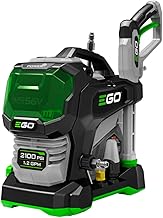
EGO Power+ HPW2100
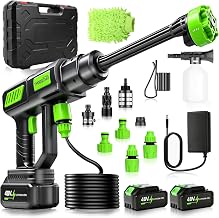
The HPW2100 is the battery option that actually feels like a detailing tool rather than a toy. It delivers a consistent 2,100 PSI without a cord in sight, and the spray pattern stays tight enough for targeted rinsing around trim and mirrors. The catch is the price of admission — batteries and charger are sold separately, so factor that into the total before committing.
Budget Electric Washer with Foam Cannon
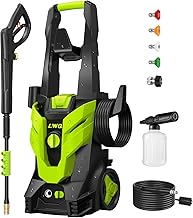
This bright green machine is the value pick for weekend detailers. The included foam cannon mates to the wand properly, and the four quick-connect nozzles cover the basics, but flow rate drops noticeably as the tank runs low and the plastic fittings feel fragile. Fine for a first machine, not for weekly use.
EGO Power+ HPW3204-2
The HPW3204-2 is the closest thing to a professional rig in this roundup. At 3,200 PSI you have to be deliberate with nozzle distance — it will strip wax if you’re careless — but the pump runs quieter and cooler than anything else here, and the heavier wand takes the vibration out of long sessions. This is the one we reach for when a car arrives caked in trail dust.
Frequently Asked Questions
Do I really need 2,500+ PSI to wash a car?
No. Paint-safe detailing typically wants 1,800–2,300 PSI at the nozzle. Higher pressure just means you hold the wand farther away and lose control. What matters far more is consistent flow and a stable, even spray pattern.
Can I use a pressure washer to rinse off foam?
Yes, and it’s the best way to do it. A pressure rinse with a wide fan nozzle removes foam and suspended dirt without touching the paint. Keep the nozzle moving and hold it at a slight angle so you don’t drive particles across the surface.
Battery or corded for auto detailing?
Corded, unless your wash spot has no outlet nearby. Battery units are convenient, but flow and pressure taper as the pack drains — exactly when you’re doing the most intricate work. If you go battery, buy a second pack and swap before the foam stage.
What’s the biggest upgrade after the washer itself?
A quality foam cannon and a short, flexible pressure hose. The wands and hoses included with most budget units are the weakest link, and swapping them transforms the feel of the machine more than any other single change.
Final Thoughts
For most detailers, the Sun Joe SPX3000 is the balanced pick — enough pressure for paint-safe work at a price that makes sense. If you need cordless freedom, the EGO Power+ HPW2100 is the best of the battery class, and for heavy or professional use, the EGO HPW3204-2 is the unit we trust with our own shop cars.