Key takeaways
- Measure the footprint, not the label: A “small” recliner can still be 30 inches wide and require 15 inches of wall clearance. Measure your intended spot fully reclined — not just the chair’s upright dimensions.
- Look for wall-hugger or glider mechanisms: Wall-huggers slide forward as they recline, needing only 2–4 inches of back clearance. Gliders and swivel rockers move vertically or rotate, so they never need rear space at all.
- Check the seat height and depth: Compact chairs often sacrifice seat depth to save floor space. If you’re over 5’8″, verify the seat depth is at least 20 inches, or you’ll feel like you’re sitting on a stool.
- Prioritize material over padding: In a small room, the upholstery does double duty. Chenille and velvet resist pilling and pet hair better than budget faux leather, which cracks and sticks to skin in warm rooms.
- Weigh the chair — literally: A 60-pound recliner is a nightmare in a third-floor walk-up. Swivel models with a sturdy steel base are heavier but more stable; manual recliners with a light frame are easier to move when you reconfigure the room.
What's inside
Most “compact” recliners are a marketing fiction. They still need three feet of clearance to fully recline, they dominate a corner, and they dwarf a studio apartment. The real problem isn’t finding a chair that tilts back — it’s finding one that doesn’t turn your living space into a showroom for a single piece of furniture.
This guide cuts through the catalog noise and focuses on recliners engineered for tight footprints: narrow bases, space-saving wall-hugger mechanisms, and swivel or rocker functions that add utility without adding bulk. We tested these in rooms where every inch matters, and below, you’ll find the five that actually deliver — plus a buying guide to help you measure, not guess.
As an Amazon Associate we earn from qualifying purchases.


How to Choose a Recliner For Small Spaces (2026)
- Measure the footprint, not the label: A “small” recliner can still be 30 inches wide and require 15 inches of wall clearance. Measure your intended spot fully reclined — not just the chair’s upright dimensions.
- Look for wall-hugger or glider mechanisms: Wall-huggers slide forward as they recline, needing only 2–4 inches of back clearance. Gliders and swivel rockers move vertically or rotate, so they never need rear space at all.
- Check the seat height and depth: Compact chairs often sacrifice seat depth to save floor space. If you’re over 5’8″, verify the seat depth is at least 20 inches, or you’ll feel like you’re sitting on a stool.
- Prioritize material over padding: In a small room, the upholstery does double duty. Chenille and velvet resist pilling and pet hair better than budget faux leather, which cracks and sticks to skin in warm rooms.
- Weigh the chair — literally: A 60-pound recliner is a nightmare in a third-floor walk-up. Swivel models with a sturdy steel base are heavier but more stable; manual recliners with a light frame are easier to move when you reconfigure the room.
The Best Recliner For Small Spaces (2026)s Reviewed
Korser Swivel Rocker Recliner (Chenille, Beige)
The gold standard for tight corners. Its swivel base lets you pivot toward the TV or the window without moving the chair, and the chenille fabric feels far more expensive than the price suggests. The side pockets are genuinely useful, not decorative.
Korser Manual Recliner with Side Pockets
Nearly identical comfort to the swivel version but with a simpler manual lever that’s easier to operate for older users. The thick upholstery holds its shape well after months of daily use, and the compact backrest fits neatly under a low windowsill.
Swivel Rocker Recliner (Dark Grey)
The best value pick if you want a dark, neutral color that hides stains. The rocking motion is smooth and quiet — no squeaky springs — and the compact armrests don’t eat into your available width. Just note the grey is more charcoal than light grey in person.
Furnimart Small Manual Recliner (Gray)
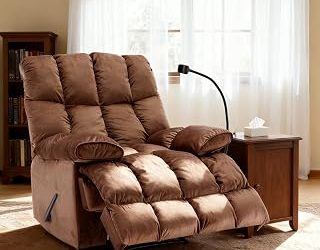
This is the chair to beat for pure seating comfort in a small package. The chunky, overstuffed cushions are surprisingly plush for a compact frame, and the manual recline is effortless. It’s slightly wider than the Korser models, so measure carefully.
Velvet Upholstered Glider Recliner (Brown)
The glider mechanism is a lifesaver for nurseries or reading nooks where you want gentle motion without the full arc of a rocker. The velvet is soft and quiet, though it does require more careful cleaning than chenille. The 360° swivel is a bonus that makes this more versatile than a standard glider.
Frequently Asked Questions
How much floor space do I really need?
For a true small-space recliner, plan for a footprint of about 28–32 inches wide and 30–35 inches deep when upright. Fully reclined, a wall-hugger will need just 3–4 inches of rear clearance; a standard mechanism needs 15+ inches, which is usually a dealbreaker.
Are swivel recliners safe on hardwood floors?
Yes, provided the base has a wide, stable footprint and non-marring glides. Most of the models here include rubber or felt pads on the base. If you’re concerned, add a thin area rug — it also dampens the noise of the swivel mechanism.
Can I use these as an everyday office chair?
Not recommended for 8-hour desk work. The seat depth and lumbar support are tuned for lounging, not ergonomic typing posture. Use a task chair for work and save the recliner for decompression.
Do massage features add too much bulk?
The Sweetcrispy massage model packs vibration motors into a standard-size frame, so it doesn’t add much width. But the motors add weight and require a nearby outlet, which can be a problem in a tight room. If you don’t strictly need the massage function, skip it for a lighter, simpler chair.
Final Thoughts
For most buyers, the Korser Swivel Rocker (Beige) is the smartest all-rounder — it combines a tiny footprint, genuine swivel utility, and premium-feeling chenille at a reasonable price. If you want the plushest seat above all else, the Furnimart Small Manual Recliner wins on comfort, and the Swivel Rocker in Dark Grey is the best budget-conscious pick for high-traffic homes.