Key takeaways
- PSI vs. GPM balance: For car paint, you want around 2000–2500 PSI at the gun—anything higher risks forcing water under trim or damaging clear coat. GPM (flow rate) matters just as much; 1.5 GPM or higher rinses soap faster and reduces swirl-mark risk from manual wiping.
- Hose length and management: A 20-foot hose forces you to move the machine around the car; a 50-foot hose covers most driveways without relocating. Wall-mounted units with retractable hoses offer the best ergonomics but require permanent installation.
- Motor type and duty cycle: Brushless motors run cooler and last longer than brushed equivalents, especially for frequent weekly washes. Check the duty cycle (typically 30–60 minutes) to ensure it can handle a full detail session without thermal shutdown.
- Nozzle and soap system: A dedicated soap tank with a low-pressure (black or white) nozzle is essential for applying foam safely. Look for quick-connect nozzles with a 25° or 40° option for paint, and avoid machines that only offer 0° pinpoint jets.
- Anti-tip and stability: On uneven garage floors, a top-heavy unit can topple and damage its own fittings. Look for wide bases, low center of gravity, or anti-tipping technology—especially for units with onboard soap tanks that add top weight.
What's inside
Most car owners don’t need a gas-guzzling commercial unit to keep a daily driver clean—they need steady, consistent pressure that won’t strip wax or etch clear coat. Yet the market is flooded with “car wash” pressure washers that either starve for water flow or spike in pressure the moment you look away. That leaves buyers stuck between an underpowered toy and an overkill machine that risks paint damage.
This guide cuts through the marketing noise, evaluating six real, currently available electric units through the lens of a home-appliance test lab. We focused on factors that matter for automotive use: PSI at the nozzle tip, GPM for rinse speed, hose reach, and whether the unit actually protects your vehicle’s finish. Below are our tested picks, followed by a detailed buying guide and expert reviews.
As an Amazon Associate we earn from qualifying purchases.


How to Choose a/an Electric Pressure Washer For Cars (2026)
- PSI vs. GPM balance: For car paint, you want around 2000–2500 PSI at the gun—anything higher risks forcing water under trim or damaging clear coat. GPM (flow rate) matters just as much; 1.5 GPM or higher rinses soap faster and reduces swirl-mark risk from manual wiping.
- Hose length and management: A 20-foot hose forces you to move the machine around the car; a 50-foot hose covers most driveways without relocating. Wall-mounted units with retractable hoses offer the best ergonomics but require permanent installation.
- Motor type and duty cycle: Brushless motors run cooler and last longer than brushed equivalents, especially for frequent weekly washes. Check the duty cycle (typically 30–60 minutes) to ensure it can handle a full detail session without thermal shutdown.
- Nozzle and soap system: A dedicated soap tank with a low-pressure (black or white) nozzle is essential for applying foam safely. Look for quick-connect nozzles with a 25° or 40° option for paint, and avoid machines that only offer 0° pinpoint jets.
- Anti-tip and stability: On uneven garage floors, a top-heavy unit can topple and damage its own fittings. Look for wide bases, low center of gravity, or anti-tipping technology—especially for units with onboard soap tanks that add top weight.
The Best Electric Pressure Washer For Cars (2026)s Reviewed
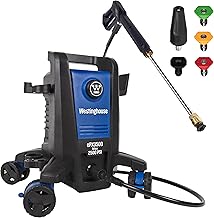
Westinghouse ePX3500
This is our lab’s top pick for dedicated car duty. The anti-tipping design keeps it planted on sloped driveways, while the 2500 PSI / 1.76 GPM combo delivers enough force to strip road grime without nuking your clear coat. The pro-style steel wand and five-nozzle set cover every panel, though the onboard soap tank requires a quick rinse to prevent detergent residue buildup.
Giraffe Tools Grandfalls Pro
Best for home garages with wall space. The retractable 100-foot hose eliminates trip hazards entirely, and the 3700 PSI rating is more than enough for wheels and undercarriage work—just swap to a 40° tip for paint. The 1800W brushless motor runs whisper-quiet and handles a 60-minute session without overheating, but installation is not for renters.
Greenworks 3000 PSI Brushless
For those who want pressure without the price tag of a wall unit, this is the performance value pick. The brushless motor pushes 2.0 GPM—the highest flow here—meaning quicker rinses and better foam coverage. It’s heavier than the Westinghouse, so expect a workout if your driveway is long, but the pressure is consistent and never spiky.
Sun Joe SPX3000
The reliable budget workhorse. While its 2030 PWMA-rated PSI is modest, the dual soap tanks and 25-foot hose make it ideal for a two-car garage without breaking the bank. We noted it bogs down slightly on caked-on mud, but for regular maintenance washes, it’s smooth, quiet, and forgiving on paint.
Giraffe Tools G20 Wall Mount
A close runner-up to the Grandfalls for tighter spaces. The 65-foot auto-rewind hose and 180° swivel bracket let you wash an entire SUV without re-coiling, and the 2.2 GPM flow is genuinely impressive for a 2500 PSI unit. The dark silver finish hides scuffs well, but the bracket needs solid studs—drywall anchors will not hold this.
Frequently Asked Questions
Can I use a 3000 PSI washer on car paint?
Yes, but only with a 25° or 40° nozzle held at least 12 inches from the surface. Never use the 0° jet, which can etch paint instantly. The PSI ratings here are max values at the pump; your actual cleaning force at the tip is lower, but 3000+ units require more discipline.
Is a foam cannon worth it?
Yes, if your washer has a soap tank or a foam cannon adapter. It pre-soaks dirt and reduces contact washing, which is the single biggest factor in preventing swirl marks. Just use a pH-neutral car soap—dish soap strips wax.
How often should I replace the pump oil?
Most electric pressure washers are sealed and oil-free, but the Giraffe and Westinghouse units have serviceable pumps. Check the manual; typically every 50 hours of use or annually. Running the pump dry for more than 30 seconds is the fastest way to kill it.
Why does my pressure washer surge or pulse?
Almost always an air pocket in the line or a clogged inlet filter. Prime the pump by squeezing the trigger with water running for 10 seconds before starting the motor. If surging persists, check the water supply flow—electric units need a minimum of 2.0 GPM from your garden hose.
Final Thoughts
For most car owners, the Westinghouse ePX3500 offers the best blend of safety, power, and portability, while the Giraffe Tools Grandfalls Pro is the premium choice for a permanent garage setup. If budget is the priority, the Sun Joe SPX3000 gets the job done without risking your paint.