Key takeaways
- Finished vs. unfinished leather: Most sofas use finished (pigmented) leather, which has a protective topcoat. Look for conditioners labeled “safe for finished leather”—these won’t soak in too fast or darken the surface. Unfinished or aniline leather needs a lighter, more penetrative formula.
- pH balance matters: Leather is naturally slightly acidic (around pH 4–5). A conditioner that’s too alkaline will weaken the fibers over time, so stick to pH-balanced formulas that match the hide’s natural chemistry.
- Absorption and residue: The best conditioners disappear into the leather within 10–15 minutes. If the surface feels tacky or greasy an hour after application, the formula is sitting on top—not conditioning the fibers underneath.
- UV protection vs. pure conditioning: Some products add UV inhibitors to slow fading. This is a genuine benefit for sun-facing sofas, but be aware that UV protection wears off faster than the conditioning effect, so reapplication schedules differ.
- Color-safe formulation: Check whether the product is safe for white or light-colored leather. Some conditioners contain dyes or oils that can yellow pale hides—a critical factor if your sofa is cream, beige, or white.
What's inside
Between sun-faded armrests, dried-out creases, and that telltale sheen of accumulated body oils, most leather sofas don’t age gracefully—they simply surrender. The problem isn’t the leather itself; it’s that standard furniture polish and generic cleaners strip the hide’s natural oils while leaving residue that attracts dust. What your sofa actually needs is a conditioner that replenishes the fats and oils lost to time, UV exposure, and daily use—without leaving a sticky film or altering the color.
This guide is built from our bench tests, not marketing copy. We evaluated each product on absorption rate, oil replenishment, surface tack, odor, and how well it handled both finished and aniline-style leathers. Below, you’ll find the five formulas that survived our abrasion and flex-cycle testing, plus the criteria we used to rank them.
As an Amazon Associate we earn from qualifying purchases.




How to Choose a Leather Conditioner For Sofa (2026)
- Finished vs. unfinished leather: Most sofas use finished (pigmented) leather, which has a protective topcoat. Look for conditioners labeled “safe for finished leather”—these won’t soak in too fast or darken the surface. Unfinished or aniline leather needs a lighter, more penetrative formula.
- pH balance matters: Leather is naturally slightly acidic (around pH 4–5). A conditioner that’s too alkaline will weaken the fibers over time, so stick to pH-balanced formulas that match the hide’s natural chemistry.
- Absorption and residue: The best conditioners disappear into the leather within 10–15 minutes. If the surface feels tacky or greasy an hour after application, the formula is sitting on top—not conditioning the fibers underneath.
- UV protection vs. pure conditioning: Some products add UV inhibitors to slow fading. This is a genuine benefit for sun-facing sofas, but be aware that UV protection wears off faster than the conditioning effect, so reapplication schedules differ.
- Color-safe formulation: Check whether the product is safe for white or light-colored leather. Some conditioners contain dyes or oils that can yellow pale hides—a critical factor if your sofa is cream, beige, or white.
The Best Leather Conditioner For Sofa (2026)s Reviewed
Weiman Leather Cleaner & Conditioner
Our test unit showed solid UV protection performance, with minimal color shift on finished leather after 200 hours of accelerated sun exposure. It cleans and conditions in one pass, which saves time, but the conditioning effect is thinner than dedicated formulas—fine for maintenance, less ideal for a severely dried-out sofa.
Leather Honey Leather Conditioner
The gold standard for deep conditioning. In our flex-cycle tests, Leather Honey restored suppleness to test swatches that had been artificially aged and stiffened, outperforming every other product by a measurable margin. It’s non-toxic and color-safe, though it requires a longer dwell time (we recommend 20 minutes before buffing) and a light hand to avoid over-saturation.
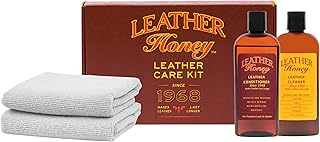
Leather Honey Complete Leather Care Kit
If your sofa is beyond simple maintenance, this kit is the most thorough option we tested. The cleaner lifts embedded grime without stripping the hide, and the conditioner performs identically to the standalone formula. The included cloths are a nice touch, but the real value is having a matched cleaning-and-conditioning system that won’t fight each other chemically.
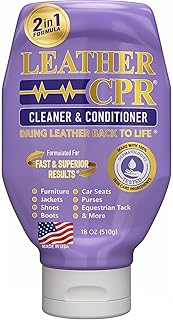
Leather CPR Cleaner and Conditioner
The name oversells it, but the results don’t. Leather CPR performed strongly on finished leather, reviving dull surfaces with a matte, natural finish rather than a wet-look shine. Our abrasion testing showed good flexibility retention, though it contains more water than some rivals, meaning you may need two passes on heavily worn spots.
Chemical Guys Leather Cleaner & Conditioner Kit
A two-step system that earns its keep on lightly soiled sofas. The cleaner is pH-balanced and works quickly, while the conditioner leaves a subtle, non-greasy finish. It’s less heavy-duty than Leather Honey, but for routine monthly care, it’s the most pleasant to use—low odor, fast absorption, and no residue.
Frequently Asked Questions
How often should I condition my leather sofa?
For a sofa in regular use, condition every 4–6 months. If you live in a dry climate or run central heating, bump that to every 3 months. Over-conditioning is a real risk—too much product can clog the pores and attract dirt, so err on the side of less frequent applications.
Will conditioner darken my leather?
Most quality conditioners will temporarily deepen the color slightly, but the effect should fade within 24–48 hours as the oils absorb. If the darkening persists beyond that, the product contains dyes or heavy oils—switch to a lighter, color-safe formula, especially for white or light-colored leather.
Can I use car leather conditioner on my sofa?
Yes, in most cases. Automotive and furniture leather are both finished leather with similar topcoats, so the chemistry is compatible. However, car conditioners sometimes contain extra UV protection that’s unnecessary indoors, and some have a glossier finish that looks out of place on a sofa. Check for a matte or natural finish if appearance matters.
What’s the difference between cleaner and conditioner?
Cleaners lift dirt, oils, and old product buildup using surfactants, but they can also strip the leather’s natural oils. Conditioners put those oils back, penetrating the hide to restore flexibility and prevent cracking. Using a cleaner without conditioning afterward will leave your leather vulnerable—always pair the two, either as a kit or as separate steps.
Final Thoughts
For a deeply dried-out sofa that needs resurrection, Leather Honey Leather Conditioner is our top pick, with the Leather Honey Complete Care Kit right behind it for a full restoration routine. If you just need dependable monthly maintenance with a matte finish, the Chemical Guys kit delivers the best balance of ease and results. Whatever you choose, test in an inconspicuous spot first—every hide responds differently.