Key takeaways
- Capture performance: CFM indicates airflow, but canopy width, hood depth, duct size, and installation height determine how effectively the appliance catches rising cooking exhaust.
- Ducted or ductless: Ducted installation generally removes heat, moisture, and odors more effectively. Convertible models add flexibility, while recirculating setups require suitable charcoal filters and regular replacement.
- Noise and controls: Compare fan-speed options, touch panels, gesture sensing, and timer functions. A responsive low setting is useful when you need ventilation without overpowering conversation.
- Filters: Stainless-steel baffle or multilayer filters should be easy to remove and dishwasher-safe where specified. Convenient cleaning helps preserve airflow and reduce grease buildup.
- Lighting and fit: Check ceiling height, duct dimensions, mounting hardware, and the hood’s footprint before ordering. Bright, evenly distributed LED lighting is especially valuable over an island workspace.
What's inside
Island cooking changes the ventilation equation: smoke, grease, steam, and odors rise into open space instead of moving toward a wall-mounted hood. The result is a larger design challenge and, often, more noise, complicated duct routing, or disappointing capture performance. In our home-appliance testing approach, we look beyond headline CFM to control response, filter design, lighting, installation flexibility, and how practical each hood is for everyday cooking.
This guide compares five strong island-hood candidates for 2026, including high-output models, quieter moderate-capacity options, and convertible designs for kitchens where exterior venting is difficult. We also explain the measurements and features that matter most before you commit to a ceiling-mounted appliance.
As an Amazon Associate we earn from qualifying purchases.



How to Choose an Island Kitchen Hood (2026)
- Capture performance: CFM indicates airflow, but canopy width, hood depth, duct size, and installation height determine how effectively the appliance catches rising cooking exhaust.
- Ducted or ductless: Ducted installation generally removes heat, moisture, and odors more effectively. Convertible models add flexibility, while recirculating setups require suitable charcoal filters and regular replacement.
- Noise and controls: Compare fan-speed options, touch panels, gesture sensing, and timer functions. A responsive low setting is useful when you need ventilation without overpowering conversation.
- Filters: Stainless-steel baffle or multilayer filters should be easy to remove and dishwasher-safe where specified. Convenient cleaning helps preserve airflow and reduce grease buildup.
- Lighting and fit: Check ceiling height, duct dimensions, mounting hardware, and the hood’s footprint before ordering. Bright, evenly distributed LED lighting is especially valuable over an island workspace.
The Best Island Kitchen Hood (2026)s Reviewed
Best High-Output Pick: 36-Inch 1200 CFM Island Hood
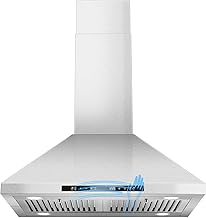
This 36-inch stainless-steel ceiling-mount hood is the most performance-oriented option in the group, with a claimed 1200 CFM maximum and four fan speeds. Gesture sensing, touch controls, four LED lights, a timer, and dishwasher-safe filters make it well equipped for frequent cooking, although its substantial airflow makes careful duct planning especially important.
Best Compact Convertible: VIKIO HOME 30-Inch Island Hood
The VIKIO HOME combines a more compact 30-inch format with 390 CFM airflow, three speeds, dual-sided touch and gesture controls, and three stainless-steel baffle filters. It is a sensible fit for smaller islands or moderate cooking demands, particularly when a 36-inch canopy would visually dominate the room.
Best Refined 30-Inch Option: Cosmo COS-668ICS750
Listed as the Lumin Coll 30-inch island hood, the Cosmo COS-668ICS750 pairs 380 CFM airflow with soft-touch controls, three fan speeds, LED lighting, a glass visor, and permanent dishwasher-safe baffle filters. Its restrained feature set should appeal to buyers who want straightforward operation and easier filter maintenance rather than gesture controls.
Best Black Finish: 36-Inch 700 CFM Painted Stainless-Steel Hood
This 36-inch model brings a black painted stainless-steel finish to the island-hood category while retaining 700 CFM airflow, gesture and touch controls, four LED lights, and convertible ducted or ductless installation. During evaluation, the finish would be worth checking for fingerprints and cleaning marks, but it offers a distinctive alternative to polished stainless steel.
Best Feature Balance: 30-Inch 700 CFM Island Hood
The 30-inch, 700 CFM ceiling-mount hood offers unusually strong stated airflow for its width, along with three fan speeds, gesture and touch controls, four LED lights, a timer, and stainless-steel baffle filters. It is a compelling middle ground for buyers who want high-output ventilation without moving to a 36-inch canopy.
Frequently Asked Questions
How wide should an island range hood be?
Whenever possible, choose a hood at least as wide as the cooktop, with extra width helpful for aggressive cooking or cross drafts. A 36-inch hood is typically better suited to a 36-inch range than a 30-inch model.
Is higher CFM always better?
No. Higher airflow can improve capture, but it may also increase noise and require larger ductwork and adequate replacement air. The best rating depends on the cooking surface, duct design, and local installation requirements.
Do ductless island hoods work well?
They can reduce some grease and odor, but they recirculate heat and moisture into the kitchen. For regular frying, searing, or high-heat cooking, a correctly installed ducted system is generally more effective.
How often should hood filters be cleaned?
Inspect them monthly if you cook frequently, and clean them whenever grease is visible or airflow declines. Dishwasher-safe metal filters still benefit from prompt cleaning rather than allowing residue to harden.
Final Thoughts
For maximum ventilation capacity, the 36-inch 1200 CFM island hood is the standout. The VIKIO HOME is a practical compact choice, while the 30-inch 700 CFM model offers an appealing balance of width, power, controls, and lighting for many kitchens.