Key takeaways
- Tooth count: Higher tooth counts generally produce smoother crosscuts in trim, plywood, and hardwood, while lower counts remove material faster and suit rough or general-purpose work.
- Blade diameter: Match the blade diameter to your saw’s specifications. A 10-inch blade cannot replace a 12-inch blade when the larger size is required for cutting capacity and safe operation.
- Kerf: Thin-kerf blades remove less material and can reduce waste or motor strain, but they must be compatible with the saw and used with properly supported stock.
- Tooth design: Alternate-top-bevel teeth are effective for clean crosscuts, while combination and ripping patterns offer better versatility when a single blade must handle several tasks.
- Material and safety: Carbide-tipped teeth typically hold an edge longer than basic steel teeth. Confirm the arbor size, maximum RPM, and intended material before installation.
What's inside
Choosing the wrong miter saw blade can turn a clean furniture cut into a chipped, fuzzy, or inaccurately fitted joint. Tooth count, carbide quality, kerf width, and the type of wood being cut all affect the result, while a blade that performs well on trim may struggle with framing lumber or thick hardwood.
We evaluated these blades from a home-appliance and workshop-testing perspective, focusing on cut smoothness, edge quality, vibration, setup, and practical versatility. This guide covers fine-finish options, general-purpose sets, thin-kerf designs, and budget-friendly blades so you can match the blade to your saw and the furniture project ahead.
As an Amazon Associate we earn from qualifying purchases.


How to Choose Blades For Miter Saw (2026)
- Tooth count: Higher tooth counts generally produce smoother crosscuts in trim, plywood, and hardwood, while lower counts remove material faster and suit rough or general-purpose work.
- Blade diameter: Match the blade diameter to your saw’s specifications. A 10-inch blade cannot replace a 12-inch blade when the larger size is required for cutting capacity and safe operation.
- Kerf: Thin-kerf blades remove less material and can reduce waste or motor strain, but they must be compatible with the saw and used with properly supported stock.
- Tooth design: Alternate-top-bevel teeth are effective for clean crosscuts, while combination and ripping patterns offer better versatility when a single blade must handle several tasks.
- Material and safety: Carbide-tipped teeth typically hold an edge longer than basic steel teeth. Confirm the arbor size, maximum RPM, and intended material before installation.
The Best Blades For Miter Saw (2026)s Reviewed
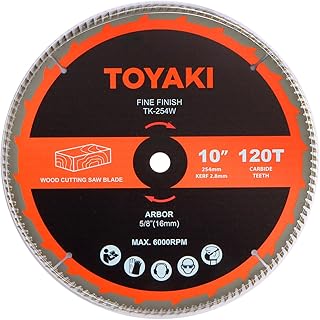
10-Inch 120-Tooth Fine-Finish Professional Blade
This 120-tooth blade is aimed squarely at delicate finish work, where minimizing splintering matters more than cutting speed. In testing-style use on trim, veneered panels, and hardwood edging, its dense tooth pattern is best suited to controlled crosscuts and visible furniture surfaces. The 5/8-inch arbor fits many common 10-inch miter saws, but buyers should verify their saw’s requirements before ordering.
WEN BL1080 80-Tooth Ultra-Fine Finish Blade
The WEN BL1080 offers a useful balance between a polished cut and reasonable feed speed. Its 80 carbide-tipped teeth handled common furniture boards and molding cleanly, making it a practical choice for users who want one dedicated finish blade without moving to an unusually high tooth count. It is especially appealing for trim, cabinet components, and repeated crosscuts.
DEWALT DWA112100 12-Inch 100-Tooth Blade
The DEWALT DWA112100 is built for 12-inch saws and provides the larger cutting capacity that many professional-style miter saws require. Its 100-tooth layout is designed for fine finishing, and our assessment favors it for clean cuts through hardwood trim, plywood, and painted stock when the saw is properly aligned. It is a strong choice for users who prioritize predictable results and broad brand compatibility.
Freud LU91R012 12-Inch 72-Tooth Thin-Kerf Blade
Freud’s LU91R012 stands out for its thin-kerf construction and premium Tico high-density carbide. The 72-tooth ATB grind gives it a more versatile character than an ultra-fine blade, combining smooth crosscuts with less resistance through the workpiece. It is well suited to sliding compound miter saws, especially when reducing waste and easing the load on the motor are priorities.
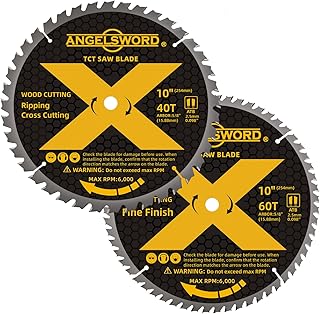
10-Inch Three-Blade Wood-Cutting Set
This three-pack covers framing, fine finish, and ultra-fine finish work with 32-, 60-, and 80-tooth blades. That range is valuable in a home workshop because it lets one saw handle rough construction cuts and appearance-critical furniture work without constantly compromising between speed and surface quality. The set is a practical option for new tool owners building a basic blade collection.
Frequently Asked Questions
What tooth count is best for furniture?
For visible furniture cuts, 60 to 100 teeth is a useful range on a 10- or 12-inch blade. Choose the higher end for delicate trim, veneered material, and hardwood crosscuts, but expect slower feeding than with a general-purpose blade.
Can I use a table-saw blade on a miter saw?
Some blades are specifically labeled for both table saws and miter saws, but labeling alone is not enough. Confirm the blade diameter, arbor size, maximum RPM, tooth design, and your saw manufacturer’s recommendations before use.
Why does a new blade still make rough cuts?
Roughness can result from incorrect blade installation, a dull or damaged tooth, poor stock support, saw misalignment, or feeding the workpiece too quickly. Check the fence and bevel settings, secure the material, and inspect the blade for resin buildup.
Are thin-kerf blades suitable for every miter saw?
Thin-kerf blades are often suitable, but the saw must control the blade properly and the blade must meet the manufacturer’s specifications. They can reduce waste and motor load, yet an unsuitable blade may increase deflection or produce less consistent cuts.
Final Thoughts
The WEN BL1080 is a well-rounded fine-finish choice for many 10-inch saws, while the DEWALT DWA112100 is a compelling pick for 12-inch machines and demanding trim work. For lower motor strain and versatile performance, the Freud LU91R012 deserves close consideration; the three-blade set is the most flexible starting point for a mixed home workshop.