Key takeaways
- Airflow: Compare CFM at 90 PSI rather than horsepower alone. Higher delivered airflow matters for sanders, spray guns, and other continuous-use tools.
- Power source: Electric models are convenient for enclosed workshops, but many require a dedicated circuit. Gas compressors suit outdoor or remote work where reliable electricity is unavailable.
- Pump design: Oil-lubricated cast-iron pumps generally favor durability and cooler operation, while maintenance-free designs may be simpler for occasional users.
- Portability: A 30-gallon tank is not lightweight. Look for balanced wheels, a sturdy handle, and a footprint that fits your garage or work area.
- Application: Tank capacity supports short bursts, but it does not determine sustained performance by itself. Match the compressor’s CFM and duty cycle to the tools you plan to run.
What's inside
Choosing a 30-gallon air compressor is less straightforward than comparing tank size. In our home-appliance testing lab, we see buyers weigh motor power, noise, recovery speed, portability, and electrical requirements—then discover that a compressor suited to inflating tires may struggle with a spray gun or impact wrench.
This guide focuses on practical performance for workshops, garages, furniture projects, and serious DIY maintenance. We compare the compressor types represented here, including electric and gas models, while paying close attention to airflow at working pressure, pump design, duty demands, and the setup each machine requires.
As an Amazon Associate we earn from qualifying purchases.


How to Choose a 30-Gallon Air Compressor (2026)
- Airflow: Compare CFM at 90 PSI rather than horsepower alone. Higher delivered airflow matters for sanders, spray guns, and other continuous-use tools.
- Power source: Electric models are convenient for enclosed workshops, but many require a dedicated circuit. Gas compressors suit outdoor or remote work where reliable electricity is unavailable.
- Pump design: Oil-lubricated cast-iron pumps generally favor durability and cooler operation, while maintenance-free designs may be simpler for occasional users.
- Portability: A 30-gallon tank is not lightweight. Look for balanced wheels, a sturdy handle, and a footprint that fits your garage or work area.
- Application: Tank capacity supports short bursts, but it does not determine sustained performance by itself. Match the compressor’s CFM and duty cycle to the tools you plan to run.
The Best 30-Gallon Air Compressor (2026)s Reviewed
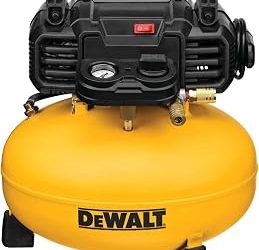
DEWALT 30-Gallon Portable Electric Compressor
This vertical DEWALT is a practical all-around choice for a home workshop, with a space-saving layout and a maximum pressure rating of 175 PSI. Its oil-lubricated pump is better suited to repeated tool use than many compact consumer compressors, although buyers should confirm that their electrical circuit can support it.
Campbell Hausfeld VT6104
The Campbell Hausfeld VT6104 is built around a heavy-duty, two-cylinder single-stage pump and delivers a stated 10.2 CFM at 90 PSI. Its 230-volt requirement makes it less plug-and-play, but for a stationary garage installation it offers a credible balance of capacity, serviceability, and working airflow.
VEVOR 30-Gallon 2 HP Compressor
VEVOR’s 120-volt model is aimed at accessible workshop use, with wheels, an oil-lubricated pump, and a listed 5.3 CFM at 90 PSI. It is a sensible fit for tire inflation, brad or framing nailers, and intermittent automotive work, but its airflow is more limited for demanding spray finishing or pneumatic sanding.
Albott 13HP Gas 30-Gallon Compressor
The Albott combines a 420cc Loncin engine with a three-cylinder cast-iron pump and a claimed maximum pressure of 180 PSI. Its gas-powered format is useful for construction areas, outdoor repairs, and locations without dependable electrical service, though engine noise, ventilation, fuel storage, and routine maintenance need to be part of the buying decision.
VEVOR 15HP Gas 30-Gallon Compressor
This horizontal VEVOR is designed for heavier outdoor and workshop demands, with a gas-driven piston pump and a listed 33 CFM at 115 PSI. That high airflow rating makes it the most compelling option here for larger pneumatic tools, but its size, noise, fuel requirements, and installation demands are excessive for light household tasks.
Frequently Asked Questions
Is a 30-gallon air compressor large enough for furniture projects?
Usually, yes. A 30-gallon tank provides useful reserve capacity for nail guns, upholstery staplers, blow guns, and short spray-painting sessions. For continuous spraying or pneumatic sanding, prioritize CFM at 90 PSI and recovery performance over tank size alone.
Should I choose an electric or gas compressor?
Electric compressors are generally the better choice for an enclosed home workshop because they produce no exhaust and are easier to start and maintain. Gas models make more sense outdoors, on construction sites, or anywhere a suitable electrical supply is unavailable.
Does a higher PSI rating mean a better compressor?
Not necessarily. Maximum PSI indicates how much pressure the tank can hold, but tool performance depends heavily on delivered CFM at the pressure your tool requires. A compressor with modest PSI and strong airflow can outperform a higher-PSI model for demanding applications.
What maintenance does an oil-lubricated compressor need?
Check the oil level regularly, change the oil according to the manufacturer’s schedule, inspect the air filter, and drain moisture from the tank after use. Also examine belts, fittings, hoses, and safety valves periodically for wear or leaks.
Final Thoughts
The DEWALT 30-gallon vertical model is the strongest general-purpose pick for many home workshops, while the Campbell Hausfeld VT6104 is worth considering for a more permanent 230-volt installation. For remote or high-airflow work, the Albott and VEVOR gas compressors offer greater independence, provided their noise, fuel, and ventilation demands fit your workspace.