Key takeaways
- Measure the usable floor, then account for door swings, stairs, posts, cabinets, and expansion gaps at the walls.
- Confirm the product’s actual coverage. Tile packs may cover less than the nominal dimensions suggest once cuts and edge pieces are considered.
- Check the height at garage doors and interior thresholds. A raised tile floor can interfere with weather seals or make carts harder to push.
- Plan how you will cut the material. Tiles usually need a fine-tooth saw or sturdy utility knife; rolls may require a straightedge and several controlled passes.
What's inside
The best garage flooring is not simply the thickest or most attractive option. In a home-appliance testing lab, we judge it by how well it handles rolling weight, moisture, grit, oil, dropped tools, cleaning chemicals, and the small height changes that can make a dolly or appliance cart difficult to steer. The right choice should also suit the way you use the garage: parking, workshop projects, storage, laundry, or a combination of all four.
This guide compares the main garage-floor formats—interlocking tiles, solid rolls, and absorbent parking mats—so you can choose with fewer surprises. We’ll look at installation, drainage, traction, cleaning, load capacity, comfort, and long-term value, with practical recommendations for both finished and unfinished concrete floors.
As an Amazon Associate we earn from qualifying purchases.




Choose the flooring format first
Interlocking tiles are the most adaptable option. They install over reasonably flat concrete without adhesive, can be replaced individually, and create a more finished appearance than a loose mat. Plastic tiles are particularly useful when you want a raised surface beneath appliances, workbenches, or storage cabinets. The Garage Floor Tiles Interlocking Garage Flooring option uses 12-by-12-inch panels and is designed for substantial rolling loads, making it a sensible general-purpose choice.
Open-grid tiles are better where water, snow, or wet vehicle tires are common. The SnapLock RaceDeck Free-Flow 12-by-12-inch tiles allow liquid and debris to pass through rather than leaving puddles on the surface. In testing, that drainage advantage is most noticeable in winter, although the subfloor must be clean and reasonably level so the tiles do not rock.
Solid rolls and mats install faster and have fewer seams, which is helpful beneath a parked car or in a multipurpose garage. They are usually easier to sweep and mop, but they can trap moisture underneath if the concrete is damp. A roll also requires careful measuring and trimming around walls, posts, and thresholds.
Match the surface to your garage conditions
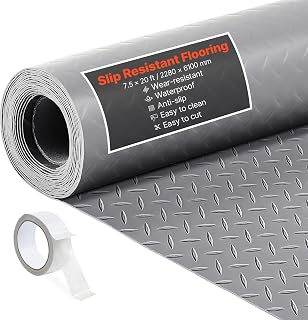
For dry garages and workshop areas, a solid PVC roll provides broad coverage and straightforward maintenance. The VEVOR Garage Floor Roll, a 7.5-by-20-foot diamond-plate PVC mat, is a practical example for protecting a large section of floor from stains and everyday abrasion. Its textured surface can improve footing, but any roll should be unrolled fully and allowed to relax before final positioning.
If drainage is the priority, choose raised or perforated tiles. Swisstrax Ribtrax PRO Garage Floor Tiles use commercial-grade polypropylene and a snap-together design, creating a durable, ventilated surface. Their larger 15.75-inch format means fewer joints, while the open structure helps air circulate beneath the floor. This is useful over concrete that occasionally feels damp, provided water has somewhere to go.
For parking protection rather than full-room coverage, an oversized mat can be the better buy. The Garage Mats Oversize Garage Floor Parking Mat measures 8.8 by 22 feet and is intended to catch oil and other vehicle residue. Absorbent mats are convenient, but they need periodic lifting and drying; otherwise, moisture and grit can remain against the concrete.
Check load ratings—and the type of load
A published load rating is helpful, but it is not the whole story. A parked vehicle distributes weight differently from a narrow caster on an appliance dolly. Small wheels concentrate force at a few contact points, especially when crossing a seam or threshold. Look for a product rated for rolling loads, not only static weight, and inspect the installation instructions for limits on jacks, stands, and casters.
Interlocking systems need a firm, stable base. Sweep away grit before installation and repair major cracks or high spots. If the floor flexes or tiles are installed over loose debris, even a high-capacity product may develop movement. For appliance storage, test the route from the garage door to the final position before covering the entire floor.
Prioritize traction and cleanup
Textured surfaces improve grip, but very deep patterns can make sweeping awkward and can catch the small wheels on utility carts. Diamond-plate rolls such as the 8×20 FT Garage Floor Mat with 2.8-millimeter thickness offer a compromise between cushioning, traction, and cleanability. The included tape can help control edge movement, though tape should be applied only to a clean, dry floor and should not block intended drainage.
Open-grid tiles shed liquid well but may require a vacuum, brush, or hose to remove grit from beneath the surface. Solid mats are easier to wipe after an oil spill, while absorbent parking mats are effective at containing routine drips. Whichever format you choose, verify that the manufacturer permits the cleaners you plan to use; harsh solvents can dull plastic or soften some rubber-backed materials.
Measure installation details before ordering
- Measure the usable floor, then account for door swings, stairs, posts, cabinets, and expansion gaps at the walls.
- Confirm the product’s actual coverage. Tile packs may cover less than the nominal dimensions suggest once cuts and edge pieces are considered.
- Check the height at garage doors and interior thresholds. A raised tile floor can interfere with weather seals or make carts harder to push.
- Plan how you will cut the material. Tiles usually need a fine-tooth saw or sturdy utility knife; rolls may require a straightedge and several controlled passes.
Tips
- Let rolls acclimate flat in the garage before trimming; cold PVC is less cooperative and more likely to retain waves.
- Use a moisture check on questionable concrete. Persistent dampness favors ventilated tiles or a properly specified moisture barrier.
- Place protective pads beneath jacks, sharp furniture feet, and metal shelving, even when the flooring has a high load rating.
- Keep spare interlocking tiles or a small offcut of roll material for future repairs and color matching.
Frequently Asked Questions
What is the best garage flooring for a parked car?
A solid parking mat is usually the simplest choice for catching oil, water, and road salt beneath one vehicle. Choose an oversized, waterproof design if the car regularly tracks in snow or rain, and lift the mat occasionally to inspect the concrete beneath it.
Are interlocking garage tiles difficult to install?
Most snap-together systems are manageable for a careful DIY installer. The main work is cleaning and leveling the concrete, planning the layout, and making accurate perimeter cuts. Avoid installing over loose grit, which can create rocking or premature wear.
Can garage flooring go over cracked concrete?
Minor, stable cracks are often acceptable, but significant heaving, loose concrete, or active moisture should be addressed first. Tiles can conceal cosmetic flaws, but they will not correct an uneven structural surface.
Which is easier to clean: tiles or a floor roll?
Solid rolls are generally quickest to sweep and mop because they have fewer joints. Tiles offer better access beneath the surface and superior drainage when open-grid, but debris can collect between or below them and may require more thorough cleaning.
Conclusion
The best garage flooring depends on the problem you are solving. Choose interlocking tiles for a durable, repairable workshop surface; open-grid tiles for wet conditions and drainage; a solid PVC roll for broad, low-seam coverage; or an oversized parking mat for targeted vehicle protection. Measure carefully, consider rolling loads rather than static weight alone, and select a surface you will realistically maintain. A well-prepared concrete floor and a properly fitted product matter just as much as the material itself.