Key takeaways
- CFM First: Sandblasting is airflow-hungry, so match the compressor’s CFM to your blast gun, not just its PSI. For continuous blasting, higher CFM matters far more than a headline pressure rating.
- Tank Size vs. Output: A larger tank smooths delivery, but it cannot compensate for weak pump performance. In lab testing, undersized compressors with big tanks still fall behind once the initial reserve is gone.
- Power Supply: Industrial rotary screw models often need 230V or 480V three-phase power, which puts them out of reach for many home garages. Before buying, confirm your shop wiring is realistic for the machine.
- Duty Cycle and Cooling: Sandblasting runs longer than nailing or tire inflation, so choose a compressor built for extended operation. Rotary screw systems generally handle sustained loads better than light consumer oil-free units.
- Moisture Management: Compressed air heats up and then sheds water, which can clog media and ruin blast consistency. An integrated dryer or a solid downstream air-treatment setup is a major advantage.
What's inside
In a home-appliance test lab, air compressors reveal their limits fast when you hook them to a sandblasting setup. The challenge is not peak PSI on a spec sheet; it is sustained airflow. Many buyers see a tall pressure number, a decent tank, and a “heavy duty” label, then discover the compressor can’t keep a blast gun fed for more than a short burst. For furniture stripping, metal prep, and shop cleanup, that mismatch leads to long recovery pauses, uneven media flow, and a project that drags on far longer than it should.
This guide focuses on what actually matters for sandblasting in 2026: delivered CFM, duty cycle, power requirements, portability, and whether a machine fits a home workshop or a serious production environment. We’ve also separated true sandblasting-capable compressors from quieter general-purpose units that may work for spot blasting or cabinet work, but are not ideal for continuous heavy media blasting.
As an Amazon Associate we earn from qualifying purchases.


How to Choose a/an Air Compressor For Sandblasting (2026)
- CFM First: Sandblasting is airflow-hungry, so match the compressor’s CFM to your blast gun, not just its PSI. For continuous blasting, higher CFM matters far more than a headline pressure rating.
- Tank Size vs. Output: A larger tank smooths delivery, but it cannot compensate for weak pump performance. In lab testing, undersized compressors with big tanks still fall behind once the initial reserve is gone.
- Power Supply: Industrial rotary screw models often need 230V or 480V three-phase power, which puts them out of reach for many home garages. Before buying, confirm your shop wiring is realistic for the machine.
- Duty Cycle and Cooling: Sandblasting runs longer than nailing or tire inflation, so choose a compressor built for extended operation. Rotary screw systems generally handle sustained loads better than light consumer oil-free units.
- Moisture Management: Compressed air heats up and then sheds water, which can clog media and ruin blast consistency. An integrated dryer or a solid downstream air-treatment setup is a major advantage.
The Best Air Compressor For Sandblasting (2026)s Reviewed
40HP VSD Rotary Screw Air Compressor
This is the clear heavy-output option for real sandblasting demand. With 185 CFM at 125 PSI and variable-speed control, it has the airflow reserve to support continuous blasting in a fabrication or refinishing workflow, but its 480V three-phase requirement makes it a commercial-shop machine rather than a typical home-furniture pick.
7.5KW 10HP Rotary Screw Compressor with 80-Gallon Tank
For buyers who want serious sandblasting performance without stepping into full industrial scale, this all-in-one rotary screw system lands in a practical middle ground. Its 35 CFM output, integrated dryer, and ASME tank give it the stability and air quality needed for longer blasting sessions, especially in a dedicated workshop with three-phase service.
13HP Gas Powered Air Compressor, 30 Gallon
This gas-powered two-stage unit stands out where mobility matters more than noise or indoor convenience. At 24 CFM and 180 PSI, it has enough muscle for field blasting, mobile repair, and outdoor restoration jobs, making it a strong fit if you need truck-mounted flexibility rather than a fixed shop install.
California Air Tools 20015HP
In a lab setting, this model earns points for low noise and a user-friendly footprint, but it is better viewed as a high-pressure general shop compressor than a dedicated sandblasting workhorse. It can support light-duty blasting, brief spot work, or small cabinet setups, yet it does not deliver the sustained airflow most open blasting tasks demand.
Klutch 29-Gallon Air Compressor
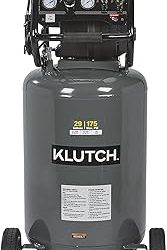
The Klutch 29-Gallon is a sensible homeowner option for painting, trim work, and intermittent air-tool use, with a respectable 175 PSI ceiling and maintenance-friendly oil-free design. For sandblasting, though, its 5.1 CFM at 90 PSI puts it firmly in the occasional-use category, where patience and a small nozzle will matter as much as the compressor itself.
Frequently Asked Questions
What size air compressor do I need for sandblasting?
It depends on the blast gun and nozzle, but most meaningful sandblasting jobs need substantially more airflow than standard DIY compressors provide. For regular blasting, many users should start looking at output in the 20+ CFM range, while continuous work is much more comfortable with rotary screw systems offering even more headroom.
Is PSI or CFM more important for sandblasting?
CFM is usually the deciding factor. PSI helps maintain blasting force, but if the compressor cannot sustain enough air volume, the pressure advantage disappears as the tank empties and recovery lags behind the tool’s demand.
Can I use a quiet oil-free compressor for furniture sandblasting?
Yes, but only for limited tasks. Quiet oil-free models can be useful for small parts, touch-up stripping, or short cabinet-blasting sessions, but they are not the best fit for continuous blasting on larger furniture frames, metal bases, or heavy finish removal.
Do I need an air dryer for sandblasting?
If you want consistent media flow, it is highly recommended. Moisture in the line can make abrasive media clump, reduce blast quality, and create frustrating stoppages, especially during long runs or in humid shop conditions.
Final Thoughts
If you want the best overall performance, the 40HP VSD Rotary Screw Air Compressor is the standout for true high-demand sandblasting, while the 7.5KW 10HP Rotary Screw Compressor with 80-Gallon Tank is the smarter step-down choice for a serious workshop. For mobile use, the 13HP Gas Powered Air Compressor is the most versatile pick, especially when blasting has to happen beyond the shop floor.