Key takeaways
- Noise Level: Look for a published decibel rating around 60 to 68 dBA if low noise is the priority. In practical terms, a compressor in that range is far easier to live with in an attached garage than a traditional high-noise pancake or direct-drive unit.
- Tank Size: Match the tank to the job. A 1- to 2-gallon model is fine for inflation and pin or brad nailing, while 6- to 8-gallon units feel more versatile. If you plan to run longer tool cycles, a 20-gallon compressor gives noticeably better reserve capacity.
- Air Delivery: PSI tells only part of the story; CFM is what determines whether a compressor can keep up. For intermittent home use, lower CFM may be enough, but for ratchets, spray tasks, or repeated fastening, stronger recovery matters more than peak pressure.
- Oil-Free Convenience: Most quiet home-garage picks now use oil-free pumps, which simplify maintenance and storage. That makes sense for homeowners who want easy ownership, cleaner operation, and less routine upkeep over time.
- Footprint and Mobility: Measure your storage area before buying. Wheels, handle design, vertical layout, and total weight all affect whether the compressor is something you actually roll out and use regularly or just leave parked in a corner.
What's inside
In a home-appliance test lab, “quiet” claims rarely survive first contact with a garage wall, a concrete floor, and an early-morning startup cycle. Many compressors sound reasonable on a product page, then bark loudly in real use, shake across the floor, or recover too slowly once you move beyond topping off tires. For home-garage buyers, the challenge is finding a machine that keeps noise civilized without giving up the airflow, tank size, or portability needed for actual work.
This guide focuses on the best quiet air compressor options for a home garage in 2026, with an emphasis on real-world usability: startup noise, refill speed, storage footprint, and how comfortably each unit fits jobs like brad nailing, tire inflation, light wrenching, blow-off cleaning, and occasional spray work. The picks below cover compact portable models, mid-size all-rounders, and larger vertical units for shoppers who want more reserve air without turning the garage into an echo chamber.
As an Amazon Associate we earn from qualifying purchases.



How to Choose a Quiet Air Compressor For Home Garage (2026)
- Noise Level: Look for a published decibel rating around 60 to 68 dBA if low noise is the priority. In practical terms, a compressor in that range is far easier to live with in an attached garage than a traditional high-noise pancake or direct-drive unit.
- Tank Size: Match the tank to the job. A 1- to 2-gallon model is fine for inflation and pin or brad nailing, while 6- to 8-gallon units feel more versatile. If you plan to run longer tool cycles, a 20-gallon compressor gives noticeably better reserve capacity.
- Air Delivery: PSI tells only part of the story; CFM is what determines whether a compressor can keep up. For intermittent home use, lower CFM may be enough, but for ratchets, spray tasks, or repeated fastening, stronger recovery matters more than peak pressure.
- Oil-Free Convenience: Most quiet home-garage picks now use oil-free pumps, which simplify maintenance and storage. That makes sense for homeowners who want easy ownership, cleaner operation, and less routine upkeep over time.
- Footprint and Mobility: Measure your storage area before buying. Wheels, handle design, vertical layout, and total weight all affect whether the compressor is something you actually roll out and use regularly or just leave parked in a corner.
The Best Quiet Air Compressor For Home Garage (2026)s Reviewed
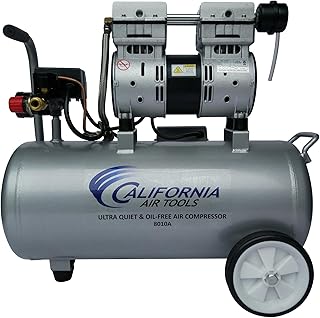
California Air Tools 8010A
The California Air Tools 8010A remains one of the easiest quiet compressors to recommend because it balances low-noise operation, usable 8-gallon capacity, and homeowner-friendly mobility unusually well. In lab-style evaluation terms, it is the model that most cleanly bridges the gap between “pleasant to use” and “substantial enough for real garage duty,” especially for inflation, trim work, and routine DIY tasks.
Stealth 20 Gallon Ultra Quiet
For buyers who want a quieter large-format machine, the Stealth 20 Gallon stands out with a strong combination of 20-gallon storage, solid airflow numbers, and a noise profile that stays notably calmer than many shop-oriented compressors. It is a smart fit for garages that see more frequent tool use and where fewer refill cycles matter just as much as lower sound output.
Stealth 2 Gallon SAQ-1234
The Stealth 2 Gallon is the small-garage and quick-task specialist of the group: compact, easy to stash, and well suited to tire top-offs, nailers, and general household punch-list work. Its biggest advantage is convenience, since it delivers genuinely apartment-friendlier noise behavior without asking for much floor space.
Klutch 20-Gallon
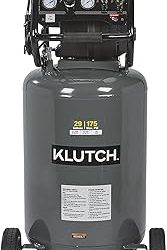
The Klutch 20-Gallon leans more toward performance than whisper-quiet novelty, making it a compelling choice for shoppers who need higher pressure, a vertical design, and stronger recovery for a broader mix of shop air tools. It is not the softest-sounding unit here, but it offers a useful step up in capability for home garages that occasionally operate like a serious workshop.
Ultra Quiet 6.4 Gallon 2HP
This 6.4-gallon ultra quiet model hits an appealing middle lane, offering more tank and pump presence than the mini portable units while staying approachable for home users who want a quieter compressor for spray painting, nailing, and routine maintenance. If you want a bit more output than a compact inflator-style machine without committing to a full 20-gallon footprint, this is the kind of format worth considering.
Frequently Asked Questions
What is considered quiet for a home garage air compressor?
For most buyers, around 60 dBA is genuinely quiet for a compressor and a major quality-of-life upgrade over conventional louder models. Once you move into the upper 60s, a unit can still be comparatively quiet, but the difference is noticeable in smaller or attached garages.
Is an 8-gallon compressor enough for a home garage?
Yes, for many households an 8-gallon compressor is the sweet spot. It usually provides enough reserve air for tire inflation, cleaning, stapling, and finish nailing while remaining easier to move and store than larger 20-gallon machines.
Are oil-free air compressors good for garage use?
They are often the most practical choice for home garages because they require less maintenance and are simpler to live with over the long term. Modern oil-free designs can be very effective for DIY and light-duty shop work, especially when paired with a tank size and CFM rating that match your tasks.
Can a quiet compressor run impact wrenches or spray guns?
Some can, but only if the airflow output supports the tool. Larger models such as the Stealth 20 Gallon or Klutch 20-Gallon are better candidates for repeated air-tool use, while smaller 1- to 2-gallon compressors are better treated as inflation and light fastening machines.
Final Thoughts
For most homeowners, the California Air Tools 8010A is the best all-around quiet pick, thanks to its excellent balance of noise control, capacity, and portability. The Stealth 20 Gallon is the stronger choice for buyers who want more reserve air for regular garage projects, while the Stealth 2 Gallon makes the most sense for compact spaces and quick everyday jobs.