Key takeaways
- Compatibility: Confirm the fence will clear your saw’s motor housing, rails, blade guard, and sliding travel. A system designed for a fixed saw may not suit a sliding compound model.
- Track length: Longer tracks support wider stock and provide more room for an adjustable stop, while compact fences are easier to fit on small benchtops.
- Stop quality: Look for a flip stop that locks firmly without twisting. A little movement at the stop can become a noticeable error across a set of identical parts.
- Measuring scale: Dual-direction or reversible tapes are useful when the fence is installed on either side of the blade. Check that the scale matches your preferred measuring direction.
- Fence stability: Aluminum is light and resistant to warping, but the mounting hardware and bench attachment matter just as much. Choose a system that can be squared and retightened easily.
What's inside
A miter saw fence system can transform a basic saw station into a more repeatable cutting setup, but choosing one is less straightforward than it looks. Track length, stop design, tape orientation, fence height, and compatibility with a sliding saw all affect whether the upgrade improves accuracy or creates new alignment headaches.
From a home-appliance testing lab perspective, we assess these systems as workshop accessories: how easily they install, how securely they hold a workpiece, how clearly they support repeat cuts, and how well they adapt to different saws and benches. The guide below focuses on practical furniture-building needs, including trim, face frames, shelving, and cabinet components.
As an Amazon Associate we earn from qualifying purchases.




How to Choose a Miter Saw Fence System (2026)
- Compatibility: Confirm the fence will clear your saw’s motor housing, rails, blade guard, and sliding travel. A system designed for a fixed saw may not suit a sliding compound model.
- Track length: Longer tracks support wider stock and provide more room for an adjustable stop, while compact fences are easier to fit on small benchtops.
- Stop quality: Look for a flip stop that locks firmly without twisting. A little movement at the stop can become a noticeable error across a set of identical parts.
- Measuring scale: Dual-direction or reversible tapes are useful when the fence is installed on either side of the blade. Check that the scale matches your preferred measuring direction.
- Fence stability: Aluminum is light and resistant to warping, but the mounting hardware and bench attachment matter just as much. Choose a system that can be squared and retightened easily.
The Best Miter Saw Fence Systems (2026) Reviewed
O’SKOOL 68-Inch Expandable Fence System
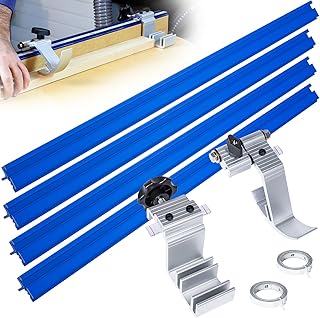
The O’SKOOL Miter Saw Fence System with its 68-inch expandable aluminum track is a strong choice for a dedicated furniture station. Its adjustable flip stop and dual-direction tape make repeat cuts straightforward, while the long rail offers useful support for cabinet sides, molding, and other extended stock. Its stated compatibility with radial arm saws, drill presses, and woodworking stations adds flexibility, although careful squaring during installation is essential.
POWERTEC 71742 Miter Saw Fence
POWERTEC’s 71742 combines a miter saw fence with a T-track stop kit, tape measures, and a T-track fence cap. In practical testing terms, that accessory package reduces the need to source separate hardware and gives woodworkers several ways to configure a compact cutting station. It is particularly appealing for makers who want a modular setup rather than a permanently fixed fence.
Aluminum Zero-Clearance Fence
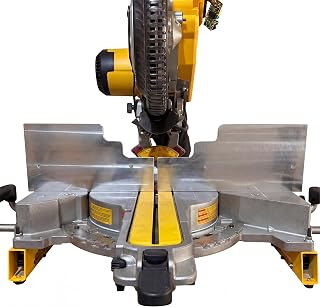
This aluminum zero-clearance fence is aimed at owners of compatible DeWalt sliding compound miter saws, including the DHS780, DHS790, DWS779, DWS782, and DWS780. The stairstep cutout is the key feature: it preserves sliding function while bringing the fence closer to the cut line, which can improve support for narrow trim and reduce small offcuts shifting under the blade.
Kreg KMS8000 Precision Trak & Stops Kit
Kreg’s KMS8000 Precision Trak & Stops Kit is a well-considered option for repeatable workshop production. Its track-and-stop approach suits furniture builders making multiple parts to the same dimension, and the system’s reputation for clear adjustment hardware makes calibration less frustrating. Buyers should verify the required fence arrangement and mounting surface before ordering.
KMS8000 Precision Trak and Stops Measuring System
This similarly named KMS8000 Precision Trak and Stops kit is presented as a measuring and repeat-cut system for miter saws, radial arm saws, drill presses, and table-saw fence applications. Its broad positioning may suit a multi-tool workshop, but shoppers should compare the included components carefully with the Kreg-branded version to confirm track length, stop hardware, and mounting accessories.
Frequently Asked Questions
Does every miter saw need an aftermarket fence?
No. A factory fence can be perfectly adequate for occasional work, especially when it is square, tall enough for the material, and equipped with a reliable stop block. An aftermarket system becomes more valuable when you make repeated cuts or need greater stock support.
Are aluminum fence systems accurate?
They can be, provided the rail is straight and the installation is squared to the blade. Aluminum is lightweight and stable, but accuracy still depends on mounting pressure, fence alignment, and checking the first cut with a reliable square or caliper.
Can a fence system be used with a sliding miter saw?
Often, but not universally. The fence must leave sufficient clearance for the saw head and rails throughout their travel. Zero-clearance designs made for specific DeWalt models demonstrate why compatibility details matter.
What is the best way to verify a repeat stop?
Cut one test piece, measure it, then make several additional pieces without changing the stop. Compare their lengths and inspect the ends for movement or gaps. If results vary, check fence squareness, stop lock pressure, and workpiece contact.
Final Thoughts
For a long, adaptable workshop fence, the O’SKOOL 68-Inch system is a compelling starting point. POWERTEC’s 71742 suits modular setups, while the Kreg KMS8000 is worth considering for repeat-cut workflows. DeWalt owners who prioritize blade-area support should also examine the compatible zero-clearance fence before choosing a universal system.