Key takeaways
- Count the full load: occupants, cushions, blankets, and anything hanging from the frame.
- Use a level across the seat and compare chain lengths before final tightening.
- Keep cushions and wooden swings covered or sheltered when not in use to slow weathering.
- Do not allow children to climb on the back or swing sideways; those actions increase dynamic forces.
What's inside
A porch swing looks simple to install, but it concentrates a surprising amount of force into two or four attachment points. In our home-appliance testing lab, we evaluate outdoor equipment by looking beyond advertised weight limits: we check load paths, hardware quality, movement, weather exposure, and how easily an installation can be inspected over time. Those same checks matter whether you are hanging a compact seat from a beam or installing a complete freestanding swing.
This guide explains the best way to hang a porch swing safely in 2026, from choosing a suitable support and hardware to checking clearances and testing the finished installation. It also compares useful swing and hanger options, including wooden benches, fabric patio swings, and heavy-duty swivel hardware. Product capacity is only one part of the decision; the structure above the swing is usually the limiting factor.
As an Amazon Associate we earn from qualifying purchases.


Recommended picks
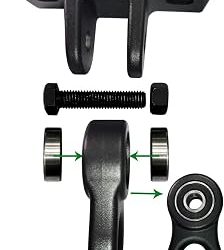
For a conventional wooden swing, the ABUSA Heavy Duty Black Swing Hangers are a practical option when you need robust mounting plates and included bolts. The Heavy Duty Swing Hangers for Wooden Sets add a 360-degree swivel, which can reduce twisting in the chains and make a swing feel smoother. Always confirm that the fasteners suit your beam and that the stated capacity applies to the complete installation, not just the hanger.
Among complete swings, the VINGLI 2026 Upgraded 4 FT Wooden Porch Swing and VEVOR Wooden Porch Swing 5 ft provide traditional bench-style seating with hanging chains included. The VINGLI XL 5 FT Pro Wooden Porch Swing is worth considering when you want a wider seat and built-in cup holders. For a different format, the Yaheetech 3-Seat Patio Swing Chair uses a freestanding frame, fabric seating, and a sunshade, so it avoids drilling into a porch structure altogether.
1. Choose a genuinely structural support
The safest attachment point is a sound, load-bearing beam, joist, or engineered support that can handle the swing, occupants, dynamic movement, and a safety margin. Do not hang a swing from soffit boards, trim, ceiling panels, decorative rafters, or a single unsupported 2-by-4. A porch ceiling can look substantial while concealing framing that was never designed for suspended loads.
Inspect the timber for rot, splitting, insect damage, water staining, and loose connections. If the proposed location is unclear, expose a small area or consult a qualified builder. On masonry or concrete, use an appropriate engineered anchor system rather than adapting wood screws. When in doubt, a freestanding model such as the Yaheetech patio swing is often safer than guessing about hidden framing.
2. Match the hardware to the installation
Use purpose-built swing hangers with a broad mounting plate, corrosion-resistant finish, and fasteners appropriate for the support material. A hanger’s headline capacity does not make a weak beam stronger. For outdoor installations, stainless steel or well-protected galvanized hardware is preferable, particularly in coastal or humid locations.
Install two hangers for a two-point swing, spacing them according to the manufacturer’s chain geometry and the width of the seat. The hardware should be aligned with the direction of travel. Swivel hangers can help prevent chains from winding, but they must be rated for the combined static and moving load. Avoid mixing random eye bolts, carabiners, and household hooks unless each component is specifically rated for overhead suspended use.
3. Establish comfortable clearances
Measure before drilling. Leave enough room behind the swing for its full backward arc and enough space in front for feet and circulation. As a starting point, allow roughly 30 inches behind and 24 inches on each side, then increase those distances if the swing has a deep arc or nearby furniture. Keep the seat well clear of walls, railings, posts, grills, light fixtures, and low branches.
Set the seat height so most users can place their feet comfortably on the floor. Many porch swings sit approximately 18 to 22 inches above the finished surface, but the correct height depends on the frame and chain length. Both sides must be equal, and the swing should hang level when unloaded. Unequal chains cause awkward movement and place uneven force on the hangers.
4. Install without weakening the support
Mark the hanger positions carefully, then drill pilot holes sized for the supplied fasteners and the support material. Pilot holes reduce splitting and help keep lag screws straight. Drive fasteners into the center of the beam, not near an edge, and tighten them firmly without crushing the wood fibers or stripping the threads.
Do not substitute shorter screws because they are easier to fit. The required embedment depends on the hanger design and structural material; follow the manufacturer’s instructions. If the swing uses chains, check every connector, pin, and retaining clip. Closed, secured connectors are preferable to open hooks that can disengage as the swing moves.
5. Test progressively and inspect regularly
Before anyone sits down, pull firmly on the seat in several directions and watch the support, hangers, chains, and fasteners for movement. Add weight gradually, beginning with a modest load and then testing near the expected use load while keeping people clear of the swing’s path. Listen for cracking, popping, metal deformation, or rubbing.
Testing is not a substitute for structural design, but it can reveal loose hardware or poor alignment. Recheck the installation after the first few uses, then inspect it at least seasonally. Look for rust, stretched links, frayed welds, cracked wood, water damage, and loosened bolts. Remove the swing from service immediately if any load-bearing component changes shape or develops a crack.
Tips
- Count the full load: occupants, cushions, blankets, and anything hanging from the frame.
- Use a level across the seat and compare chain lengths before final tightening.
- Keep cushions and wooden swings covered or sheltered when not in use to slow weathering.
- Do not allow children to climb on the back or swing sideways; those actions increase dynamic forces.
Frequently Asked Questions
Can I hang a porch swing from a ceiling joist?
Yes, if the joist is structural, accessible for correct fastening, and suitable for the swing’s total dynamic load. A decorative ceiling member or thin ceiling covering is not enough. When the framing cannot be verified, use a freestanding swing or obtain a professional assessment.
How far apart should porch swing hangers be?
Follow the swing manufacturer’s spacing instructions because chain angles and seat width vary. In general, the hangers should support the swing near its ends without forcing the chains sharply inward. Incorrect spacing can make the seat unstable and increase side loading.
Are swivel swing hangers better?
They can be useful when you want smoother movement or reduced chain twisting. They are not automatically safer, however. Confirm the swivel’s capacity, corrosion resistance, and compatibility with the chains and mounting surface. A fixed hanger is perfectly suitable for many straight-ahead porch swings.
Is an advertised 880-pound capacity enough?
Not by itself. That figure may describe the swing frame under specified conditions rather than the ceiling, hangers, chains, and fasteners together. The complete system should be rated for the intended load with an appropriate safety margin, and the weakest component determines the practical limit.
Conclusion
The best way to hang a porch swing is to treat it as a small structural installation, not simply a furniture assembly task. Verify the support, use purpose-built and weather-resistant hardware, set generous clearances, install fasteners accurately, and test gradually before regular use. A well-chosen wooden swing and quality hangers can provide years of service, while a freestanding patio model is the sensible alternative when the porch structure cannot be confirmed.