Key takeaways
- Test the setup gradually: apply light weight first, then sit down slowly near the center.
- Keep the hammock low enough for an easy exit, but never let it rest on the ground when occupied.
- Remove fabric hammocks during severe weather and store metal hardware dry to limit corrosion.
- Use only the supplied or manufacturer-approved connectors; visually similar hardware may have very different ratings.
What's inside
A hammock can look like a simple piece of outdoor furniture, but the suspension system carries every pound of the user and shifts as they sit, turn, or swing. In our home-furnishings testing approach, the most important questions are not whether a strap feels thick or a hook looks substantial, but whether the anchor, hardware, clearance, and stated capacity suit the installation.
This guide explains how to hang a hammock safely between trees, from a suitable ceiling structure, or on a freestanding frame. We’ll cover measuring, anchor selection, mounting angles, inspection, and the practical differences between straps, fixed hardware, and stands, with a few equipment options worth considering.
As an Amazon Associate we earn from qualifying purchases.


Choose the Right Hanging Method
For two healthy trees, wide webbing straps are usually the simplest and most forgiving choice. The MalloMe Hammock Straps for Trees use adjustable loops, allowing you to fine-tune height without drilling into bark. The SZHLUX Hammock Straps are another flexible option, with two 10-foot straps, multiple loops, and carabiners for a broad range of tree spacing. Look for flat, load-rated webbing rather than thin rope, and choose straps long enough to reach around both trunks without forcing the hammock too close to the ground.
A stand is better when trees are unavailable, unsuitable, or located too far apart. The Sunnydaze Heavy-Duty Hammock Stand has a stated 550-pound capacity, fits 9- to 14-foot hammocks, and includes chains and hooks. A stand also avoids drilling into a wall or ceiling, although it needs level, stable ground and enough surrounding space to prevent tipping or collisions.
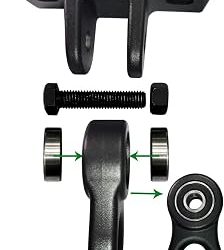
For a permanent indoor or porch installation, use hardware designed for structural mounting. The MHMYDZ 1000 lb Capacity Heavy Duty Hammock Hanging Kit and the black 360-degree rotating Hammock Hanging Kit with a stated 1,000-pound capacity are examples of hardware marketed for ceiling or beam applications. These ratings describe the hardware under specified conditions; they do not make an inadequately supported ceiling safe.
Measure Before You Install
Start by measuring the hammock’s overall length from end loop to end loop, then measure the distance between the proposed anchors. Many hammocks work best when the anchor points are roughly 12 to 18 feet apart, but the manufacturer’s instructions take priority. A stand must also match the hammock’s usable length; forcing a long hammock onto a short frame can create excessive tension.
As a starting point, position each suspension point about 4½ to 5½ feet above the ground, then aim for a relaxed curve rather than a tightly stretched line. When occupied, the lowest part of the hammock should generally sit about 16 to 24 inches above the ground. Test this with the hammock empty first, then lower it if necessary. Leave several feet of clear space at the sides and underneath, away from steps, sharp furniture, fire pits, and hard obstacles.
Attach Straps Without Damaging Trees
Wrap each tree strap around the trunk at least several feet above the ground, keeping the webbing flat and untwisted. Use a trunk with substantial diameter and healthy bark; avoid dead, leaning, cracked, or visibly diseased trees. Do not substitute narrow cord, wire, or bare chain, which can cut into bark and concentrate force on a small area.
Connect the hammock’s end loops to the strap loops using the supplied carabiners or approved connectors. Confirm that every gate is fully closed and that the connector is loaded along its strongest length, not sideways against the gate. Never join straps with an improvised knot unless the manufacturer specifically permits it. After sitting down slowly, check that the webbing has not slipped, folded, or migrated around the trunk.
Mount Ceiling and Beam Hardware Correctly
Ceiling-mounted hammocks and hanging chairs should be attached to a structural beam, joist, or properly engineered support—not drywall, plaster, decorative trim, or a hollow ceiling cavity. Locate the framing with reliable measurements and verify its direction before drilling. If the installation is over a finished ceiling, a qualified contractor can confirm the support and select suitable fasteners.
Follow the hardware manufacturer’s drill size, embedment depth, and fastener requirements exactly. A 360-degree rotating hook, such as those included in several 1,000-pound-rated hammock chair kits, can reduce twisting during use, but rotation does not compensate for a weak anchor. Install only where the complete load path—from hook to fastener to framing—can support dynamic movement as well as the user’s weight.
Check Stability and Load Capacity
Capacity is a system rating, not simply the largest number printed on one component. Consider the hammock, straps or chains, carabiners, hooks, stand, anchor structure, and the movement created by swinging. If a stand is rated for 550 pounds, do not treat that figure as a recommendation for two people plus heavy bedding and vigorous motion. Follow the lowest rating in the system and the most conservative limit in the instructions.
Before every use, inspect stitching, webbing, carabiner gates, chains, welds, bolts, hooks, and stand feet. Retire any component showing fraying, stretched fibers, corrosion, cracking, bent metal, or unexplained noise. For a stand, check that all feet sit flat and that connectors remain tight. Stop using the hammock if it begins to twist, tilt, or sag differently from its normal setup.
Tips
- Test the setup gradually: apply light weight first, then sit down slowly near the center.
- Keep the hammock low enough for an easy exit, but never let it rest on the ground when occupied.
- Remove fabric hammocks during severe weather and store metal hardware dry to limit corrosion.
- Use only the supplied or manufacturer-approved connectors; visually similar hardware may have very different ratings.
Frequently Asked Questions
How high should a hammock be hung?
Begin with the suspension points about 4½ to 5½ feet high and adjust after a controlled test. The occupied center should usually be around 16 to 24 inches above the ground, with enough clearance for a safe exit.
Can I hang a hammock from a regular ceiling joist?
Only if the joist is confirmed to be structural and the mounting hardware is installed according to its instructions. Do not attach a hammock to drywall, trim, or an unverified ceiling cavity. When in doubt, have the framing assessed professionally.
Are hammock straps safer than drilling into trees?
Wide, purpose-made tree straps are generally the better choice because they distribute pressure across the trunk and are removable. They still need correct positioning, adequate trunk strength, and regular inspection. Thin rope or narrow webbing can damage bark.
Is a 1,000-pound hook suitable for two people?
Not automatically. The hook’s rating may be tested under static conditions, while two occupants create shifting and swinging forces. Check the ratings of every component and follow the hammock or stand manufacturer’s stated occupancy limit.
Conclusion
The best hammock installation combines an appropriate suspension method with sound anchors, correct spacing, generous clearance, and routine checks. Tree straps offer quick adjustment, a stand provides flexibility without drilling, and structural hardware suits permanent installations when the framing is verified. Choose based on the complete load-bearing system—not a single impressive capacity figure—and test the setup conservatively before relaxing in it.