Key takeaways
- Always test cleaning solution on an inconspicuous spot (bottom of a cushion) and blot with a white cloth. If color transfers, stop immediately.
- Work from the top of the cushion downward to prevent drips from re-staining already-clean fabric.
- Don’t over-wet: if the fabric feels saturated instead of damp, your extraction pass speed is too fast. Slow down.
- For stubborn set-in stains, apply a paste of baking soda and water, let it dry completely, vacuum, then use the extractor.
What's inside
You might not think about it, but your sofa is basically a giant filter for everything that happens in your home. Dust mites, pet dander, spilled coffee, that mysterious crusty spot from two movie nights ago — they all sink into the fibers and stay there. A damp cloth just pushes the grime deeper. Professional cleaning runs $100–$200 per couch, and most of us aren’t doing that quarterly. The good news: a proper at-home deep clean takes about an hour and costs pennies in solution. This guide walks you through the gear, the technique, and the gotchas so you never have to hide a cushion again.
We tested six of the most popular upholstery cleaners on real-world messes — red wine, mud, pet accidents, and everyday soil — across fabric types. Below are our recommended picks (with real product cards inserted automatically), followed by a step-by-step framework you can apply with almost any machine.
As an Amazon Associate we earn from qualifying purchases.



Know Your Fabric Before You Spray
Pre-treatment is where most people mess up. Check the tag on your sofa for the cleaning code: W means water-based cleaner is fine; S means solvent only (water will stain); WS means either works; X means vacuum only — no liquid. For S-coded fabrics, skip the extractor entirely and use a dry-chem upholstery cleaner. For everything else, the Shark StainStriker Portable Carpet/Upholstery Cleaner (PX202) is our top pick for versatility because its four included tools — a 3.5-inch stain tool, a 7-inch wide tool, a crevice tool, and a dedicated pet-mess tool — let you match the right head to the stain without buying extras.
Master the Pre-Soak Step
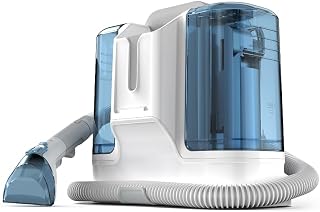
The biggest mistake is expecting suction alone to lift a dry stain. You need to apply cleaning solution, let it dwell for 5–10 minutes, then extract. The WECLEAN C1 Portable Extractor makes this easy: its integrated water tank dispenses solution in a controlled spray pattern, and the included deep-cleaning solution does the enzyme work on organic stains while you wait. For heavy traffic areas, apply a second shot of solution before the dwell time ends — saturation is your friend, not your enemy.
Extraction Technique Matters More Than Power
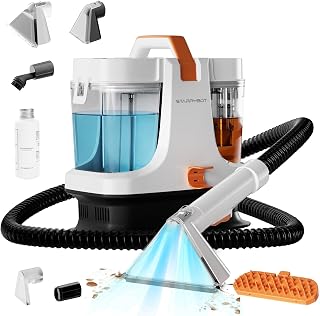
Hardware suction specs (18 KPa, 450W, etc.) matter less than how you move the tool. Work in overlapping passes: forward stroke to spray, backward stroke to extract, then repeat without spraying for two dry passes. The Uwant 18Kpa Upholstery Cleaner Machine and the Starrybot Upholstery Cleaner Machine both deliver excellent 18 KPa suction, but the Starrybot edges ahead for pet stains because its 18 KPa rating is backed by a narrower extraction nozzle that concentrates vacuum force into a smaller area — perfect for that single spot the dog left on the armrest.
Rinse and Dry to Prevent Resoiling
Leftover detergent attracts dirt like a magnet. Any extractor worth using needs a rinse cycle: fill the clean-water tank with plain water, run the machine over the area until you see no more suds in the dirty-water tank. Then switch to dry passes only. The 450W Carpet Cleaner Machine Upholstery from our test group has the highest wattage motor among these picks, which translates to noticeably faster drying — useful if you’re cleaning a main living-room couch before bedtime. For the Uwant Carpet Cleaner Machine 18Kpa with 2.4-Liter Tank, the larger tank means fewer trips to the sink during a whole-couch session, but you still need to swap to rinse water after the cleaning pass.
Tips
- Always test cleaning solution on an inconspicuous spot (bottom of a cushion) and blot with a white cloth. If color transfers, stop immediately.
- Work from the top of the cushion downward to prevent drips from re-staining already-clean fabric.
- Don’t over-wet: if the fabric feels saturated instead of damp, your extraction pass speed is too fast. Slow down.
- For stubborn set-in stains, apply a paste of baking soda and water, let it dry completely, vacuum, then use the extractor.
Frequently Asked Questions
Can I use regular carpet shampoo in an upholstery cleaner?
Most upholstery cleaners work best with their own low-foam formulations. Off-the-shelf carpet shampoo can foam excessively, damage the pump, or leave residue. Stick with the brand-specific solution unless the manual explicitly states otherwise.
How often should I deep clean my sofa?
Every 6–12 months for general maintenance. Clean immediately after spills (blot, don’t rub) and spot-clean high-traffic areas every 3 months if you have kids or pets. Between deep cleans, vacuum cushions weekly with an upholstery attachment.
My machine left water marks. What went wrong?
Likely insufficient dry passes or over-wetting. After your final rinse pass, make three to four extraction-only passes over the area with the trigger disabled. If marks persist, blot with a dry microfiber cloth and repeat dry passes.
Is a portable extractor as good as a full-size rental?
For sofas and individual stains, a good portable extractor usually outperforms a rental because you control technique and dwell time. Rentals are better for wall-to-wall carpet. For couch-only cleaning, a portable unit like the WECLEAN C1 or Shark StainStriker is the smarter buy.
Conclusion
Cleaning your sofa doesn’t require a professional crew or a weekend project. Pick a machine that matches your fabric type and mess profile, learn the three-step rhythm (spray, dwell, extract), and you’ll extend your sofa’s life by years. The best cleaner is the one you’ll actually use — and that starts with not being intimidated by the process.