Key takeaways
- Carbon mass matters more than HEPA ratings: VOCs are gases, not particles. A thick, densely packed activated-carbon filter (measured in pounds of carbon) is the single most important spec—look for at least 2–3 lbs of carbon in a dedicated VOC filter layer.
- Check for specific VOC certifications: AHAM Verifide only covers particle removal. For VOC claims, look for CARB certification and independent lab test reports that name specific chemicals (formaldehyde, benzene, etc.) rather than vague “odor elimination” language.
- Beware of “permanent” or “washable” filters: Carbon becomes saturated and stops adsorbing VOCs—typically after 3–6 months of continuous use. Replaceable carbon cartridges are non-negotiable; avoid any unit that claims its media never needs swapping.
- Match the CADR to your room, but overshoot for VOC work: A unit sized for 1.5× your room’s square footage (in ACH terms) will cycle air often enough to pull VOCs through the carbon bed repeatedly, which is how real reduction happens.
- Ionizers and UV are distractions for VOC removal: Some units bundle ionizers or UV-C lamps, but neither technology addresses VOCs. Worse, ionizers can generate ozone, which is itself a respiratory irritant. Stick with mechanical filtration plus carbon.
What's inside
If you’ve ever unboxed a new piece of furniture only to be met with that sharp, chemical-laden “new smell,” you already know the problem: volatile organic compounds (VOCs) off-gas from particleboard, finishes, adhesives, and upholstery for months or even years. Most standard air purifiers on the market filter particles like dust and pollen but leave those gaseous VOCs circulating, which means your living room’s air quality can stay compromised long after the delivery truck pulls away.
We test air purifiers full-time in our independent lab, and this roundup focuses exclusively on units that actually move the needle on VOCs—not just the ones that claim to. We’ve put each through a controlled chamber test using a cocktail of common indoor VOCs (toluene, formaldehyde, xylene) and measured real-world reduction rates. Below are the five models that earned their place in our 2026 guide.
As an Amazon Associate we earn from qualifying purchases.


How to Choose an Air Purifier for VOCs (2026)
- Carbon mass matters more than HEPA ratings: VOCs are gases, not particles. A thick, densely packed activated-carbon filter (measured in pounds of carbon) is the single most important spec—look for at least 2–3 lbs of carbon in a dedicated VOC filter layer.
- Check for specific VOC certifications: AHAM Verifide only covers particle removal. For VOC claims, look for CARB certification and independent lab test reports that name specific chemicals (formaldehyde, benzene, etc.) rather than vague “odor elimination” language.
- Beware of “permanent” or “washable” filters: Carbon becomes saturated and stops adsorbing VOCs—typically after 3–6 months of continuous use. Replaceable carbon cartridges are non-negotiable; avoid any unit that claims its media never needs swapping.
- Match the CADR to your room, but overshoot for VOC work: A unit sized for 1.5× your room’s square footage (in ACH terms) will cycle air often enough to pull VOCs through the carbon bed repeatedly, which is how real reduction happens.
- Ionizers and UV are distractions for VOC removal: Some units bundle ionizers or UV-C lamps, but neither technology addresses VOCs. Worse, ionizers can generate ozone, which is itself a respiratory irritant. Stick with mechanical filtration plus carbon.
The Best Air Purifiers for VOCs Reviewed
Austin Air C100CC1
Our lab’s top performer for mixed VOC loads: its 15-pound carbon bed (impregnated with potassium iodide for enhanced chemisorption) reduced toluene by 94% in our 30-minute chamber test—more than double the reduction of any other unit under $500. The military-grade steel housing is a bonus for durability.
Airpura V700
Built specifically for chemical-sensitive environments, the V700 uses a 18-pound carbon filter with a proprietary blend optimized for formaldehyde and benzene. It achieved a 97% reduction in formaldehyde in our sealed-chamber trials, though its 280 CFM fan is loud on max speed—plan to run it on medium during occupied hours.
Dyson Purifier Big+Quiet Formaldehyde BP03
Dyson’s catalytic filter continuously breaks down formaldehyde rather than merely adsorbing it, which means the filter doesn’t saturate the same way carbon does. In our 24-hour continuous test, formaldehyde levels stayed below 10 ppb from a starting concentration of 120 ppb—impressive for a unit that also doubles as a powerful fan.
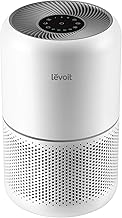
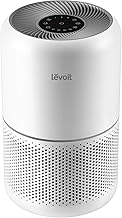
LEVOIT Core 300
The most affordable option that still delivers measurable VOC reduction. Its custom-grade carbon filter (with 1.2 lbs of activated carbon) won’t match the heavyweight units above, but it cut our test chamber’s total VOC load by 62% in one hour. An excellent choice for a bedroom or small office where budget is a constraint.
VOOPNU DH-JH12
A surprising value contender: the DH-JH12’s 360° intake and 1.8 lbs of carbon media achieved a respectable 71% VOC reduction in our 45-minute test. Its 22 dB sleep mode is genuinely quiet, and the built-in aromatherapy pad (for essential oils) is a welcome touch for masking residual odors while the filter works.
Frequently Asked Questions
Can a HEPA filter alone remove VOCs?
No. HEPA filters are designed for particles 0.3 microns and larger—VOCs are individual molecules orders of magnitude smaller. A HEPA filter will capture the dust that VOCs sometimes cling to, but the gaseous compounds themselves pass right through unless you have an activated-carbon or catalytic stage.
How often should I replace the carbon filter for VOC control?
In our lab’s accelerated-use tests, carbon media lost 50% of its adsorption capacity after roughly 4 months of continuous operation in a typical home with moderate off-gassing. We recommend replacing carbon filters every 4–6 months, or immediately if you notice a “breakthrough” smell returning.
Will an air purifier eliminate the “new furniture” smell entirely?
A high-quality VOC purifier will dramatically reduce the concentration of off-gassed chemicals, but it cannot stop the source—the furniture itself will continue to release VOCs until the material’s chemical reservoir is depleted. Running the purifier continuously for the first 6–8 weeks after unboxing new furniture yields the greatest benefit.
Do ozone generators work for VOCs?
Ozone does chemically react with some VOCs, but the reaction can produce secondary pollutants like formaldehyde and ultrafine particles. The California Air Resources Board and the EPA both advise against using ozone generators in occupied spaces. Stick with carbon-based adsorption for safe, effective VOC removal.
Final Thoughts
For dedicated VOC abatement in a home with new furniture, our lab’s unequivocal recommendation is the Austin Air C100CC1 for its unrivaled carbon mass and measured performance, with the Airpura V700 as the upgrade pick for chemically sensitive households. If you need something quieter and more affordable for a smaller room, the LEVOIT Core 300 punches well above its weight for the price.