Key takeaways
- Compare separate wash, dry and program load limits before choosing an all-in-one washer-dryer. Includes a practical load-planning example.
What's inside
- Use the lower applicable limit for an uninterrupted load
- Read a real specification without turning it into a universal rule
- Build a load-planning sheet
- Worked example: a wash load that cannot all continue
- Account for bulky items separately
- Compare machines by the workflow you need
- Keep the selected program with the capacity record
- Use the lower applicable limit for an uninterrupted load
- Read a real specification without turning it into a universal rule
- Build a load-planning sheet
- Worked example: a wash load that cannot all continue
- Account for bulky items separately
- Compare machines by the workflow you need
- Keep the selected program with the capacity record
Use the lower applicable limit for an uninterrupted load
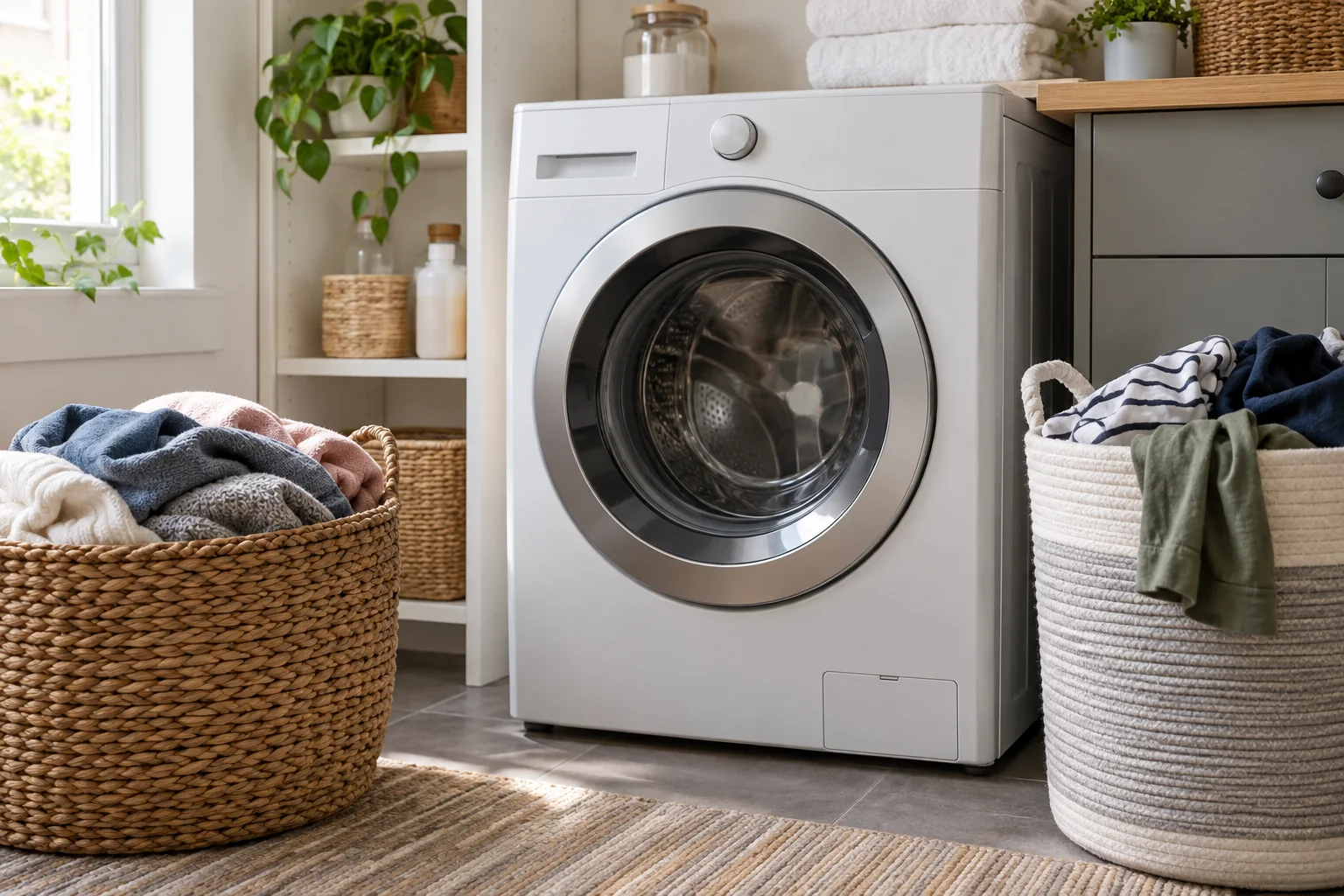
An all-in-one washer-dryer can have different maximum capacities for washing and drying. If you want laundry to move through both stages without unloading, check the load limit for the actual combined program. The larger wash-capacity number alone does not describe that workflow.
Start with three entries: maximum wash capacity, maximum dry capacity and the limit for the selected wash-and-dry program. The program’s fabric and loading instructions still apply even when a headline specification is higher.
Read a real specification without turning it into a universal rule
The LG India FHD1207STB product page lists 12 kg maximum washing capacity and 7 kg maximum drying capacity. This is an example of separate ratings on one appliance. It is not a statement that every washer-dryer dries half of its wash load or that every program on this model accepts the maximum.
Use the exact model and regional manual when checking a purchase. Similar model names can represent different machines. Also distinguish a single-drum washer-dryer from a stacked pair or a portable machine with a spin compartment. Spinning removes water; it does not establish a heated-drying capacity.
If a listing provides drum volume in cubic feet but no supported laundry-weight limit, do not invent a conversion. Volume and permitted load mass are different specifications. Ask for the program table and loading guidance that apply to the appliance.
Build a load-planning sheet
| Field | Record | Decision it supports |
|---|---|---|
| Appliance identity | Full model and regional manual | Matches the correct limits |
| Wash rating | Maximum and stated conditions | Defines the washing ceiling |
| Dry rating | Maximum and stated conditions | Defines the drying ceiling |
| Selected program | Fabric type and program load limit | May impose a lower limit |
| Actual laundry | Dry-load amount and care restrictions | Checks the specific batch |
| Workflow | Continuous, split drying or separate air drying | Shows whether intervention is needed |
Use the manual’s definition of load weight, commonly based on dry laundry, and confirm it for the model. Do not weigh a wet load after washing and compare it with a dry-textile rating. Water retained by the clothes changes the measurement.
Worked example: a wash load that cannot all continue
Illustrative scenario using invented program limits: a machine allows a 10 kg cotton wash but limits its selected combined program to 6 kg. The household has 8 kg of dry cotton items that are all permitted for that program. Loading all 8 kg for an uninterrupted wash-and-dry run would exceed the combined limit.
One plan is two compliant smaller combined loads. Another is a permitted wash-only load followed by a manual division for drying, using the model’s instructions. A third is washing with some items assigned to another approved drying method. The right choice depends on the laundry care labels, available time and actual appliance directions.
The arithmetic is simple: 8 kg is 2 kg above the hypothetical combined limit. But that does not mean removing an arbitrary two kilograms of wet clothing guarantees a correct result. Plan the dry items and fabric groups before the cycle rather than estimating from a wet heap.
Account for bulky items separately
A bulky item can create a loading problem even when its mass is below a headline maximum. Check the appliance’s bedding or bulky-item guidance and the item’s own care label. Do not convert the maximum into a promise that a particular duvet size will fit or dry properly.
Mixed fabrics can also require different programs or drying methods. Separate items that prohibit tumble drying before selecting a continuous cycle. Convenience is useful only when the full load is compatible with both stages.
For recurring laundry, keep a simple list of the usual groups: everyday cotton clothing, items that air dry and any special-care textiles. The list is a sorting aid, not a fixed number of garments that supposedly equals a kilogram.
Compare machines by the workflow you need
If unattended transfer between washing and drying is the main reason for buying a combo, compare the relevant combined-program capacity first. A larger wash-only limit may still be valuable, but it solves a different task.
Ask how the program duration is stated and whether the conditions match your intended load. Do not infer throughput from capacity alone. One machine may accommodate more washing while still requiring your intervention before drying; another arrangement may suit your routine better.
Keep the selected program with the capacity record
Save the model specification, program table and your planned load groups together. Recheck the limit when selecting a delicate, quick or specialty program. A number remembered from a sales page should not override a smaller program allowance.
The practical outcome is a clear answer to one question: can this particular batch complete both stages as planned? Separate ratings and a short worksheet make that answer much more reliable than assuming the wash-capacity headline covers everything.