Key takeaways
- Pros: Multi-mode matrix cleaning adapts pressure for vacuuming and mopping; the dual-action brush roll resists hair tangling on pet-heavy homes.
- Cons: Lacks a self-emptying base, so you will still handle dust cups weekly or more often.
What's inside
A 2-in-1 robot vacuum mop combo promises to handle both dry debris and light spills without forcing you to swap hardware or run two separate machines. In practice, many budget models vacuate decently but leave floors damp or streaked, while premium units mop well yet still miss corners or drag hair across baseboards. The gap between “technically has a mop” and “actually leaves a clean floor” is where most buyer frustration lives.
This roundup compares eight combos priced from under $120 to nearly $750, drawing on published suction ratings, navigation systems, tank capacity, self-emptying features, and aggregated owner feedback. We focused on what separates a unit you will still use in month six from one collecting dust in a closet: navigation reliability, mop pad retention, obstacle avoidance on cables and socks, and whether hands-free features like self-emptying or auto-washing actually reduce your weekly effort.
As an Amazon Associate we earn from qualifying purchases at no extra cost to you. Product prices and availability are accurate as of the date shown and are subject to change.




Quick Picks
| Product | Best for | Price |
|---|---|---|
| Shark Matrix Plus 2-in-1 | Multi-room homes needing versatile matrix cleaning | $299.99 |
| iMartine 2-in-1 (Value) | Tight budgets with mostly hard floors | $114.69 |
| iMartine 2-in-1 (Pets) | Pet owners who want quiet, scheduled cleaning | $114.69 |
| roborock Qrevo S Pro | Power-suction mopping with auto-wash dock | $549.99 |
| wrydao Self-Empty Combo | Homes wanting 90-day hands-free dust handling | $239.09 |
| eufy C28 HydroJet | Roller-mop performance at a mid-tier price | $499.99 |
| XIEBro 6500Pa | Long runtime across large open floors | $119.99 |
| Shark PowerDetect UV Reveal | Spotless-obsessed buyers wanting UV dirt mapping | $749.99 |
How We Picked
Four criteria carried the most weight. First, suction pressure combined with navigation type, because LiDAR or gyro systems that map rooms outperform random-bounce units on coverage. Second, mop mechanism quality: whether the pad stays attached under water pressure, whether the unit lifts or avoids carpet while mopping, and whether it returns to the dock for auto-washing. Third, maintenance burden: a self-emptying station or large water tank means you touch the robot less often. Fourth, price-to-feature ratio for owners who run the unit several times a week.
The 8 Best 2-In-1 Robot Vacuum Mop Combo in 2026
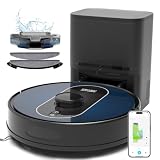
Shark Matrix Plus 2-in-1 Robot Vacuum & Mop
- Pros: Multi-mode matrix cleaning adapts pressure for vacuuming and mopping; the dual-action brush roll resists hair tangling on pet-heavy homes.
- Cons: Lacks a self-emptying base, so you will still handle dust cups weekly or more often.
The Matrix Plus suits households with a mix of hard floors and low-pile carpet who want one machine that does not need babysitting between room changes. Shark’s matrix approach lets the unit apply different cleaning patterns without a separate dock. Owner feedback highlights strong pickup on embedded debris but notes the mop function works best for maintenance cleaning rather than stuck-on messes. Skip it if you want fully hands-free operation with auto-washing pads.
iMartine Robot Vacuum and Mop Combo (Value Pick)
- Pros: Under $120 with Alexa and Google Assistant support; long runtime keeps larger apartments on a single charge.
- Cons: Gyro-based navigation is less precise than LiDAR, so room-to-room coverage can be uneven on first runs.
This iMartine combo targets buyers who want basic vacuum-and-mop duty at the lowest entry price. It handles hard floors and low-pile carpet adequately, runs quietly enough for evening schedules, and the combined dust-and-water tank keeps setup simple. Owner reviews praise the value proposition but flag that the mop pad application is modest, best for light surface refresh rather than deep stain removal. Skip it if your floors see heavy pet messes or you need reliable edge cleaning.
iMartine Robot Vacuum and Mop Combo (Pet-Friendly Pick)
- Pros: Quiet operation makes it usable during naps or work-from-home calls; scheduled runs reduce the buildup of pet hair between manual cleanings.
- Cons: No self-empty feature means frequent manual bin clearing in high-shed households.
For pet owners who prioritize low noise and scheduling flexibility, this iMartine listing delivers a dependable routine without a premium price tag. Strong suction pulls hair from carpet fibers, and the quiet motor earns it a spot in bedrooms or offices. It will not replace a monthly deep scrub of pet-traffic areas, but it keeps visible hair under control between those sessions. Skip it if you need LiDAR mapping for furniture-dense rooms or a self-emptying dock for multi-day away-from-home use.
roborock 2026 New Qrevo S Pro Robot Vacuum and Mop
- Pros: 18,500Pa suction is among the highest in this roundup; the dock auto-washes mop pads between sessions, reducing manual upkeep.
- Cons: Premium pricing places it out of reach for casual or small-space users who only need light maintenance cleaning.
The Qrevo S Pro is built for buyers who want near-hands-free operation. The auto-wash dock rinses pads so you are not hand-cleaning a dirty mop every run, and the extreme suction rating translates to strong debris pickup on carpet. Navigation is LiDAR-based with obstacle detection that handles cables and shoes reasonably well. Skip it if your home is mostly hard floor with minimal mess, where a sub-$150 unit would cover 80 percent of the work at a fifth of the price.
wrydao Robot Vacuum and Mop Combo with Self-Emptying Station
- Pros: LiDAR navigation with 90-day hands-free dust collection means you empty the base only once per season; mapping enables targeted room cleaning.
- Cons: The mop function is basic pad-drag rather than a powered or rotating system, so it handles only light surface refresh.
This wrydao unit wins on one key metric: the longest hands-free interval relative to its price. At under $240 you get a self-emptying station that eliminates dust-bin handling for months, plus LiDAR mapping for structured cleaning. Suction sits at a respectable 6000Pa. The trade-off is mop sophistication. Skip it if mopping performance matters as much as vacuuming in your routine; choose the roborock or eufy instead.
eufy C28 Robot Vacuum Cleaner and Mop Combo
- Pros: The HydroJet roller mop continuously rinses itself during the run, leaving less streaking than pad-based systems; 15,000Pa suction handles carpet debris confidently.
- Cons: Mid-range pricing without a self-emptying dock means you still clear the dust bin after most sessions.
The C28 occupies a sweet spot for owners who prioritize mopping quality over vacuuming automation. The roller mop design is a meaningful step up from flat pads because it applies consistent pressure and moisture across the cleaning path. For tile and hardwood homes that deal with tracked-in grime or food spills, this is one of the stronger mop performances in the category. Skip it if you want a full set-and-forget routine and would prefer a self-emptying base.
XIEBro Robot Vacuum and Mop with Gyro Navigation
- Pros: 200-minute runtime covers large open-plan floors in a single pass; 6500Pa suction handles pet hair on carpet effectively.
- Cons: Gyro inertial navigation is slower to map and less adaptive around obstacles than LiDAR, so it may re-clean zones or miss tight corners.
The XIEBro suits buyers with wide, relatively open floors who value runtime over navigation intelligence. It will run through a 1500-square-foot apartment without needing a recharge mid-cycle. Pet hair pickup earns praise in owner reports, and the app and voice controls keep scheduling simple. Skip it if your layout is cluttered with furniture legs, cables, or rugs with tall pile, where LiDAR mapping provides measurably better coverage.
Shark PowerDetect UV Reveal 2-in-1 Robot Vacuum & Mop
- Pros: UV illumination reveals invisible dirt and residue that normal lighting hides, enabling genuinely targeted cleaning; the dock handles auto-empting and pad washing.
- Cons: At $749.99, this is the most expensive unit in the roundup, and the UV advantage matters most to buyers already maintaining high cleaning standards.
The PowerDetect UV Reveal targets the perfectionist end of the market. The UV light identifies spots the robot might otherwise overlook, and Shark’s multi-stage dock automates the tasks that make other units a weekly chore. For owners who want the closest thing to a fully autonomous floor-care system without subscribing to a robot with a built-in scrubber arm, this is the flagship option. Skip it if a $300-$500 unit already leaves your floors clean by your standards.
Buying Guide
Navigation and Mapping
Gyro-based systems follow a structured but reactive path, while LiDAR builds a room map and plans efficient routes. If your home has more than a few obstacles, LiDAR consistently delivers better coverage and fewer stuck moments. Random-bounce units, found only at the very bottom of the price range, waste time and leave gaps.
Mop Mechanism Type
Flat pads with gravity-fed water work for light dust but struggle with anything sticky. Roller-based systems like the eufy HydroJet apply pressure and self-rinse, producing a more even finish. Auto-wash docks from roborock and Shark go further by returning the unit for pad cleaning mid-cycle, which prevents cross-contamination across rooms.
Hands-Free Features That Matter
A self-emptying station eliminates the most annoying recurring task in robot ownership. Auto-wash docks do the same for mop maintenance. If you will run the robot daily or in a home with pets, the time saved by these features justifies the price premium within a year of ownership.
Our Verdict
For most households wanting a genuine set-and-forget experience in 2026, the roborock Qrevo S Pro is the top pick: extreme suction, an auto-wash dock, and LiDAR navigation combine to cover vacuuming and mopping with minimal human intervention. Budget buyers should grab the iMartine combo at $114.69 and accept that it handles light maintenance duty without complaint. If mopping quality is your priority over vacuuming automation, the eufy C28 HydroJet delivers the best in-class mop performance per dollar.
FAQ
Can a 2-in-1 robot vacuum mop combo replace manual mopping entirely?
For routine maintenance cleaning, yes. For stuck-on grime, dried food, or heavy traffic areas, you will still want to spot-clean by hand occasionally. The gap closes most when you run the robot daily rather than weekly.
Do these combos mop on carpet by accident?
All eight products listed include carpet detection or zone-based scheduling to prevent wet pads from soaking your carpet. Models with LiDAR mapping offer the most reliable zone control. Gyro-based units may need you to set virtual barriers in the app.
How often should I clean the robot itself?
Wipe sensors weekly, clear the main brush of wrapped hair every one to two weeks, and replace filters monthly. Units with self-emptying docks still need brush and sensor maintenance on the same cadence.
Is 18,500Pa suction better than 6,000Pa in real-world use?
Higher suction pressure helps most on embedded carpet debris like fine sand or pet dander. For hard-floor-only homes with light dust, a 6,000Pa unit cleans adequately. The practical difference narrows on tile and sealed wood.