Key takeaways
- Duty rating: Choose a ladder rated above the combined weight of the user, clothing, tools, and materials; higher ratings generally provide a sturdier margin, not permission to exceed the limit.
- Material: Fiberglass is heavier but does not conduct electricity, while aluminum is easier to carry and is best kept away from energized electrical sources.
- Step design: Wide, slip-resistant steps are more comfortable for routine tasks such as painting, changing bulbs, and reaching high shelves.
- Stability: Look for a broad base, secure spreaders, substantial feet, and minimal flex when the ladder is opened on a level surface.
- Working style: A platform or twin-front model can improve balance and access, while a lightweight step ladder is more convenient for quick jobs and frequent repositioning.
What's inside
A six-foot ladder is tall enough for many ceilings, cabinets, light fixtures, and exterior maintenance jobs—but compact enough to store in a closet or utility room. The challenge is finding the right balance of stability, weight, reach, duty rating, step comfort, and portability without choosing more ladder than your household actually needs.
From a home-appliance testing lab perspective, we look beyond headline capacity. This guide compares the frame materials, working comfort, footprint, storage practicality, and everyday handling of leading six-foot models, including fiberglass options for electrical-awareness, lightweight aluminum designs, platform-style ladders, and heavy-duty choices.
As an Amazon Associate we earn from qualifying purchases.


How to Choose a 6-Foot Ladder (2026)
- Duty rating: Choose a ladder rated above the combined weight of the user, clothing, tools, and materials; higher ratings generally provide a sturdier margin, not permission to exceed the limit.
- Material: Fiberglass is heavier but does not conduct electricity, while aluminum is easier to carry and is best kept away from energized electrical sources.
- Step design: Wide, slip-resistant steps are more comfortable for routine tasks such as painting, changing bulbs, and reaching high shelves.
- Stability: Look for a broad base, secure spreaders, substantial feet, and minimal flex when the ladder is opened on a level surface.
- Working style: A platform or twin-front model can improve balance and access, while a lightweight step ladder is more convenient for quick jobs and frequent repositioning.
The Best 6-Foot Ladders (2026) Reviewed
Louisville Ladder FS1506
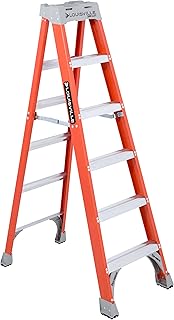
The Louisville Ladder FS1506 is a practical fiberglass step ladder for common household maintenance. Its 300-pound Type IA rating suits most users, while the nonconductive frame is a sensible choice around lighting, wiring, and other electrical-adjacent tasks—though it should never be treated as electrical protection.
Louisville Ladder FS1406HD
With a 375-pound Type IAA rating, the Louisville Ladder FS1406HD is built for shoppers who want a more substantial conventional step ladder. It is a strong fit for painting, seasonal decorating, and workshop work where a heavier frame is an acceptable trade-off for added capacity and a planted feel.
Louisville Ladder FM1406HD Twin Front
The Louisville Ladder FM1406HD Twin Front adds flexibility by allowing users to work from either side, making it useful when a task moves across a room or around an obstacle. Its 375-pound Type IAA rating and fiberglass construction make it a compelling heavy-duty option for demanding home projects.
Little Giant Flip-N-Lite 6-Foot
The Little Giant Flip-N-Lite 6-foot ladder takes a different approach, emphasizing low carry weight and quick setup. Its aluminum frame, wide anti-slip steps, and easy-release handle make it appealing for repeated indoor jobs, but aluminum is not appropriate for work near energized electrical equipment.
6-Foot Fiberglass Platform Step Ladder, 500-Pound
This 500-pound Type IA fiberglass platform ladder is aimed at users who prioritize capacity and a more secure standing position. The platform-style design can reduce foot fatigue during longer tasks, although its heavy-duty construction may be less convenient to move and store than a lighter household ladder.
Frequently Asked Questions
How high can I reach with a six-foot ladder?
A six-foot step ladder does not provide six feet of safe standing height. Depending on your own height and the ladder’s top-step guidance, it typically offers useful access to ceilings, upper cabinets, and fixtures in rooms with standard-height ceilings. Never stand on a top cap or a step marked unsafe.
Is fiberglass better than aluminum for home use?
Neither material is universally better. Fiberglass is heavier and often costs more, but it is the safer material choice around potential electrical hazards. Aluminum is usually easier to carry and reposition, making it excellent for general, non-electrical indoor maintenance.
What duty rating should a household ladder have?
Calculate your body weight plus footwear, tools, paint, and anything else you will carry. A 300-pound Type IA ladder is adequate for many homes, while 375- and 500-pound models provide more capacity and can feel more robust, albeit with additional weight.
Can I use a step ladder on stairs or uneven ground?
Only use a ladder on a surface and configuration specifically approved by its manufacturer. A standard six-foot step ladder should stand fully open on firm, level ground with all feet contacting the surface. Do not improvise with boxes, boards, furniture, or makeshift leveling.
Final Thoughts
For balanced household performance, the Louisville Ladder FS1506 is an sensible starting point, while the FS1406HD and FM1406HD Twin Front suit shoppers who want greater capacity and a more substantial fiberglass design. If low carry weight matters most, the Little Giant Flip-N-Lite is the standout convenience pick; for extended standing and maximum capacity, a 500-pound fiberglass platform ladder deserves consideration.