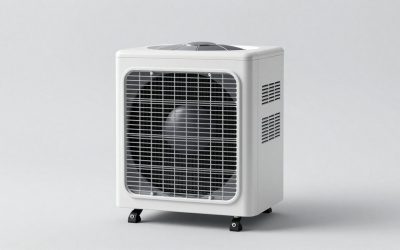
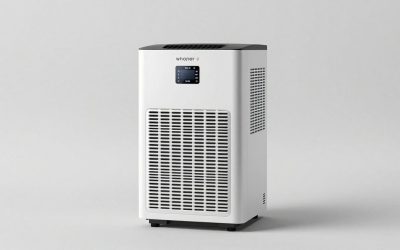
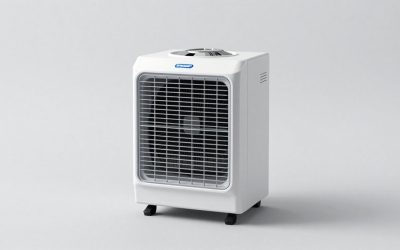
Our Top Picks
8,000 BTU portable air conditioners often look similar on a spec sheet, yet owner feedback and published ratings show they separate fast once they are running. Some cool evenly, some short-cycle in smaller bedrooms, and some solve humidity well but add more fan noise than most sleepers will tolerate. For apartment renters, guest rooms, home offices, and small living spaces, that gap between claimed performance and lived comfort is usually where buying mistakes happen.
This guide is based on manufacturer specifications, published ratings and recurring buyer feedback rather than our own use of each unit. It focuses on what matters in daily use: room-size fit, venting setup, noise character, controls, and day-to-day convenience. The picks below center on 8,000 BTU portable AC units designed for spaces up to roughly 350 square feet, with attention to models that combine cooling, fan, and dehumidifier functions in a practical footprint for modern homes.
Updated October 2026 – The best 8000 BTU portable air conditioner (listed as 8,000 BTU on most spec sheets) is the one whose rating matches your room. Most units sold as 8,000 BTU are really about 5,000 BTU on the newer DOE/SACC scale, so choose a true 8,000 BTU SACC model for sunny or larger rooms and a standard 8,000 BTU unit for a shaded bedroom up to roughly 200 square feet.
Top 3 by full name: the Hisense 8,000 BTU SACC Dual-Hose Inverter for the strongest cooling, the DREO 318S Smart Portable AC for bedrooms and app control, and the BLACK+DECKER 8,500 BTU BPACT05SM for simple, familiar operation.
Top Picks at a Glance
- Hisense 8,000 BTU SACC Dual-Hose Inverter – best for true 8,000 BTU cooling · 8,000 BTU SACC (10,000 ASHRAE) · dual hose · inverter · Wi-Fi
- DREO 318S Smart Portable AC – best smart bedroom pick · 8,000 ASHRAE / 5,000 DOE · drainage-free cooling · app control
- LG LP0825WFR – best name-brand pick with a real SACC rating · 8,000 SACC / 11,000 ASHRAE · remote with 24-hour timer · up to 350 sq ft
- BLACK+DECKER BPACT05SM – best simple name-brand option · 8,500 ASHRAE · remote and window kit · no Wi-Fi
- Shinco 8,000 BTU – best budget pick · ASHRAE-rated · cool, dehumidifier and fan modes
How to Choose an 8,000 BTU Portable Air Conditioner (2026)
- Room match: 8,000 BTU portable units make most sense for bedrooms, offices, and compact living areas up to about 350 square feet. In poorly insulated rooms, sun-heavy spaces, or open layouts, expect weaker pull-down performance.
- Noise profile: Published noise numbers never tell the full story. Owner feedback usually reveals whether sound is steady and maskable or full of compressor surges and rattling panel vibration, which matters more for sleep.
- Moisture control: A built-in dehumidifier mode can improve comfort even when air temperature changes slowly. In humid climates, better moisture removal often makes room feel cooler without pushing thermostat as hard.
- Controls and scheduling: Remote access, Wi-Fi, sleep mode, and 24-hour timers are not extras for many buyers. They reduce overnight overcooling and help a room feel ready before you walk in.
- Installation footprint: Check hose routing, window-kit adjustability, and floor space before buying. Portable AC units are easier than permanent window models, but bulky cabinets and awkward exhaust paths still affect placement and efficiency.
Best 8,000 BTU Portable Air Conditioners (2026), Reviewed
AKIRES 8,000 BTU Portable Air Conditioner
The AKIRES stands out as a balanced bedroom-friendly option, pairing cooling, fan, and dehumidifier functions with a remote, 24-hour timer, and sleep mode. This is the kind of feature mix that suits buyers who want simple daily use without stepping up to app-based controls. We could not match this exact 8,000 BTU model to a current purchase listing, so no buy button is shown; check availability before relying on it.
GarveeLife 8,000 BTU Portable Air Conditioner

GarveeLife Portable Air Conditioner,8,000 BTU for Rooms up to 350 Sq.Ft., 4-in-1 Smart Compact AC Unit with Cooling, 24 Hour Timer, Dehumidifier, Fan, Remote Control and Window Kit, White
Chosen because it adds cooling or gel-infused layers.
View on AmazonGarveeLife leans into convenience with a smart compact design, remote control, and included window kit, making it a strong fit for renters and first-time portable AC buyers. Its broad 350-square-foot target and all-in-one operating modes give it solid versatility for spare rooms, small lounges, and home offices.
SereneLife 8,000 BTU Portable Air Conditioner

SereneLife 8000 BTU Portable Air Conditioner, Small AC Unit with Dehumidifier and Fan, Mini AC Unit with 350 Sq. Ft. Coverage, Timer Settings Up to 24 Hours and Window Mount Kit for Roo
One of the home product options compared in this guide.
View on AmazonThis standard SereneLife model keeps the formula straightforward: cooling, fan, dehumidifier, 24-hour timer, and window mount kit. On paper, it appeals to shoppers who want established portable-AC basics without paying for connectivity features they may never use.
SereneLife 8,000 BTU Portable Air Conditioner with WiFi
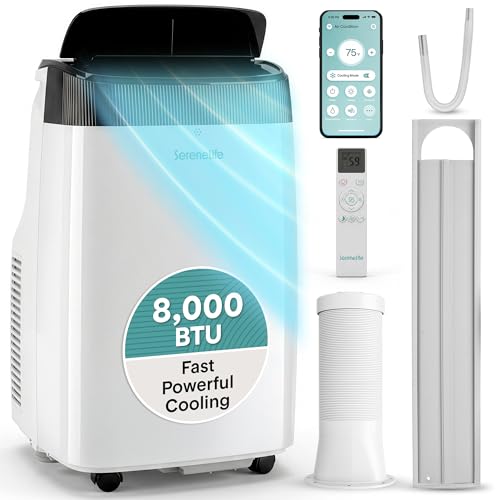
SereneLife Portable Air Conditioner 8000 BTU With WIFI | 3-in-1 Cooling, Fan and Dehumidifier | 24-H Timer up to 350 sq ft Coverage | AC Unit for Bedroom, Home & Office | Window Kit & Remote
Chosen because it adds cooling or gel-infused layers.
View on AmazonThe WiFi-enabled SereneLife version adds a more flexible control experience, which can make a noticeable difference in everyday comfort for busy households. If remote scheduling and app access matter as much as raw cooling, this upgrade is easier to justify than many smart-home add-ons.
Portable Air Conditioner 8,000 BTU Black
This black-finish portable AC offers a clean three-mode setup, remote control, and an easy-install kit, making it a practical choice where appearance matters alongside function. For furniture-focused interiors, its darker cabinet can integrate more naturally than the usual bright white box. This is an unbranded listing that we could not match to a current purchase page, so no buy button is shown; check availability before relying on it.
Hisense 8,000 BTU SACC Dual-Hose Inverter — Best for True 8,000 BTU Cooling

Hisense 8,000 BTU DOE/SACC (10,000 ASHRAE) Portable Air Conditioner Dual Hose & Inverter, 350 Sq Ft, Wi-Fi, ConnectLife App Google & Alexa, 3 operating modes, Noise 42 dB HAP0825TWD
One of the home product options compared in this guide.
View on AmazonMost “8,000 BTU” portable units earn that number on the older ASHRAE scale. This Hisense is different: its listing rates it at 8,000 BTU on the DOE/SACC scale, which corresponds to roughly 10,000 BTU ASHRAE. That puts it in a stronger cooling class than most units carrying the same headline number, and it is aimed at rooms up to about 350 square feet.
The dual-hose design pulls outside air in through one hose and exhausts hot air through the other, which avoids the negative pressure that draws warm air into the room with single-hose units. Add an inverter compressor, which ramps output up and down rather than cycling fully on and off, and you get a unit built for steadier temperatures and more efficient running. Wi-Fi control through the ConnectLife app with voice-assistant support rounds it out.
Pros
- 8,000 BTU rated on the stricter SACC scale
- Dual hose and inverter compressor for efficient, steady cooling
- App and voice-assistant control
Cons
- Two hoses take a little more space at the window
- Larger and heavier than basic single-hose compact units
DREO 318S Smart Portable AC — Best Smart Bedroom Pick

DREO Portable Air Conditioner 318S, 8000 BTU ASHRAE (5000 BTU DOE) Smart AC Unit for Bedroom with Drainage-free Cooling, Fan&Dehumidifier 3 in 1, APP/Voice/Remote, Quiet Standing AC for Room Indoors
Chosen because it adds cooling or gel-infused layers.
View on AmazonThe DREO 318S is designed around bedroom use and smart control. Its listing is unusually transparent about ratings, stating 8,000 BTU ASHRAE and 5,000 BTU DOE, so buyers know exactly which cooling class they are getting. It suits bedrooms, nurseries and small offices rather than large, sunny living rooms.
A key feature is what DREO calls drainage-free cooling: in normal cooling conditions, collected condensate is designed to be evaporated and expelled with the exhaust air, which cuts down on emptying a water tank. Very humid conditions can still require draining, so check the manual. App control lets you set schedules and adjust temperature without getting out of bed, and its modern styling looks less like a utility appliance than many budget cabinets.
Pros
- Clear ASHRAE and DOE ratings on the listing
- Drainage-free cooling design reduces tank emptying
- Smart app control and bedroom-friendly design
Cons
- 5,000 BTU DOE rating limits it to smaller rooms
- Sits in a higher price tier, often $350–$450
BLACK+DECKER 8,500 BTU BPACT05SM — Best Simple Name-Brand Option

BLACK+DECKER Portable Air Conditioner, 8,500 BTU, BPACT05SM, White
One of the home product options compared in this guide.
View on AmazonBLACK+DECKER’s BPACT05SM is a straightforward portable AC from a familiar brand, rated at 8,500 BTU on the ASHRAE scale, which typically corresponds to a SACC rating in the 5,000 BTU class. That makes it a fit for bedrooms, dorm rooms and home offices, especially for buyers who want reliable basics without app features.
Like most units in this class, it offers cooling, fan and dehumidifying modes with a remote control and a window kit for single-hose venting. It is a good pick if you value brand support and easy setup over smart features, and it has a long track record as one of the commonly recommended small-room portable units.
Pros
- Familiar brand with established support
- Simple controls and straightforward window-kit setup
- Suited to bedrooms and offices
Cons
- No Wi-Fi or app control
- Single-hose design is less efficient than dual-hose models
LG 8,000 BTU ASHRAE Portable AC With Wi-Fi — Best for Smart-Home Users
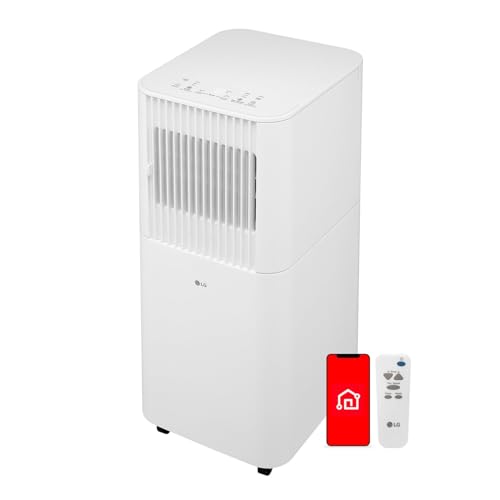
LG 6,000 BTU (DOE) / 8,000 BTU (ASHRAE) Portable AC with Wi-Fi and Remote
One of the home product options compared in this guide.
View on AmazonLG’s portable air conditioner is rated at 6,000 BTU on the DOE scale and 8,000 BTU on the ASHRAE scale. That DOE figure is a step above the many “8,000 BTU” units that land around 5,000 BTU SACC, which gives it a bit more cooling headroom for a mid-size bedroom or study.
Wi-Fi connectivity and a remote let you adjust settings from your phone or across the room, and LG’s app platform will appeal to anyone who already uses LG appliances or TVs. It is a balanced choice for buyers who want a major-brand unit with smart control, in a size class that suits most bedrooms.
Pros
- 6,000 BTU DOE rating is above many units in the 8,000 BTU class
- Wi-Fi and remote control
- Major brand with broad service network
Cons
- Typically costs more than budget 8,000 BTU units, often around $300–$400
- Single-hose venting rather than dual-hose
Shinco 8,000 BTU Portable AC — Best Budget Pick

Shinco 8,000 BTU Grey Portable Air Conditioner, Portable AC Unit with Built-in Cool, Dehumidifier & Fan Modes for Room up to 350 sq.ft, Room Air Conditioner with Remote Control, Installation Kit
Chosen because it adds cooling or gel-infused layers.
View on AmazonShinco is a long-standing value brand in portable cooling, and this 8,000 BTU unit covers the essentials: cooling, dehumidifier and fan modes in a grey cabinet that is a little less stark than standard white. It is a good match for shoppers who want a small bedroom or office cooled on a budget and are comfortable with basic controls.
As with most budget units, the 8,000 BTU figure follows the ASHRAE method, so plan on it for smaller rooms rather than the top end of advertised coverage, particularly in sunny or poorly insulated spaces. A remote and window kit are standard for this class; confirm the package contents on the listing.
Pros
- Affordable entry point, often around $180–$230
- Cooling, dehumidifier and fan modes
- Grey finish blends into many rooms
Cons
- Best for smaller rooms given its rating class
- No smart features
More 8,000 BTU Portable ACs With Real SACC Ratings
Competing guides lean on a few models that rate 8,000 BTU on the stricter DOE/SACC scale or carry a larger ASHRAE number. These four fill those gaps: a true-SACC LG, a BLACK+DECKER with larger listed coverage, a Midea rated 12,000 BTU ASHRAE and 8,000 BTU SACC, and a budget Frigidaire.
LG LP0825WFR 8,000 BTU SACC – Best Name-Brand Pick With a True 8,000 BTU Rating

LG 8000 BTU (DOE) / (11000 ASHRAE) Portable Air Conditioner Cools 350 Sqft Easy Install, Remote Control, Washable Filter Eco-friendly AC Unit, White LP0825WFR
One of the home product options compared in this guide.
View on AmazonWhere the other LG in this guide is a 6,000 BTU DOE unit, the LP0825WFR carries the 8,000 BTU figure on the SACC scale, so the headline number is the one that counts. It suits larger bedrooms and small living areas where a standard 8,000 BTU ASHRAE unit would struggle.
- 8,000 BTU SACC (DOE) and 11,000 BTU ASHRAE on LG’s product page
- Cools rooms up to 350 sq ft
- Cool, dehumidify and fan modes (no heating)
- Remote control with a 24-hour timer; LG’s page lists no Wi-Fi or app control
- Washable filter
Pros: the rating matches the label; simple remote and timer; major-brand service network. Cons: premium price tier, often $350-$400; cool-only; no Wi-Fi. Skip it if you want app or voice control, or only need to cool a small, shaded bedroom on a budget.
BLACK+DECKER BPACT08WT 9,000 BTU – Name-Brand Option With Larger Listed Coverage

BLACK+DECKER Portable Air Conditioner, 9,000 BTU, BPACT08WT, White
One of the home product options compared in this guide.
View on AmazonThe BPACT08WT is a frequent recommendation in 8,000 to 9,000 BTU roundups, but its published ratings differ by source, so read the rating on the listing you actually order. It is aimed at living rooms and home offices that are a step above bedroom size.
- Current retail listing: 9,000 BTU ASHRAE and about 5,300 BTU DOE
- The maker’s own page still shows the older 4,000 BTU DOE (8,000 BTU ASHRAE) rating and 52.9 lb
- Coverage quoted up to roughly 400 sq ft on the retail listing (ASHRAE basis)
- About 54 dB in retailer spec tables; white finish with remote, 24-hour timer and window kit
Pros: familiar brand; straightforward controls; cool, dehumidify and fan modes. Cons: the DOE rating is still in the 4,000-5,000 class, so the 400 sq ft claim is optimistic; ratings conflict between the listing and the maker page; heavy for a portable unit at roughly 50 lb; no inverter listed. Skip it if you want Wi-Fi control or the lowest purchase price.
Midea 12,000 BTU ASHRAE (8,000 BTU SACC) Portable AC – Best Voice-Control Pick

Midea 12,000 BTU ASHRAE (8,000 BTU SACC) Portable Air Conditioner, Cools up to 350 Sq.Ft., with Dehumidifier & Fan mode, Control with Remote, Amazon Alexa & Google Assistant, Easy-to-use and Install
One of the home product options compared in this guide.
View on AmazonThis Midea shows why the BTU number on a box is not enough: it is labeled 12,000 BTU on the ASHRAE scale but 8,000 BTU on the SACC scale, which puts it in the same real cooling class as the true 8,000 BTU models above. It is a good match for buyers who want voice control without paying inverter prices.
- 12,000 BTU ASHRAE and 8,000 BTU SACC
- Cools up to 350 sq ft
- Dehumidifier and fan modes
- Remote control plus Alexa and Google Assistant compatibility
Pros: a real 8,000 SACC rating; voice assistant support; mid-range price, often $350-$400. Cons: the large ASHRAE figure on the box can confuse comparisons; check weight and hose style on the listing before ordering. Skip it if you want a cheaper unit for a small bedroom.
Frigidaire 8,000 BTU ASHRAE / 5,500 BTU DOE Portable AC – Best Budget Name-Brand Pick

Frigidaire Portable Room Air Conditioner 8,000 BTU (ASHRAE) / 5,500 BTU (DOE), Cools Up to 350 Sq. Ft., Quiet Operation, Dehumidifying Dry Mode, White
One of the home product options compared in this guide.
View on AmazonFrigidaire’s 8,000 BTU portable lists a 5,500 BTU DOE rating, a little above the roughly 5,000 BTU many competitors land at. That makes it a sensible choice for a bedroom or home office when you want a known appliance brand without a smart-home premium.
- 8,000 BTU ASHRAE and 5,500 BTU DOE
- Cools up to 350 sq ft on the listing
- Dehumidifying dry mode
- Quiet-operation design
- White finish
Pros: slightly higher DOE rating than many 8,000 BTU units; familiar brand; reasonable price, often $230-$280. Cons: the 350 sq ft claim follows the ASHRAE number, so plan on roughly 200 sq ft in a sunny room; no smart features listed. Skip it if you need app scheduling or dual-hose efficiency.
8,000 BTU Portable Air Conditioners Compared
The table below collects the stated ratings and key features for each model covered above. Pay close attention to the rating column: a SACC or DOE number is a more realistic measure of cooling than the ASHRAE figure most listings lead with.
| Model | Stated rating | Stated coverage | Smart control | Standout feature |
|---|---|---|---|---|
| AKIRES 8,000 BTU | 8,000 BTU | Up to 350 sq ft | Remote | Sleep mode and 24-hour timer |
| GarveeLife 8,000 BTU | 8,000 BTU | Up to 350 sq ft | Remote | 4-in-1 modes, window kit included |
| SereneLife 8,000 BTU | 8,000 BTU | Up to 350 sq ft | Remote | 24-hour timer, window mount kit |
| SereneLife 8,000 BTU with WiFi | 8,000 BTU | Up to 350 sq ft | Wi-Fi app and remote | App scheduling |
| Portable AC 8,000 BTU Black | 8,000 BTU | Up to 350 sq ft | Remote | Dark cabinet finish |
| Hisense SACC Dual-Hose Inverter | 8,000 BTU SACC (10,000 ASHRAE) | Up to 350 sq ft | Wi-Fi app and voice | Dual hose with inverter compressor |
| DREO 318S | 8,000 ASHRAE / 5,000 DOE | Smaller bedrooms | Wi-Fi app | Drainage-free cooling design |
| BLACK+DECKER BPACT05SM | 8,500 BTU ASHRAE | Small rooms | Remote | Simple name-brand basics |
| LG Wi-Fi Portable AC | 8,000 ASHRAE / 6,000 DOE | Small to mid-size rooms | Wi-Fi app and remote | Higher DOE rating than most in class |
| Shinco 8,000 BTU | 8,000 BTU | Small rooms | Basic controls | Budget-friendly grey cabinet |
| LG LP0825WFR | 8,000 BTU SACC / 11,000 ASHRAE | Up to 350 sq ft | Remote (no Wi-Fi) | True 8,000 BTU SACC rating |
| BLACK+DECKER BPACT08WT | 9,000 ASHRAE / about 5,300 DOE (retail listing) | Up to 400 sq ft listed | Remote | Larger listed coverage; maker page shows an older rating |
| Midea 12,000 BTU ASHRAE | 12,000 ASHRAE / 8,000 SACC | Up to 350 sq ft | Remote and voice assistants | Voice control with a real 8,000 BTU SACC rating |
| Frigidaire 8,000 BTU | 8,000 ASHRAE / 5,500 DOE | Up to 350 sq ft listed | None listed | Slightly higher DOE rating than many in class |
ASHRAE vs SACC: What “8,000 BTU” Really Means
Two different rating methods appear on portable air conditioner boxes, and they can produce very different numbers for the same machine. The older ASHRAE rating measures cooling output under a fixed test condition and does not fully account for the heat a portable unit adds back to the room through its cabinet and exhaust hose. The newer DOE SACC (Seasonally Adjusted Cooling Capacity) rating accounts for those losses and better reflects real-world cooling.
The practical result is that most portable units sold as “8,000 BTU” are rated around 5,000 BTU SACC. A smaller number of models, such as the Hisense dual-hose inverter above, are rated 8,000 BTU on the SACC scale itself, which places them in a meaningfully stronger cooling class. When a listing shows only one number, it is almost always the ASHRAE figure.
Why does this matter? Coverage claims such as “up to 350 sq ft” are often based on the ASHRAE number and ideal conditions. In a bedroom with good insulation and shaded windows, a 5,000 SACC unit can perform well. In a sunny top-floor room or a space with high ceilings, you may want a unit with a higher SACC rating. When comparing models, line up SACC against SACC whenever the information is available.
Single-Hose vs Dual-Hose and Inverter Models
Single-hose units use indoor air to cool their internal components and then blow that warm air outside. Because air leaves the room, the room is slightly depressurized, and warm air from outside seeps in through doors, windows and gaps to replace it. Single-hose units are simpler, lighter and usually more affordable, and they work well in small, well-sealed rooms.
Dual-hose units draw outside air through one hose to cool the condenser and exhaust it through the second hose, so they do not pull conditioned air out of the room. The result is typically faster, more consistent cooling and better efficiency, especially in hotter climates. The trade-off is a slightly bulkier window setup and a higher price.
Inverter compressors adjust their speed to match demand instead of switching fully on and off. That usually means steadier room temperatures, fewer noisy start-ups and lower energy use once the room has cooled down. For a bedroom where abrupt compressor cycling disturbs sleep, an inverter model is worth considering.
Room Size Guide for Portable Air Conditioners
The table below uses widely referenced room air conditioner sizing guidance. For portable units, compare these figures against the SACC rating where possible, since that is closer to the cooling you will actually get.
| Room area | Suggested cooling capacity |
|---|---|
| 100–150 sq ft | About 5,000 BTU |
| 150–250 sq ft | About 6,000 BTU |
| 250–300 sq ft | About 7,000 BTU |
| 300–350 sq ft | About 8,000 BTU |
| 350–400 sq ft | About 9,000 BTU |
Adjust for conditions: reduce capacity by about 10 percent for a heavily shaded room, increase it by about 10 percent for a very sunny room, and add roughly 600 BTU for each regular occupant beyond two. Kitchens need considerably more because of cooking heat. By this measure, a typical 5,000 SACC unit is best suited to rooms of roughly 150 square feet, while a true 8,000 SACC model fits the 300-to-350-square-foot range.
Energy Use and Running Costs
Most portable air conditioners in this class draw several hundred watts while the compressor runs, often somewhere around 700 to 1,000 watts, depending on the model and setting. The exact figure is printed on the rating label and in the manual. At an electricity rate of about 17 cents per kWh, a unit drawing 800 watts for eight hours a day costs roughly $1 a day, or around $30 a month, if the compressor ran continuously. In practice, the compressor cycles or slows once the room reaches temperature, so real costs are often lower.
You can reduce running costs by keeping doors closed, drawing blinds on sunny windows, sealing gaps around the window kit, and using the timer or app schedules so the unit is not cooling an empty room. Inverter models generally use less energy once the room has cooled down.
Installation Step by Step
- Choose the spot: place the unit on a level floor near a window and an outlet, leaving the clearance the manual specifies around the air intakes, often around 12 to 20 inches.
- Fit the window kit: extend the slider panel to fit the window opening and close the sash against it. Most kits fit standard sliding and double-hung windows; casement windows may need an aftermarket kit.
- Attach the hose: connect the exhaust hose to the unit and the window adapter. Keep it as short and straight as possible, since bends and extra length reduce efficiency.
- Seal the gaps: use foam strips around the slider panel to block warm air leaks. Insulating the hose with a wrap can also help, as the exhaust hose gets warm during use.
- Plug in directly: connect the power cord straight to a properly grounded wall outlet. Avoid extension cords and power strips unless the manufacturer explicitly permits them.
- Let it settle: if the unit was tipped during delivery, follow the manual’s guidance on letting it stand upright before running the compressor.
Draining and Maintenance
Portable air conditioners remove moisture as they cool, and they handle that water in one of three ways. Self-evaporating designs expel most condensate with the exhaust air and only need occasional draining in humid conditions. Others collect water in an internal tray or tank that needs emptying when the unit signals it is full. Many also offer a continuous drain port, which is useful in dehumidifier mode, where a hose can lead to a floor drain or bucket.
- Clean the air filter every two weeks during heavy use. A clogged filter reduces airflow and cooling performance.
- Check the drain plug before and after the cooling season and empty any remaining water.
- Dry the unit before storage by running fan mode for a few hours at the end of the season to prevent mold and odors.
- Inspect the hose and window kit for cracks and loose seals each season.
- Store upright in a dry place, with the hose and kit together so they are ready for next summer.
Tips for Quieter, Cooler Results
Place the unit on a hard, level floor rather than thick carpet, which can amplify vibration. Run the unit on a lower fan speed overnight and pre-cool the bedroom an hour before bed with the timer or app, so it only needs to maintain the temperature while you sleep. Keep the unit a short distance away from the bed and point the airflow across the room rather than directly at you. A ceiling or floor fan can also help circulate cool air into corners, allowing a smaller unit to keep up with a slightly larger room.
Best 8,000 BTU Portable AC by Need
Best for the most cooling power
The Hisense dual-hose inverter is the standout, because its 8,000 BTU figure is a SACC rating rather than ASHRAE. Choose it for sunny rooms, top-floor bedrooms or spaces near the 350-square-foot mark.
Best for bedrooms and light sleepers
The DREO 318S is built around bedroom use with app scheduling and a drainage-free cooling design, while the GarveeLife adds a 24-hour timer and remote at a lower price. Inverter models such as the Hisense also help avoid abrupt compressor cycling at night.
Best for smart-home control
The LG Wi-Fi model, the SereneLife with WiFi and the Hisense all support app control. LG suits households already using LG devices, while the Hisense adds voice-assistant support.
Best on a budget
The Shinco, GarveeLife and standard SereneLife models deliver cooling, fan and dehumidifier modes at entry-level prices. Use them in smaller, well-shaded rooms to get the best results from their rating class.
Best for simple, familiar operation
The BLACK+DECKER BPACT05SM keeps things straightforward with a remote and window kit from a widely known brand, making it a good fit for dorms, guest rooms and offices.
Portable AC vs Window AC: Which Should You Choose?
Portable air conditioners and window units solve the same problem in different ways. A window unit places the noisy compressor and hot side outside the room, which generally makes it quieter indoors and more efficient for the same SACC capacity. Window units also tend to cost less per BTU. The downsides are installation weight, the need for a suitable window, and building rules that sometimes prohibit them.
A portable unit sits on the floor and vents through a narrow window kit, so it works in many rentals, condos and rooms where hanging a window unit is impractical or not allowed. It can be rolled to another room or stored in a closet over winter, and setup typically takes minutes rather than requiring heavy lifting at the window. The trade-offs are floor space, an exhaust hose, more indoor noise and, for single-hose designs, lower efficiency.
If you own your home, have a suitable window and want the most cooling per dollar, a window unit is usually the better value. If you rent, need flexibility, or have windows that cannot hold a window unit safely, an 8,000 BTU portable AC is the more practical choice.
Common Buying Mistakes to Avoid
- Comparing ASHRAE to SACC: an 8,000 BTU ASHRAE unit and an 8,000 BTU SACC unit are not equivalent. Compare like with like.
- Sizing to the maximum claim: advertised coverage assumes favorable conditions. For a sunny or poorly insulated room, size up or choose a higher SACC rating.
- Ignoring the window type: standard kits fit sliding and hung windows; casement, awning and unusually tall or wide windows may need a different kit.
- Stretching the hose: extending or coiling the exhaust hose reduces efficiency and can trigger overheating protection.
- Forgetting drainage: know whether the unit self-evaporates, needs tank emptying or requires a drain hose before deciding where it will sit.
- Overlooking noise: for bedrooms, look for sleep modes, low fan speeds and inverter designs rather than relying on a single published decibel figure.
More Questions About 8,000 BTU Portable ACs
Is a 12,000 BTU ASHRAE portable air conditioner the same as 8,000 BTU SACC?
Often, but not always. Some makers label a unit 12,000 BTU ASHRAE and 8,000 BTU SACC, like the Midea above, while others pair 8,000 BTU ASHRAE with only about 5,000 BTU SACC. Always compare the DOE/SACC figure on the listing.
What is the best 8,000 BTU portable air conditioner for a 350 square foot room?
Choose a model rated 8,000 BTU on the SACC scale, such as the Hisense dual-hose inverter, the LG LP0825WFR or the Midea above. Standard ASHRAE-rated units suit roughly 150 to 250 square feet.
Which 8,000 BTU portable AC is best for a bedroom?
The DREO 318S is the strongest bedroom pick for app scheduling and drainage-free cooling, while the Hisense inverter model avoids abrupt compressor cycling at night.
How loud is an 8,000 BTU portable air conditioner?
Published figures for single-hose units in this class run from about 50 to 57 dB, while inverter dual-hose models can list lower numbers. Treat all of them as manufacturer figures measured under ideal conditions.
Frequently Asked Questions
Is 8,000 BTU enough for a bedroom or small living room?
Usually yes, if the room is within the stated coverage range and not fighting major heat load from tall ceilings, west-facing glass, or heavy foot traffic. In practice, 8,000 BTU performs best in enclosed spaces where doors can stay closed and the exhaust hose can run short and straight.
Are portable air conditioners noisier than window AC units?
Often yes, because more of the mechanical system stays inside the room. That said, noise quality matters more than raw volume, and a steady compressor hum with a well-tuned sleep mode can feel far less intrusive than a unit with abrupt cycling or plastic-panel buzz.
Do portable AC units also remove humidity?
Most models in this category include a dehumidifier mode, and that function is more important than many buyers realize. Lower indoor moisture improves comfort quickly, especially in muggy climates where air can feel heavy even before the thermometer climbs.
What should buyers expect from installation?
Setup is generally manageable with a window kit and exhaust hose, but fit still varies by window style and available floor clearance. Best results come from placing the unit near the window, minimizing hose bends, and checking that warm exhaust air is sealed off cleanly from the room.
What is the difference between ASHRAE and SACC BTU ratings?
ASHRAE is the older rating method and usually produces a higher number. SACC, the current DOE rating, accounts for heat a portable unit adds back to the room through its cabinet and hose, so it better reflects real cooling. Many units sold as 8,000 BTU ASHRAE are rated around 5,000 BTU SACC.
Is a dual-hose portable air conditioner worth it?
For hot climates, sunny rooms or spaces at the top of the advertised range, often yes. Dual-hose units avoid pulling conditioned air out of the room, which typically means faster, steadier cooling. For a small, shaded bedroom, a single-hose unit is usually adequate and costs less.
Can I run a portable air conditioner on an extension cord?
Most manufacturers advise against it. Portable air conditioners draw substantial current, and an undersized extension cord or power strip can overheat. Plug the unit directly into a grounded wall outlet unless the manual specifically allows a heavy-duty cord.
How often do I need to drain a portable air conditioner?
It depends on the design and humidity. Self-evaporating models may rarely need draining in typical conditions, while units with a collection tank need emptying whenever the full indicator lights up. In dehumidifier mode, a continuous drain hose is the most convenient option.
Can a portable air conditioner work without a window?
A standard portable AC must vent hot air outside, usually through a window kit. Alternatives include venting through a wall, a sliding door kit or a drop ceiling, but each requires a proper sealed exhaust path. Running the unit without venting the exhaust will heat the room rather than cool it.
How much does it cost to run an 8,000 BTU portable AC?
Costs vary with wattage, electricity rates and hours of use. As a rough guide, a unit drawing around 800 watts for eight hours a day at 17 cents per kWh would cost about $1 a day if the compressor ran continuously. Inverter models and good sealing usually bring that down.
Final Thoughts
For most buyers, the Hisense SACC dual-hose inverter is the strongest cooler here, the GarveeLife 8,000 BTU Portable Air Conditioner is a smart choice for convenience-focused setups, and the SereneLife 8,000 BTU Portable Air Conditioner with WiFi makes most sense for shoppers who want more flexible control from day one. If your room is near 350 square feet, stick with the true SACC-rated models above.
- ▸ Start an Audible Premium Plus free trial
- ▸ Read free with Kindle Unlimited