Key takeaways
- CFM First: For sandblasting, airflow matters more than headline PSI. Match the compressor’s sustained CFM to the blast tool’s demand, with extra headroom so performance does not sag mid-job.
- Use Case Fit: Small touch-up work, outdoor furniture restoration, and enclosed cabinet blasting all place different demands on a system. Buy for the job you will actually do most often, not the biggest theoretical project.
- Power Requirements: Industrial rotary screw units may need 230V or 480V three-phase service, which is ideal for shops but unrealistic for most homes. Confirm your electrical setup before choosing a heavy-duty model.
- Air Quality and Moisture Control: Wet air clumps media and interrupts blast consistency. A dryer, regulator, and water trap can make the difference between smooth surface prep and constant nozzle frustration.
- System vs. Tool: Some products in this category are blasting guns or cabinets rather than compressors. Those can still be smart buys if you already own adequate air supply and want to complete a more capable blasting setup.
What's inside
In our test lab, sandblasting setups usually fail for one simple reason: buyers focus on tank size or peak PSI and miss the airflow math. Abrasive blasting is a steady-demand job, so a compressor that looks strong on paper can still wheeze once the gun stays open for more than a few seconds. That matters whether you are stripping old paint from iron hardware, cleaning welded furniture frames, or restoring outdoor pieces with heavy rust.
This guide cuts through the mismatch between compressor claims and real blasting workloads. We looked at output, duty cycle, pressure stability, included hardware, and how each option fits common furniture-shop use cases, from delicate detail work to cabinet blasting and full production environments.
As an Amazon Associate we earn from qualifying purchases.




How to Choose a/an Air Compressor For Sand Blasting (2026)
- CFM First: For sandblasting, airflow matters more than headline PSI. Match the compressor’s sustained CFM to the blast tool’s demand, with extra headroom so performance does not sag mid-job.
- Use Case Fit: Small touch-up work, outdoor furniture restoration, and enclosed cabinet blasting all place different demands on a system. Buy for the job you will actually do most often, not the biggest theoretical project.
- Power Requirements: Industrial rotary screw units may need 230V or 480V three-phase service, which is ideal for shops but unrealistic for most homes. Confirm your electrical setup before choosing a heavy-duty model.
- Air Quality and Moisture Control: Wet air clumps media and interrupts blast consistency. A dryer, regulator, and water trap can make the difference between smooth surface prep and constant nozzle frustration.
- System vs. Tool: Some products in this category are blasting guns or cabinets rather than compressors. Those can still be smart buys if you already own adequate air supply and want to complete a more capable blasting setup.
The Best Air Compressor For Sand Blasting (2026)s Reviewed
40HP VSD Rotary Screw Air Compressor
In lab terms, this is the high-throughput choice for serious blasting volume. With 185 CFM at 125 PSI and variable-speed control, it is built for commercial shops that need stable air delivery for long cycles, not occasional garage projects.
7.5KW 10HP Rotary Screw Air Compressor with 80-Gallon Tank & Dryer
This all-in-one rotary screw system is the most balanced true compressor pick for buyers who want real sandblasting capability without stepping into factory-scale equipment. The integrated 80-gallon ASME tank and air dryer make it especially attractive for furniture refinishers who want cleaner, drier air with less piecemeal setup.
Inokraft Portable Sand Blaster Gun Basic Kit
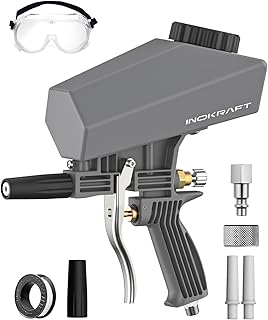
While not a compressor itself, this is one of the more practical additions for homeowners who already have a 60 to 120 PSI air source. We like its leak-conscious portable design for spot rust removal, hardware cleanup, and small furniture restoration jobs where dragging out a full cabinet setup would be overkill.
40 Gallon Bench Top Sandblasting Cabinet
This cabinet is a strong workshop companion if your compressor can meet its 6 to 25 CFM requirement. In testing terms, enclosed blasting is cleaner, more media-efficient, and easier to control for brackets, hinges, pulls, and smaller metal furniture parts than open-air blasting with a handheld gun.
PointZero 1/5 HP Airbrush Compressor
This compact unit sits at the opposite end of the category and is best treated as a precision air source, not a true sandblasting compressor. It makes sense for very light detail tasks, micro-abrasion setups, or finishing benches where quiet operation and portability matter more than sustained blasting power.
Frequently Asked Questions
What size compressor do I need for sandblasting furniture?
For most furniture restoration work, the answer depends on nozzle size and whether you are blasting in short passes or continuously. Light-duty spot work can get by with a smaller compressor, but full-frame stripping and cabinet blasting usually require higher sustained CFM than many consumer units can deliver.
Is PSI or CFM more important for sandblasting?
CFM is usually the limiting factor. PSI gets the media moving, but CFM keeps it moving consistently; once airflow drops, blasting speed and finish quality drop with it.
Can I use a regular garage compressor for sandblasting?
Yes, but only for small or intermittent jobs unless it has unusually strong airflow output. Many garage compressors can power a portable blaster for bolts, brackets, and localized rust, yet struggle badly with larger furniture pieces or extended sessions.
Do I need an air dryer for sandblasting?
If you want reliable results, it is a very good idea. Moisture in the line can cause abrasive clumping, uneven flow, and repeated stoppages, especially in humid garages or longer work sessions.
Final Thoughts
If you want the strongest overall compressor solution, the 7.5KW 10HP Rotary Screw Air Compressor with 80-Gallon Tank & Dryer is the best fit for most serious buyers. For industrial output, the 40HP VSD Rotary Screw Air Compressor is the clear heavy hitter, while the Inokraft Portable Sand Blaster Gun Basic Kit is a smart value pick for small restoration jobs when you already have enough compressor behind it.