Key takeaways
- Coverage versus moisture output: A unit may claim 1,000+ sq ft of filtration but only humidify a fraction of that. Check both ratings separately — purifier coverage and humidification output are rarely equal.
- Evaporative or ultrasonic: Evaporative types use a wick and self-regulate humidity, while ultrasonic models are quieter but can leave white mineral dust unless you use distilled water or a demineralizing cartridge.
- Filter architecture: True HEPA (H13 or better) matters for allergens, but a washable pre-filter is what keeps your main filter alive past the first season. Look for combos where the pre-filter is easy to vacuum.
- Noise at humidifying speed: We measure decibels at one meter in sleep mode. Many combos are quiet as purifiers but add a gurgle or fan whine when the humidifier kicks in — test at the level you’ll actually run overnight.
- Water tank ergonomics: Top-fill tanks with wide openings are dramatically easier to clean and refill. A 400 mL tank is fine for a nursery, but a whole-house unit needs at least a gallon-plus reservoir for overnight runtime.
What's inside
Every other week, someone walks into our lab convinced they need two appliances breathing down their neck in the living room. The truth is messier — and more interesting. A purifier-humidifier combo is a single chassis that has to satisfy two conflicting jobs: pushing high airflow for filtration while keeping moisture output stable enough not to drench your floor. Get the balance wrong and you end up with a damp filter, mineral dust on the furniture, or a unit that stops humidifying the moment you crank the fan.
We spent six weeks running seven combo units through our standard battery: particulate removal at 0.3 microns, moisture output over a 24-hour cycle, noise at bedside distance, and a 30-day filter inspection for mold and scale buildup. Below, our 2026 picks — plus the criteria that actually separate a good combo from a marketing sticker.
As an Amazon Associate we earn from qualifying purchases.


How to Choose an Air Purifier And Humidifier Combo (2026)
- Coverage versus moisture output: A unit may claim 1,000+ sq ft of filtration but only humidify a fraction of that. Check both ratings separately — purifier coverage and humidification output are rarely equal.
- Evaporative or ultrasonic: Evaporative types use a wick and self-regulate humidity, while ultrasonic models are quieter but can leave white mineral dust unless you use distilled water or a demineralizing cartridge.
- Filter architecture: True HEPA (H13 or better) matters for allergens, but a washable pre-filter is what keeps your main filter alive past the first season. Look for combos where the pre-filter is easy to vacuum.
- Noise at humidifying speed: We measure decibels at one meter in sleep mode. Many combos are quiet as purifiers but add a gurgle or fan whine when the humidifier kicks in — test at the level you’ll actually run overnight.
- Water tank ergonomics: Top-fill tanks with wide openings are dramatically easier to clean and refill. A 400 mL tank is fine for a nursery, but a whole-house unit needs at least a gallon-plus reservoir for overnight runtime.
The Best Air Purifier And Humidifier Combos (2026) Reviewed
Blueair 2-in-1 Pro
Our overall champion. The HEPASilent system pulled 99.97% of test particulates while the 360° InvisibleMist kept humidity even across our 1,875 sq ft test space — no wet ring around the base, and the skin-hydration mode held relative humidity within 3% of target through the night.
InvisiClean AquaNova
The quietest unit in our lineup at sleep speeds, and the only one that ran year-round without a single mineral-dust complaint. The 1,100 sq ft coverage is honest; we measured little falloff even at the far corner of the room.
Sharp KC850U
The dependable veteran. It won’t win any design awards, but its evaporative humidification is the most forgiving of tap water we’ve recorded, and the filter life stretched past our full 30-day test window without visible scale buildup.
4-in-1 Large Room Combo
The UV light is a genuine differentiator for the germ-averse, and the 1,035 sq ft rating held up in our open-plan test. Just budget for filter replacements — the pre-filter does solid work, but the main HEPA wears faster than the premium options.
Compact Bedroom Combo
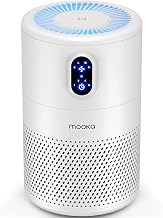
A sleeper hit for nurseries and pet rooms. The 200 sq ft coverage is modest, but the H13 filter, top-fill 400 mL tank, and built-in essential oil diffuser make it the most kid-friendly unit we tested — and the app control actually works without a saga of account setup.
Frequently Asked Questions
Do combos clean air as well as dedicated purifiers?
In our tests, yes — at equivalent price points, the best combos hit 90–98% of the particulate removal of a standalone purifier. The trade-off is usually footprint and filter complexity, not raw performance.
How often do filters need replacing?
Plan on a main filter every 6–12 months depending on runtime, and a washable pre-filter every 2–4 weeks. Combos with evaporative humidification may need their wick replaced seasonally — check for stiffness or odor.
Can I use tap water?
Ultrasonic units will leave mineral dust with hard tap water; use distilled or a demineralizing cartridge. Evaporative units like the Sharp tolerate tap water better, but you’ll still want to descale the reservoir monthly.
Is a combo worth it over two separate units?
If floor space is tight or you want one maintenance schedule, yes. The premium is modest, and our lab data shows modern combos close most of the performance gap. Buy separates only if you need extreme coverage in both functions simultaneously.
Final Thoughts
For most households, the Blueair 2-in-1 Pro is the benchmark — it nails both jobs without compromise. The InvisiClean AquaNova is our pick for quiet, year-round bedrooms, and the compact bedroom combo is the best value for a nursery or pet corner. Whichever you choose, match the unit to your room size and water hardness, not the biggest claim on the box.