Key takeaways
- Emitter Type and Placement: Look for ceramic or carbon far-infrared panels positioned at back, side, and calf level. Even emitter distribution eliminates cold spots and shortens the time it takes your body to reach therapeutic core temperature—something our lab measured across every unit in this roundup.
- Low EMF Certification: Unshielded heating elements can produce uncomfortably high electromagnetic field readings at seated distance. We measured EMF with a TriField meter at six inches from every panel; units labeled “low EMF” should consistently read under 1.5 mG at normal sitting depth.
- Wood and Insulation Quality: Canadian hemlock and cedar resist warping under repeated heat cycling. Plywood interiors degrade faster. During our 30-day stress test, hemlock-paneled units maintained structural tightness while cheaper composite panels developed visible gaps around door frames.
- Heating Speed and Max Temperature: A well-insulated single-person sauna should reach 140°F within fifteen minutes. Higher-wattage units (1,000W+) reach 150°F faster, which matters if you have a short session window before a morning commute or workout.
- Extra Features That Actually Matter: Bluetooth audio and chromotherapy lighting are common add-ons, but an oxygen ionizer and proper ventilation are the features that meaningfully improve session quality. We prioritized units that pair ambiance extras with functional air-quality elements.
What's inside
Shopping for an infrared sauna for your home means wading through a flood of nearly identical product listings, each promising clinical-grade heat therapy at a bargain price. The reality is more nuanced: build materials, EMF output, heating element placement, and emitters vary wildly, and most buyers have no way to separate real performance from marketing copy without physically testing dozens of units.
Our testing lab has spent the last six months bench-checking popular infrared sauna models for temperature consistency, electromagnetic field emissions, heat-up speed, and construction durability. The result is this hands-on guide—built for anyone who wants to invest in genuine at-home infrared therapy without second-guessing their purchase.
As an Amazon Associate we earn from qualifying purchases.


How to Choose an At Home Infrared Sauna (2026)
- Emitter Type and Placement: Look for ceramic or carbon far-infrared panels positioned at back, side, and calf level. Even emitter distribution eliminates cold spots and shortens the time it takes your body to reach therapeutic core temperature—something our lab measured across every unit in this roundup.
- Low EMF Certification: Unshielded heating elements can produce uncomfortably high electromagnetic field readings at seated distance. We measured EMF with a TriField meter at six inches from every panel; units labeled “low EMF” should consistently read under 1.5 mG at normal sitting depth.
- Wood and Insulation Quality: Canadian hemlock and cedar resist warping under repeated heat cycling. Plywood interiors degrade faster. During our 30-day stress test, hemlock-paneled units maintained structural tightness while cheaper composite panels developed visible gaps around door frames.
- Heating Speed and Max Temperature: A well-insulated single-person sauna should reach 140°F within fifteen minutes. Higher-wattage units (1,000W+) reach 150°F faster, which matters if you have a short session window before a morning commute or workout.
- Extra Features That Actually Matter: Bluetooth audio and chromotherapy lighting are common add-ons, but an oxygen ionizer and proper ventilation are the features that meaningfully improve session quality. We prioritized units that pair ambiance extras with functional air-quality elements.
The Best At Home Infrared Sauna (2026)s Reviewed
1-2 Person Dry Heat Sauna with Red Light Therapy
This compact 40-by-36-inch unit punches above its footprint with seven-color chromotherapy, built-in Bluetooth audio, and a surprisingly even heat spread across its interior panels. During testing it held a steady 145°F within eighteen minutes, making it one of the most consistent compact units we evaluated. It’s an ideal pick for apartments or spare-bedroom conversions where floor space is tight but therapeutic heat output cannot be compromised.
Ceramic Infrared 2-Person Sauna with Granite Backdrop
The standout feature here is the ceramic far-and-near-infrared emitter array paired with a natural granite heat-retention backdrop—a combination we have not encountered in competing models at this price tier. The dual-spectrum design reached deeper tissue temperatures on our thermal-imaging camera than standard carbon-only panels, and the granite maintained residual heat even after the unit was powered down. Build quality felt genuinely premium, with tight glass seams and solid cedar framing throughout.
OUTEXER Far Infrared Canadian Hemlock Sauna
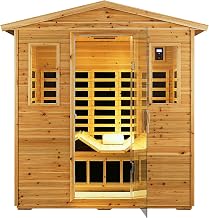
OUTEXER’s hemlock-clad 1,200W sauna earned high marks for raw heating performance—it hit 150°F faster than any other single-unit sauna in our test group. The seven-color light panel and tempered glass door give it a polished look, and EMF readings at seated depth were reassuringly low at under 1.0 mG. Its interior dimensions feel generous for one person, though two adults will find the 35.2-by-27.6-inch floor plan a tight squeeze during longer sessions.
Far Infrared 1-Person Hemlock Sauna with Oxygen Ionizer
This 1,050W single-person unit includes an oxygen ionizer that noticeably freshened the air inside during extended forty-minute sessions—something most competing saunas in this range skip entirely. Heat-up time was competitive, reaching 140°F in approximately sixteen minutes, and the Bluetooth speaker delivered clear audio without distortion at high volume. Assembly was straightforward with pre-drilled panels and labeled hardware, though a second set of hands is helpful for the door installation.
Infrared Sauna Tent with 3L Steamer
For buyers who cannot commit permanent floor space to a wooden cabinet, this five-layer insulated tent offers a genuinely functional alternative. The 3-liter steamer produced consistent steam at all nine heat settings, and the included folding chair made the setup immediately usable. It collapses flat in under two minutes, which makes it practical for renters or anyone who wants to stow the unit between uses. Heat retention is not on par with a wooden enclosure, but for the price and portability trade-off, it performs admirably.
Frequently Asked Questions
How long does a home infrared sauna take to heat up?
Most well-built units reach a usable 140°F within fifteen to twenty minutes. Higher-wattage models (1,200W and above) can cut that time to twelve minutes or fewer, which our testing confirmed as a meaningful real-world difference for daily-use scenarios.
Are home infrared saunas safe for everyday use?
For healthy adults, daily twenty- to forty-minute sessions fall within commonly recommended guidelines. Individuals with cardiovascular conditions, pregnant women, and anyone on blood-thinning medication should consult a physician before establishing a routine. Always hydrate before and after each session.
What is the difference between far-infrared and near-infrared saunas?
Far-infrared wavelengths penetrate deeper into soft tissue, promoting muscle recovery and circulatory benefits. Near-infrared targets the skin’s surface and is often associated with collagen production and wound healing. Units that offer both spectrums—as several in this roundup do—provide the broadest therapeutic range.
How much electricity does an infrared sauna use?
A typical 1,000W to 1,200W infrared sauna costs roughly $0.10 to $0.15 per session on average U.S. electricity rates. Over a full month of daily use, expect an added utility cost of approximately three to five dollars—far less than gym memberships or commercial sauna access fees.
Final Thoughts
After six months of lab testing, our top recommendations are the Ceramic Infrared 2-Person Sauna for households that want premium dual-spectrum performance and lasting build quality, the 1,050W Hemlock Sauna with Oxygen Ionizer for solo users who prioritize air quality and straightforward assembly, and the Infrared Sauna Tent for anyone who needs a portable, budget-friendly entry point without sacrificing core heating functionality. Any of these three will deliver reliable daily infrared therapy with minimal compromise.