Our Top Picks
Pros & cons
- Dual USB ports let it double as a device charger
- Two temperature settings suit different warmth needs
- Compact and portable design fits workshops or small rooms
- Only compatible with specific listed battery models
- Listing does not specify runtime per battery charge
Pros & cons
Designed around windshield defrosting and defogging, with 360-degree rotation and 160-degree tilt adjustment listed in the title.
- 360-degree rotation and 160-degree tilt aim heat anywhere
- Compact design fits easily in a car or small space
- Quiet operation avoids disturbing work or rest
- Requires separately purchased batteries to operate
- Only two heat settings limit temperature control
 Best when stated battery capacity is the priorityBattery Powered Space Heater 12000mAh Cordless Portable HeaterCheck on Amazon
Pros & cons
Lists a 170W output, fast-heating claim, dual-speed operation, and a 12000mAh battery.
- Built-in 12000mAh battery runs without a power outlet
- 360-degree base and compact size fit tight spaces
- Cigarette lighter plug and USB options add charging flexibility
- Dual speed settings offer only limited heat control
- Listing provides no detailed specifications for this heater
If you need warmth away from an outlet, the best battery-powered space heater depends less on room size and more on the job. These products are generally designed for close-range spot heating, vehicle defrosting, camping, or garage work—not for replacing a full-size plug-in heater in a bedroom or living room. Battery capacity, compatible power sources, safe placement, and airflow direction should guide the decision.
For the broadest starting point, the 5-cell rechargeable model offers wireless operation, dual USB ports, included 3000mAh rechargeable batteries, quiet operation, and an anti-tilt design according to its listing information. Tool-battery owners may prefer the banapoy model, while vehicle users should focus on the automotive blower formats. The 12000mAh model is the most obvious capacity-focused choice, although capacity alone does not establish a guaranteed runtime.
Updated October 2026 — The best battery powered space heater is a 150-200W personal heater for your desk, tent or lap, not a room heater: a typical 20V 5.0Ah tool battery holds about 100 Wh, enough for roughly 30 minutes at 200W. For real room heat without an outlet, use an indoor-safe propane heater or a large power station.
Top 3 by job: the Battery Powered Space Heater with 5-Cell Rechargeable Batteries for self-contained personal warmth, the Yudara Mini Heater for DW 20V Max Batteries if you already own DEWALT-style packs, and the Mr. Heater Buddy FLEX (8,000-11,000 BTU propane, indoor-safe with oxygen-depletion sensor) when you need to warm a room of up to about 275 sq ft.
Our top picks at a glance
- Best overall for personal portability: Battery Powered Space Heater with 5-cell rechargeable batteries — A compact wireless option with dual USB ports, quiet operation, anti-tilt design, and 3000mAh rechargeable batteries listed in the product title.
- Best for compatible tool-battery owners: banapoy 200W Portable Car Window Defroster — Uses batteries identified as BL1850B and BL1840B and adds two heat settings plus dual USB ports.
- Best for garage or jobsite spot heating: 200W Cordless Space Heater with 360-degree rotation — Offers natural-wind and heated modes, rotation, and dual USB functionality for localized airflow.
- Best for a vehicle-focused format: CUIFATI Portable Car Heater and Defroster — Designed around windshield defrosting and defogging, with 360-degree rotation and 160-degree tilt adjustment listed in the title.
- Best when stated battery capacity is the priority: 12000mAh Cordless Portable Heater — Lists a 170W output, fast-heating claim, dual-speed operation, and a 12000mAh battery.
How we researched this guide
This guide is based on the product titles and specifications stated for each listing, with attention to the differences between rechargeable heaters, tool-battery appliances, vehicle defrosters, and higher-voltage equipment. We compared the stated output, battery information, operating modes, adjustment features, USB ports, and intended-use language where those details were available.
The listings do not include complete manuals, verified runtime figures, battery voltage for every model, dimensions, safety certifications, charging times, or a consistent set of owner-review findings. We therefore do not assign precise runtime expectations or make claims about heating an entire room. Before buying, confirm the current listing, operating instructions, included accessories, battery requirements, and indoor-use guidance. A product title can identify a feature, but it cannot replace the manufacturer’s full safety and compatibility information.
How to choose a battery-powered space heater
1. Match the heater to the actual job
“Battery-powered space heater” covers several very different product formats. A small rechargeable unit may be intended for personal warmth at a desk, in a tent, or inside a vehicle. A 200W blower may be more useful for moving warm air toward a windshield or a nearby work area. A tool-battery model may suit a garage or jobsite where the user already has compatible packs. These are not interchangeable use cases.
Start by identifying the area you want to warm. For a driver, windshield defrosting and defogging may matter more than broad cabin heating. For a camper, low weight, secure placement, and battery availability may matter more than maximum airflow. For a garage user, a rotatable body and a familiar battery platform can be more useful than a built-in rechargeable pack. For indoor spot heating, confirm that the manufacturer permits the intended indoor setting.
Mistake to avoid: choosing based only on the words “space heater.” A cordless unit that directs air at one person or one section of glass should not be assumed to heat a whole room evenly.
2. Interpret wattage realistically
Wattage describes electrical power draw or stated output, but it does not by itself guarantee a particular air temperature, airflow volume, heating area, or runtime. These products include models identified at 170W and 200W. Those figures should not be compared without checking what each manufacturer means by the specification and what power source the unit requires.
As a practical buying framework, cordless heaters in the roughly 170W-to-200W range are better approached as personal or spot-heating appliances. They may be useful close to a user, near a vehicle windshield, or beside a work area, but battery limitations make sustained whole-room heating a demanding expectation. A conventional wall-powered heater is generally the more appropriate category when the goal is to maintain the temperature of a full enclosed room.
Look for the listed heat settings and airflow information as well as wattage. Two heat modes can help balance warmth and battery use, while a natural-wind mode can provide airflow without activating the heating element. Do not assume that a “fast heating” claim means the unit will heat a large space quickly.
3. Check battery type, voltage, and what is included
Battery compatibility is one of the most important differences among these products. The 5-cell model’s title identifies 3000mAh rechargeable batteries, while the banapoy model identifies compatibility with BL1850B and BL1840B batteries. The 12000mAh model lists a built-in or associated 12000mAh battery in its title. Those arrangements involve different purchasing, charging, and replacement considerations.
A tool-battery heater may be convenient if you already own the exact supported battery. It may be less convenient if the battery is not included or if your existing pack uses a different mount, voltage, or protection system. Never assume that two batteries with similar names or capacities are interchangeable. Confirm the exact battery designation, voltage, physical interface, polarity, and whether an adapter is prohibited.
For rechargeable models, check whether the batteries are included, removable, replaceable, or charged inside the heater. Also check the charging input and whether a charger is included. A USB port may be intended for charging another device rather than charging the heater itself; do not infer its purpose from the presence of the port.
Mistake to avoid: forcing a battery into a mount or using an unlisted adapter. An incompatible battery can damage the heater or create a safety hazard.
4. Treat capacity and runtime as separate questions
Battery capacity is useful for comparison, but it does not provide a guaranteed operating time on its own. Runtime depends on the battery’s voltage and energy rating, the selected heat setting, fan speed, ambient temperature, battery age, and whether USB devices are also drawing power. A heater running at a higher output will normally place a greater demand on its battery than a lower setting or natural-wind mode.
The 12000mAh model may appeal to shoppers prioritizing a larger stated capacity, but the listing information does not establish a universal number of hours. Likewise, a 3000mAh rechargeable battery specification should not be treated as a promise of a particular session length. Confirm whether the capacity is stated at the relevant voltage and whether it refers to one battery, a combined battery system, or a power bank-style rating.
If you need several hours of intermittent use, consider a heater that accepts spare compatible packs or a design with an explicitly documented runtime chart. Keep batteries warm and dry according to the manufacturer’s instructions, and remember that cold conditions can affect battery performance.
5. Prioritize tip-over protection and thermal safeguards
Heating elements and hot air outlets require more care than ordinary battery-powered fans. Look for clearly documented tip-over protection, overheat protection, automatic shutoff behavior, stable feet or mounting, and unobstructed intake and outlet areas. The 5-cell model specifically identifies an anti-tilt design, but buyers should still confirm how that feature works and whether it shuts the heater off when tilted.
Place the unit on a stable, nonflammable surface. Keep it away from bedding, curtains, paper, clothing, fuel, and other combustible materials. Do not cover the heater, block the fan, insert objects into openings, or place it where it can be knocked over. Avoid using a heater while sleeping or leaving it running unattended unless the manufacturer’s instructions explicitly address that situation—and even then, follow the stated limitations.
For a car, secure the unit so it cannot slide or fall during use. Make sure the airflow does not obstruct visibility, interfere with vehicle controls, or create a distraction. A heater designed for defrosting should be positioned according to its instructions rather than aimed casually at the windshield from an unstable location.
6. Choose vehicle features for defrosting, not just warmth
Automotive heaters have a specialized job. A blower that can direct air toward glass may be more useful than a general personal heater when the immediate problem is frost or fog. The banapoy listing identifies a car window defroster format, while the CUIFATI listing identifies a windshield defroster and defogger with 360-degree rotation and 160-degree tilt adjustment.
Adjustability can help aim airflow, but it does not establish how quickly a windshield will clear. Check the heater’s power source, cable or battery arrangement, mounting method, and instructions for vehicle operation. Confirm that the unit is suitable for the vehicle’s electrical environment if it uses a vehicle connection, and do not assume that a cordless product can be operated safely in every part of a car.
Use the vehicle’s built-in climate and defrost controls as directed when possible. A small portable heater should be treated as a supplemental, targeted appliance, not as a substitute for safe visibility. Never drive until the windshield and windows provide adequate visibility.
7. Evaluate airflow direction, modes, and controls
Battery power is most useful when the heat can be aimed where it is needed. Rotation and tilt adjustment can help direct air toward a nearby user, workbench, or windshield. The 200W cordless model lists 360-degree rotation, and the CUIFATI model lists both rotation and tilt adjustment. These features may improve positioning, but they also make secure placement important.
Multiple modes offer another useful trade-off. The 200W cordless model identifies natural wind and heated modes, while the banapoy model lists two heat settings. A lower setting may be preferable when you need gentler airflow or want to reduce battery demand. A natural-wind mode can be useful as a fan function, but it should not be confused with a heating mode.
Before buying, check whether controls are accessible while the unit is mounted or placed on the floor, whether the display indicates the active mode, and whether the heater restarts automatically after power interruption. Those details can affect convenience and safety, but they are not stated consistently across these listings.
8. Treat USB ports as a convenience feature
Several listed models include dual USB ports. These can be useful for charging or powering small devices, but they also draw energy from the same battery system and may reduce available operating time. Confirm the port’s output, whether both ports can be used simultaneously, and whether the ports remain active while the heater is operating.
Do not assume that USB ports recharge the heater. A product may offer USB output for a phone or other device while using a separate input or charger for its own battery. Check the manual for charging direction, supported cables, and any restrictions on using USB devices while heating.
USB functionality should remain secondary to a suitable battery system, safe heating controls, and the right intended use. If a model’s capacity, charging method, or port specifications are unclear, treat those as questions to resolve on the current product page before purchase.
Important limitations of cordless heating
Battery-powered heaters are constrained by available stored energy. They are most practical for localized warmth, short sessions, vehicle glass, tents, and work areas where portability matters. They are usually not a replacement for a properly sized plug-in heater or a building’s fixed heating system. Room insulation, outdoor temperature, drafts, ceiling height, and the number of occupants can all affect the result.
For every model, read the current instructions before use. Confirm the permitted environment, battery requirements, charging procedure, clearance requirements, and safety shutoffs. When the listing does not provide a key detail—such as runtime, dimensions, certification, or included batteries—check the manufacturer’s documentation rather than guessing.
How Much Heat Can a Battery Actually Deliver?
A little arithmetic explains why battery-powered heaters are best treated as personal or spot heaters. A battery’s stored energy is measured in watt-hours (Wh), which you can estimate by multiplying its voltage by its amp-hour rating. An 18V or 20V Max-style tool battery rated at 5.0Ah holds roughly 90 to 100 Wh. Every watt-hour of electricity turned into heat equals about 3.4 BTU, so that entire battery holds roughly 300 to 350 BTU of heat energy.
For comparison, a typical 1,500W plug-in space heater produces about 5,100 BTU every hour. In other words, a full tool battery holds less heat energy than a standard wall heater produces in five minutes. Even a modest 200W cordless heater would, in theory, drain a 90 Wh battery in under half an hour at full output, before accounting for fan power, conversion losses or cold-weather battery performance.
Rechargeable heaters rated in mAh need one extra step. Many packs quote mAh at a lithium-ion cell voltage of around 3.6 to 3.7V. If a 12000mAh rating is quoted at that voltage, it represents roughly 44 Wh, and a 6500mAh rating roughly 24 Wh. Manufacturers do not always state the reference voltage, so treat these figures as rough guides rather than runtime estimates.
| Power source | Approximate stored energy | Approximate heat equivalent |
|---|---|---|
| 6500mAh pack at 3.7V | About 24 Wh | About 80 BTU |
| 12000mAh pack at 3.7V | About 44 Wh | About 150 BTU |
| 18V or 20V Max tool battery, 5.0Ah | About 90–100 Wh | About 300–350 BTU |
| 1,500W plug-in heater, one hour | 1,500 Wh from the wall | About 5,100 BTU |
The takeaway is not that battery heaters are useless. Warm air aimed directly at your hands, feet or a fogged windshield can make a real difference, because you are heating a small target rather than the air in a room. Just set expectations accordingly, and choose a format where heat is directed at the place you need it.
Battery Powered Space Heater Runtime by Battery Size
Runtime is simple division: watt-hours of battery divided by heater watts. The table shows best-case minutes at full output. Expect 10-30% less in the cold, and about 15% less on a power station because its inverter loses some energy.
| Battery | Stored energy | 150W heater | 200W heater | 750W heater (low) | 1,500W heater (high) |
|---|---|---|---|---|---|
| 12000mAh built-in pack (at 3.7V) | About 44 Wh | About 17 min | About 13 min | Not supported | Not supported |
| 18V/20V tool battery, 5.0Ah | About 90-100 Wh | About 36-40 min | About 27-30 min | Not supported | Not supported |
| Two 20V 5.0Ah packs | About 200 Wh | About 80 min | About 60 min | Not supported | Not supported |
| EcoFlow DELTA 3 Classic power station | 1,024 Wh (about 870 Wh usable at AC) | About 5.8 hr | About 4.3 hr | About 70 min | About 35 min |
Two practical rules follow. First, a battery heater rated under 200W warms your hands, feet or face, not the air in a room. Second, if you need hours of heat in a cold room during an outage, a propane heater rated for indoor use, or a heated blanket on a power station (often 50-100W), lasts far longer than any battery space heater.
Detailed product breakdowns
1. Battery Powered Space Heater with 5-Cell Rechargeable Batteries
This battery-powered space heater is positioned as a wireless personal-heating option for indoor use, cars, camping, and other situations where access to a wall outlet may be limited. Its product title identifies five included 3000mAh rechargeable batteries, dual USB ports, silent operation, portability, and an anti-tilt design. Those features make it one of the more self-contained options in this group because the listing indicates that batteries are included rather than requiring a separate tool-battery system.
The intended use appears to be close-range or spot heating rather than heating an entire room. A battery-operated heater has to balance heat production against battery drain, so buyers should approach the included battery capacity as a portability feature rather than proof of a specific runtime. The listing does not state the heater’s wattage, voltage, heating modes, charging time, operating duration, or whether all five batteries operate together. Those details should be confirmed on the Amazon listing and in the manufacturer’s instructions before purchase.
Key specifications from the listing:
- Battery-powered and wireless design.
- Five 3000mAh rechargeable batteries are identified in the product title.
- Dual USB ports.
- Silent operation is claimed in the title.
- Anti-tilt design.
- Intended settings named in the listing include indoors, cars, and camping.
Strengths: The included rechargeable battery system may appeal to buyers who do not already own compatible power-tool batteries. Wireless operation can be useful in a vehicle, tent, campsite, or personal area where cable placement is inconvenient. Dual USB ports add a charging function, although using them while heating could affect available runtime. The stated anti-tilt design is a useful safety-oriented feature, particularly when the unit is placed on a surface that may be bumped or moved. The silent-operation claim may also suit users who want less fan noise during work or rest.
Trade-offs: The available data does not identify heat output, battery voltage, total battery capacity, runtime, recharge method, or the type of safety shutoffs used. The 3000mAh figure should not be used by itself to compare runtime with the 12000mAh model elsewhere in this guide because voltage, battery configuration, heater draw, and operating modes also matter. “Silent” should likewise be treated as a manufacturer claim rather than a stated noise measurement. Buyers should verify whether the heater can operate while charging, whether the batteries are replaceable, and whether the USB ports are intended for charging phones only or other devices as well.
Best for: Buyers seeking a self-contained rechargeable heater for supervised personal warmth, camping, vehicle use, or another small spot-heating task.
Skip it if: You need a clearly documented high-output heater, a specific long runtime, a wall-powered room heater, or compatibility with batteries you already own. It may also be a poor fit if you require published information about wattage, temperature control, or indoor safety certifications.
2. banapoy 200W Portable Car Window Defroster Heater

banapoy Battery Powered Space Heater, 200W Portable Car Window Defroster Electric Heater Fan Blower with Dual USB Ports, 2 Heat Settings, for BL1850B, BL1840B Battery
One of the home product options compared in this guide.
View on AmazonThe banapoy Battery Powered Space Heater is a 200W portable car window defroster and electric heater fan designed around compatible battery packs identified as BL1850B and BL1840B. Its two heat settings and dual USB ports give it more clearly defined controls and connectivity than several products in this comparison. The blower format and window-defroster description point toward targeted airflow for a vehicle rather than broad room heating.
This model is especially relevant to owners of the listed battery types. However, the listing does not explicitly state whether a battery is included, so buyers should assume nothing about what comes in the box until the listing confirms it. The battery references also need careful checking: a compatible battery must match the heater’s required voltage, physical connection, and protection requirements. A similar-looking battery from another series should not be substituted without manufacturer approval.
Key specifications from the listing:
- 200W output is stated in the product title.
- Portable car window-defroster and heater-fan format.
- Dual USB ports.
- Two heat settings.
- Designed for BL1850B and BL1840B batteries according to the listing title.
Strengths: The stated 200W output gives buyers a useful basis for comparing it with the other 200W jobsite heater in this guide. Two heat settings can make it easier to balance warmth and battery consumption, although the actual wattage of each setting is not provided. The car-window-defroster format is a practical match for directing warm air toward a windshield or another localized area. Dual USB ports may provide additional utility when a suitable battery is attached. For someone who already owns the explicitly listed battery packs, the tool-battery format may avoid purchasing a separate proprietary rechargeable system.
Trade-offs: The available information does not state runtime, battery voltage, airflow, temperature range, mounting method, cord length, or whether it includes a battery, charger, fuse, or vehicle-specific accessories. A 200W heater can be useful for localized airflow but should not be treated as a substitute for a conventional plug-in heater intended to warm a room. The listing’s car-defroster orientation also means buyers should verify whether the unit is approved for continuous indoor use, whether it must be secured while driving, and whether operation from a power-tool battery is appropriate inside a moving vehicle.
Defrosting performance will depend on the distance from the glass, ambient temperature, airflow direction, battery charge, and the condition of the windshield. Buyers should not rely on any portable heater until visibility is fully restored, and they should follow vehicle and manufacturer instructions regarding placement. The USB ports may also draw energy that would otherwise support heating.
Best for: Owners of the specified battery packs who want a portable, two-setting heater fan for vehicle defrosting or supervised spot airflow.
Skip it if: You do not own or intend to obtain a confirmed compatible BL1850B or BL1840B battery, need a self-contained heater with batteries included, or want a unit primarily intended for whole-room heating.
Check the banapoy 200W car defroster heater on Amazon
3. Cordless 200W Heater with Natural-Wind and Heated Modes
This Cordless Space Heater 200W Battery model is presented as a portable heater for a garage or jobsite. Its title specifies two operating modes—natural wind and a heated mode described as 55–85C—along with 360-degree rotation and dual USB ports. That combination suggests a directional, task-oriented appliance for a work area rather than a conventional heater designed to maintain the temperature of a full room.
The natural-wind mode may be useful when heat is not wanted, although the available data does not explain whether it functions as a fan-only setting or identify its airflow rate. The title’s 55–85C wording should also be checked carefully on the product page to determine whether it refers to a selectable outlet-temperature range, an internal temperature range, or another specification. It should not automatically be interpreted as the temperature of the entire surrounding space.
Key specifications from the listing:
- 200W battery-powered cordless design.
- Two modes: natural wind and a heated mode identified as 55–85C.
- 360-degree rotation.
- Dual USB ports.
- Positioned for garage and jobsite use.
Strengths: The 200W rating places this model in the same general output category as the banapoy heater, making it relevant for close-range work-area heating and localized airflow. A natural-wind mode adds seasonal flexibility, provided the fan-only operation meets the buyer’s needs. Full rotation can make it easier to direct air toward a workbench, tool area, or seated user without repeatedly moving the entire unit. Dual USB ports may be convenient at a jobsite where a battery-powered charging option is useful.
The garage and jobsite positioning is also a strength for buyers who need temporary personal warmth while performing a task. A cordless design can eliminate an extension cord across a work area, but safe placement remains important because tools, materials, dust, and combustible items may be present in these environments.
Trade-offs: The listing does not identify the battery type, battery capacity, voltage, whether a battery is included, runtime, charging system, or the wattage used in each mode. It also does not specify the adjustment increments within the stated 55–85C range. Buyers should confirm how the 360-degree rotation works, whether the body rotates continuously or through fixed positions, and whether the unit can be locked in a stable direction.
Garage and jobsite use does not automatically establish suitability for a tent, vehicle cabin, bedroom, bathroom, or other indoor space. Check the instructions for permitted locations, required clearance, ventilation, tip-over protection, overheat protection, and unattended-use restrictions. The natural-wind setting may extend battery use, but no runtime claim is available. Using the USB ports at the same time as heating may further reduce operating duration.
Best for: Users who need directional personal warmth or fan-only airflow while working in a garage or jobsite and value rotation and USB connectivity.
Skip it if: You want an included-battery package, a documented runtime, quiet operation, or a heater specifically approved for sleeping areas or unattended use. It may also be unsuitable if you need a precise, clearly documented thermostat rather than broad mode descriptions.
4. CUIFATI Portable Car Heater with Rotatable and Adjustable-Tilt Body

CUIFATI Battery Powered Space Heater, Portable Car Heater Fan, Car Windshield Defroster & Defogger, Electric Heater for Car, Small Space, 360 Rotatable,160 Tilt Adjustable
One of the home product options compared in this guide.
View on AmazonThe CUIFATI Battery Powered Space Heater is a portable car heater fan described for windshield defrosting, defogging, vehicles, and small spaces. Its 360-degree rotation and 160-degree tilt adjustment are the clearest differentiating features on the listing. Those adjustment claims suggest that the heater can be aimed at a windshield or a particular part of a vehicle interior rather than simply projecting air in one fixed direction.
This is a vehicle-focused product, so buyers should assess it first as a targeted defroster and defogger rather than as a general-purpose room heater. The listing does not state the output wattage, battery capacity, battery type, charging method, runtime, or whether a battery is included. It also does not identify the temperature range, fan speeds, power cable, mounting hardware, or automatic shutoff features. Those omissions are important because a car heater’s usefulness depends heavily on how it is powered and secured.
Key specifications from the listing:
- Battery-powered portable car heater fan.
- Designed for windshield defrosting and defogging.
- Intended for cars, vehicles, and small spaces according to the title.
- 360-degree rotation.
- 160-degree tilt adjustment.
Strengths: The vehicle-specific design gives this model a focused purpose: directing heated airflow toward glass or another small area. The combination of rotation and tilt adjustment can help users position the outlet without repeatedly repositioning the base, assuming the adjustment mechanism is suitable for the intended surface. Its portable format may be useful for drivers who need a supplemental defrosting or defogging tool when the vehicle’s normal climate system is not immediately sufficient.
The small-space orientation may also suit localized personal airflow, but it should not be interpreted as evidence that the unit can warm a cabin or room evenly. A targeted heater can be more practical than a larger cordless unit when the goal is a specific windshield or compact area.
Trade-offs: The available data does not provide a wattage figure or any runtime information. Without those details, buyers cannot reliably estimate how quickly it may clear condensation, how much glass it can affect, or how long the battery will last. The power source is also unspecified beyond the battery-powered description. Verify whether the battery is built in, removable, included, or separately purchased, and check how it is charged.
Vehicle placement deserves particular attention. Buyers should confirm that the heater can be secured on a stable, non-obstructive surface and that its airflow does not interfere with driving visibility or vehicle controls. Never rely on a portable defroster until the windshield and required windows are clear. The listing does not state whether operation while driving, operation in a parked vehicle, or indoor use is permitted, so the manufacturer’s instructions should control.
Best for: Drivers seeking an adjustable, battery-powered airflow source for targeted windshield defrosting, defogging, or limited vehicle spot heating.
Skip it if: You need a documented high-output heater, long stated runtime, whole-cabin heating, or a unit with clearly listed battery and charging specifications. It may also be unsuitable for anyone who cannot safely secure and monitor a heater inside a vehicle.
Check the CUIFATI portable car heater on Amazon
5. 12000mAh Cordless Portable Heater with 170W Output
Battery Powered Space Heater 12000mAh Cordless Portable Heater with 170W Output Fast Heating & Dual Speed for Cars Vehicles Office Tent Outdoor Winter Use Defrost
Chosen because it offers heating.
View on AmazonThis cordless portable heater is identified by a 12000mAh battery, 170W output, fast-heating claims, and dual-speed operation. The title lists cars, vehicles, offices, tents, and outdoor winter use, along with defrosting, so it is intended to cover several portable spot-heating situations. Among the products provided here, it has the clearest combination of a stated battery-capacity figure and a stated output figure, although those numbers alone do not establish a guaranteed operating time or heating area.
The 170W output places it below the two products identified as 200W, at least according to the product titles. That difference may matter when comparing expected heat production, but battery efficiency, airflow design, temperature control, and heat distribution can also affect practical usefulness. The listing does not explain whether 12000mAh refers to a built-in battery, a removable pack, or a battery system rated at a particular voltage. Buyers should verify the full electrical specification before comparing capacity directly with another model.
Key specifications from the listing:
- 12000mAh cordless portable heater.
- 170W output.
- Fast-heating claim in the product title.
- Dual-speed operation.
- Listed for cars, vehicles, offices, tents, outdoor winter use, and defrosting.
Strengths: The stated 12000mAh capacity may appeal to buyers who prioritize a larger declared battery figure in a portable package. Two speeds offer a way to choose between stronger heat and potentially lower battery consumption, although the wattage associated with each speed is not provided. The 170W output gives the product a concrete comparison point for buyers who want more than a very small personal heater but do not need a 200W jobsite model.
The broad list of intended settings may also make it flexible for vehicle use, office spot heating, tent use, or outdoor tasks. Its defrosting orientation gives it a practical automotive role, while the portable format may be useful when the user needs warmth close to the body rather than uniform heating across a large enclosure.
Trade-offs: “Fast heating” is a product claim, not a stated time measurement. The listing does not state how quickly the heater reaches operating temperature, how much air it moves, or how long the battery lasts on either speed. Battery runtime will vary with the selected setting, ambient temperature, battery condition, airflow demands, and any simultaneous charging or accessory use. Buyers should also verify recharge time, charger type, battery replaceability, and whether the 12000mAh rating is measured at the battery’s nominal voltage.
Although offices and tents are named in the title, those settings still require careful safety review. Confirm that the manufacturer permits use in the intended enclosure, maintain clearance around the air intake and outlet, avoid covering the unit, and keep it away from fabric, bedding, paper, and other combustible materials. For vehicle defrosting, the unit must be placed securely and used without obstructing the driver’s view or controls. A 170W portable heater should be regarded as a supervised spot-heating appliance, not a replacement for a properly sized room-heating system.
Best for: Users who want a portable heater with a stated 12000mAh battery, 170W output, two speeds, and broad vehicle, office, tent, and outdoor-use positioning.
Skip it if: You need a confirmed long runtime, precise temperature control, a wall-powered room heater, or a product with fully documented charging and battery-replacement details. It may also be the wrong choice if your priority is maximum listed output rather than battery capacity and portability.
Check the 12000mAh 170W portable heater on Amazon
6. FTVOGUE Cordless Space Heater — Best for Adjustable Heat Settings

FTVOGUE Cordless Space Heater Battery Powered Space Heater Portable with 2 Temperature Settings 30-50 50-80 and 90 Tilt Adjustment for Workshop Factory Outdoor Use
One of the home product options compared in this guide.
View on AmazonThe FTVOGUE Cordless Space Heater is a compact battery-powered unit whose title lists two temperature settings, shown as 30–50 and 50–80, plus a 90-degree tilt. The listing does not make the temperature unit obvious in the title, so confirm on the product page whether those figures describe outlet-air temperature in Celsius and how each setting is selected. The tilt function lets you angle the airflow toward your hands, feet or lap rather than straight across a desk.
Like the other rechargeable heaters in this guide, it belongs in the personal spot-heating category. Two settings give you a practical way to trade warmth for battery life: the lower range for longer sessions, the higher range for short bursts of heat. Before buying, check what battery arrangement it uses, whether the battery is included and how it charges.
Pros
- Two listed temperature ranges for balancing warmth and runtime
- 90-degree tilt for aiming heat at a specific spot
- Compact, cordless format for desks, cars or campsites
Cons
- Title does not clarify temperature units or battery details
- Personal-zone heat only, not whole-room warming
7. Diydeg 170W Battery Operated Heater — Best Self-Contained Rechargeable Option

Diydeg Battery Operated Heater, 170W Portable Electric Space Heater with 6500mAh Rechargeable Battery and Cordless Design, for Car Defogger, Indoor, Office and Camping Use
One of the home product options compared in this guide.
View on AmazonThe Diydeg heater is listed at 170W with a 6500mAh rechargeable battery and a cordless design. That combination makes it one of the more clearly specified self-contained options: you know the stated output and the stated battery capacity, and the battery is described as part of the product rather than a separate tool-battery purchase.
As with every model here, the 6500mAh figure should not be treated as a runtime promise. Battery capacity in mAh depends on the voltage it is quoted at, and a 170W heating element is a heavy load for a small pack, so expect short sessions at full output. It is best for personal warmth at a desk, in a parked car, or during a short break outdoors.
Pros
- Stated 170W output and 6500mAh built-in battery
- No separate tool battery required
- Portable cordless design for personal use
Cons
- Built-in battery may be harder to replace when it ages
- Runtime at full output is likely short
8. Yudara Mini Heater for DW 20V Max Batteries — Best for 20V Tool-Battery Owners
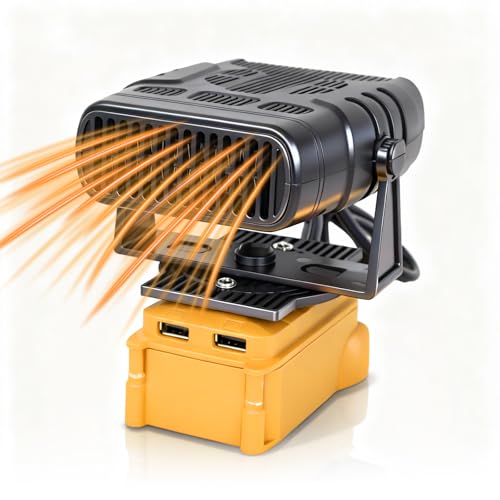
Portable Mini Small Space Heater for DW 20V Max Battery, 2S Efficient Heating Thermostat Heat Up 200 Square Feet in Minute, Safe and Quiet for Car Interior Office Room Tent Indoor Use(No Battery)
Chosen because it offers heating.
View on AmazonThis Yudara mini heater is designed to run on 20V Max-style tool batteries, which makes it the counterpart to the banapoy model for users of a different battery platform. The listing highlights a thermostat function, which can help limit unnecessary heating once the area near the heater warms up, potentially stretching battery life.
The title also claims it can heat up to 200 square feet in minutes. Treat that claim cautiously: a tool battery stores a limited amount of energy, and a compact heater of this type is far better suited to warming a person at a workbench or beside a jobsite task than to raising the temperature of a whole room. Batteries are typically sold separately for tools in this format, so confirm what is included.
Pros
- Uses widely owned 20V Max-style tool batteries
- Thermostat function listed
- Small, portable form for garages and jobsites
Cons
- Room-heating claim is unrealistic for a battery-only heater
- Battery and charger likely not included
9. DEWALT 68,000 BTU Cordless Propane Heater — Best for Large Garages and Jobsites

DEWALT 68,000 BTU Cordless Portable Forced Air Propane Heater
One of the home product options compared in this guide.
View on AmazonThis DEWALT heater takes a different approach from every other product in this guide. It is a forced-air propane heater rated at 68,000 BTU, and the “cordless” part refers to the battery that runs its fan and ignition, while propane produces the heat. That arrangement solves the core limitation of battery-only heaters: the battery only has to power a fan, so it can support far more heat output than any battery-powered heating element.
This is strictly a tool for well-ventilated jobsites, open garages, construction areas and outdoor work spaces. Propane combustion produces carbon monoxide and consumes oxygen, so it must never be used in a car, tent, bedroom, living space or any enclosed area without the ventilation the manufacturer specifies. Follow the clearance requirements, keep combustibles well away from the outlet, and use a carbon monoxide alarm where appropriate. Confirm the battery compatibility and whether a battery is included before ordering.
Pros
- 68,000 BTU rating far exceeds any battery-only heater
- Battery runs the fan, so no extension cord is needed on site
- Suited to large, open, ventilated work areas
Cons
- Not for living spaces, vehicles, tents or enclosed rooms
- Requires propane cylinders and careful ventilation
Battery-Powered Space Heater Comparison
The products below represent several different cordless-heating formats: rechargeable personal heaters, tool-battery heaters, and automotive defrosters. Because detailed specifications were not provided for most models, use the table as a starting point and verify the current Amazon listing, included accessories, battery requirements, safety features, and operating instructions before ordering.
| Product | Stated power or battery information | Controls and adjustment | Ports or positioning features | Best fit | What to check |
|---|---|---|---|---|---|
| Battery Powered Space Heater, 5-cell | Includes 3000mAh rechargeable batteries; exact output and runtime: check listing | Silent operation stated; heat settings: check listing | Dual USB; anti-tilt design; wireless operation stated | Portable personal warmth, car use, or camping | Number and type of included cells, charging method, runtime, indoor-use approval, and tip-over details |
| banapoy 200W Portable Heater | 200W; designed for BL1850B and BL1840B batteries | Two heat settings | Dual USB ports; fan-blower format; car window defroster positioning | Tool-battery owners and vehicle defrosting | Whether the battery is included, approved battery voltage, runtime, charging arrangement, and indoor-use instructions |
| 200W Cordless Jobsite Heater | 200W battery-powered design; battery type and capacity: check listing | Natural-wind mode and a heated mode stated; temperature range listed as 55–85C | 360-degree rotation; dual USB | Garage, jobsite, or directed spot airflow | Battery compatibility, temperature-unit interpretation, safety shutoffs, and whether a battery or charger is included |
| CUIFATI Portable Car Heater | Battery and output information: check listing | Heat controls: check listing | 360-degree rotation and 160-degree tilt adjustment; windshield defroster and defogger format | Targeted vehicle airflow and windshield use | Power source, battery inclusion, vehicle compatibility, mounting method, cord or adapter requirements, and approved operating conditions |
| 12000mAh Portable Heater | 12000mAh battery; 170W output | Dual-speed operation; fast-heating claim | Vehicle, office, tent, outdoor, and defrost use stated; other positioning features: check listing | Buyers prioritizing a stated larger battery capacity and portable use | Battery voltage, watt-hour rating, charging time, included charger, runtime at each speed, and safety protections |
Additional Models at a Glance
The four additional heaters reviewed above, plus the two alternatives from the Alternatives section, summarized using the details stated in their listings and on the makers’ pages.
| Model | Power source | Stated output or rating | Key listed features | Best use |
|---|---|---|---|---|
| FTVOGUE Cordless Space Heater | Battery (confirm type) | Not stated in title | Two temperature settings, 90-degree tilt | Personal spot heat |
| Diydeg Battery Operated Heater | Built-in 6500mAh rechargeable | 170W | Cordless design | Desk, parked car, short outdoor breaks |
| Yudara Mini Heater | 20V Max-style tool battery | Not stated in title | Thermostat function | Workbench and jobsite |
| DEWALT Cordless Propane Heater | Propane, battery-run fan | 68,000 BTU | Forced-air design | Ventilated garages and jobsites only |
| Mr. Heater Buddy FLEX (MH11BFLEX) | Propane (1 lb cylinder) | 8,000-11,000 BTU per hour | Oxygen-depletion sensor, tip-over switch, electronic ignition | Room heat with ventilation and a CO alarm |
| EcoFlow DELTA 3 Classic | 1,024 Wh LiFePO4 power station | 1,800W AC output | Runs a plug-in heater, electric blanket or heated pad | Outage warmth, with limited runtime at heater wattages |
Best Pick by Need
Best starting point for a compact rechargeable heater
The 5-cell rechargeable battery heater is the most straightforward option for shoppers who want a wireless unit with batteries included in the product description. Its stated 3000mAh rechargeable batteries, dual USB ports, silent operation, and anti-tilt design address several common portability concerns. The main qualification is that the available information does not identify its output, expected runtime, charging system, or heat settings. Check those details before treating it as suitable for a particular trip or work session.
Best for owners of compatible tool batteries
The banapoy 200W heater makes the most sense when you already have a battery specifically identified as compatible, including the BL1850B or BL1840B listed in its title. Its two heat settings can provide more control than a single-output design, while the blower format and dual USB ports add usefulness around a vehicle or work area. Do not assume that other batteries from the same brand will fit. Confirm the exact pack, voltage, battery-inclusion status, and operating instructions.
Best for garage or jobsite airflow
The 200W cordless jobsite heater is the clearest match for a garage or work area where adjustable direction matters. Its stated natural-wind and heated modes allow it to function as more than a heat-only appliance, and 360-degree rotation can help direct airflow without repeatedly moving the base. The listing identifies a 55–85C range, but the available data does not clarify how that range is displayed or controlled. Verify the temperature controls and battery system before purchase.
Best for windshield defrosting and defogging
The CUIFATI portable car heater is designed around a focused automotive task: directing air toward a windshield or other cabin area. Its 360-degree rotation and 160-degree tilt adjustment can help position the airflow. However, the listing does not state its battery capacity, output, or charging arrangement. Confirm how it receives power and how it should be secured in a vehicle. A compact defroster should not automatically be treated as a general-purpose indoor heater.
Best for a stated larger battery capacity
The 12000mAh portable heater is the logical option for buyers who place battery capacity near the top of the checklist. It states a 170W output, dual-speed operation, and use in cars, vehicles, offices, tents, and outdoor settings. Capacity alone does not guarantee longer useful heating time because voltage, conversion losses, fan demand, battery condition, and selected speed also matter. Check the watt-hour rating and runtime information rather than comparing the mAh figure by itself.
Best Battery Powered Space Heater by Use Case
Pick the group that matches the job, then compare the one-line specs.
Personal heat at a desk, in a tent or blind (built-in battery)
- Battery Powered Space Heater with 5-Cell Rechargeable Batteries — 3000mAh cells included · dual USB · anti-tilt
- Diydeg 170W Battery Operated Heater — 170W · built-in rechargeable pack
- FTVOGUE Cordless Space Heater — adjustable heat settings · rechargeable
What to expect: short sessions, often well under half an hour at full output (see the runtime table above), with warmth felt mainly within arm’s reach. No tools or extra batteries to buy.
Tool-battery owners (18V/20V packs)
- Yudara Mini Heater for DW 20V Max Batteries — runs on DEWALT-style 20V packs · third-party tool
- banapoy 200W Heater — 200W · fits BL1840B/BL1850B-style 18V packs · two heat settings · dual USB
What to expect: about 30 minutes per 5.0Ah pack at full output; swap packs to keep going. These are third-party tools, so a brand’s battery warranty may not cover damage.
Room heat without an outlet (propane or power station)
- Mr. Heater Buddy FLEX (MH11BFLEX) — 8,000-11,000 BTU · up to 275 sq ft · 1 lb cylinder · ODS and tip-over shutoff
- EcoFlow DELTA 3 Classic — 1,024 Wh LFP · 1,800W AC · runs a plug-in heater on low for about an hour
What to expect: real room warming. Propane needs ventilation and a CO alarm; a power station is silent and fume-free but heavy and drains fast at heater wattages.
Garages and jobsites
- DEWALT 68,000 BTU Cordless Forced Air Propane Heater — 68,000 BTU · battery runs fan and ignition · outdoor or well-ventilated spaces only
What to expect: fast heat for large, ventilated spaces; never use it in a home, tent or vehicle.
Alternatives When You Need More Warmth
If the energy limits of battery-only heating do not fit your situation, several alternatives can provide more usable warmth from the same or a different power source.
Battery-run propane heaters
Forced-air propane heaters such as the DEWALT model above use a battery only for the fan and ignition, while propane supplies the heat. They deliver dramatically more output than any battery-only unit, but they are designed for ventilated jobsites, open garages and outdoor work areas. They are not suitable for homes, vehicles or tents because combustion produces carbon monoxide.
Heated blankets, pads and apparel
Heating your body directly is far more efficient than heating air. Battery-powered heated blankets, seat pads, vests and gloves use relatively little power because the heat sits right against you, so the same battery lasts much longer than it would in a blower-style heater. For camping, stadium seats or a cold car, these often provide more comfort per charge than a cordless space heater.
Portable power stations with a low-wattage heater
A large portable power station stores far more energy than a tool battery or small rechargeable pack. Paired with a low-wattage plug-in heater or an electric blanket, it can provide warmth for longer, although a full-size 1,500W heater will still drain most power stations quickly. Check the power station’s continuous output rating and the heater’s wattage before relying on this combination.
Mr. Heater Buddy FLEX (MH11BFLEX) — Best Indoor-Safe Alternative When You Need Room Heat

Mr. Heater Buddy FLEX 11,000 BTU Radiant Propane Indoor/Outdoor Space Heater
One of the home product options compared in this guide.
View on Amazon- Output: 8,000-11,000 BTU/hr, variable dial; heats up to about 275 sq ft
- Fuel: 1 lb propane cylinder (about 3.5 hours on low, 2 on high); 20 lb tank with optional hose
- Safety: oxygen-depletion sensor, 50° tip-over switch, thermal shutdown
- Electronic ignition; about 11 lb
Pros: roughly 12-16 times the heat of a 200W battery heater; no electricity needed; rated for indoor use with proper clearance and fresh air.
Cons: burns fuel, so it needs ventilation and a CO alarm; ongoing cylinder cost.
Skip it if… you cannot crack a window or keep it 3 feet from bedding and curtains.
EcoFlow DELTA 3 Classic — Best Power Station for Running a Low-Watt Heater
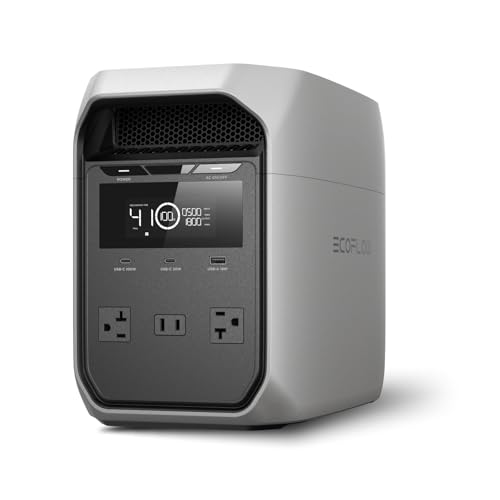
EF ECOFLOW Portable Power Station Delta 3 Classic, 1024Wh 1800W AC
One of the home product options compared in this guide.
View on Amazon- Capacity: 1,024 Wh LiFePO4 (EcoFlow estimates about a 10-year lifespan)
- Output: 1,800W AC (3,600W surge); multiple AC outlets plus USB-A and USB-C
- Recharge: EcoFlow claims 0-80% in about 45 minutes on AC; up to 500W solar input
- Weight: about 27 lb
Pros: runs a standard plug-in heater, electric blanket or heated pad with no fumes; also powers lights, phones and a fridge in an outage.
Cons: a 1,500W heater empties it in about 35 minutes; heavy and costly next to a battery mini heater.
Skip it if… you only need hand-warming heat for an hour; a heated blanket on a smaller power bank lasts longer.
Using a Battery Heater During a Power Outage
Battery-powered heaters can play a supporting role in an outage, but they should not be your primary plan for keeping a home warm. Their limited stored energy means they work best as short, targeted heat sources, for example warming your hands or a small sitting area, while you rely on layered clothing, sleeping bags and blankets to hold body heat.
- Gather everyone in one small room and close doors to reduce the space you are trying to keep warm.
- Keep batteries fully charged during storm season, and store them indoors at room temperature so they deliver their full capacity.
- Use the lowest effective setting to stretch each charge, and turn the heater off when you do not need it.
- Prioritize body-focused warmth such as heated blankets or apparel, which use stored energy more efficiently.
- Never bring fuel-burning heaters, grills or generators indoors. Carbon monoxide is a serious risk in outages, and working CO alarms are essential.
Care and Setup Tips
- Confirm the power system before unpacking. A rechargeable heater, a tool-battery heater, and a vehicle-powered defroster may require completely different charging or connection methods. Match the battery voltage, connector, polarity, and approved pack listed by the manufacturer.
- Read the intended-use section. Vehicle defrosters, jobsite products, camping heaters, and indoor personal heaters are not interchangeable categories. Use a model only in settings specifically permitted by its instructions.
- Start on the lower setting when available. This can reduce unnecessary battery drain and lets you judge airflow, surface stability, and heat direction before selecting a higher setting.
- Keep the intake and outlet clear. Do not place clothing, blankets, bags, paper, or other objects against the heater. Restricted airflow can affect performance and increase safety risks.
- Use a stable, nonflammable surface. Position the unit where it cannot be knocked over, and use any anti-tilt, rotation, or tilt-adjustment features as intended rather than improvising a mount.
- Secure automotive units before driving. A portable defroster should not slide into pedals, obstruct visibility, interfere with controls, or become a loose object during braking. Follow the vehicle and heater instructions for placement.
- Keep moisture away unless outdoor use is specifically explained. “Outdoor” in a title does not by itself establish water resistance. Protect the heater, battery, charger, and USB ports from rain, snow, condensation, and spills unless the manufacturer provides clear guidance.
- Allow the battery to cool before charging. After a demanding heating session, follow the manufacturer’s charging instructions rather than immediately storing a hot battery in an enclosed bag or charging area.
- Inspect the battery and housing regularly. Stop using a pack that is swollen, cracked, leaking, unusually hot, or otherwise damaged. Do not modify battery packs or bypass protection features.
- Keep clearance around the heater. Bedding, curtains, upholstery, cardboard, sawdust, and clothing should remain away from hot surfaces and airflow openings. Never cover an operating heater.
- Do not leave it running while sleeping or away. Cordless operation improves portability, but it does not remove the need for supervision. Turn the unit off before leaving the space or vehicle.
- Store it clean and dry. Once cool, remove dust from accessible openings according to the manual. Store the heater and battery separately if the manufacturer recommends it, and avoid leaving a battery in extreme heat or cold.
Frequently Asked Questions
Are battery-powered space heaters suitable for heating an entire room?
Generally, these products are better suited to personal warmth, a small spot, vehicle airflow, a tent, or a work area than to whole-room heating. The listed models include outputs of 170W and 200W, which are oriented toward localized heating or defrosting rather than the sustained power commonly expected from a plug-in room heater. Room size, insulation, air movement, and outdoor temperature also affect results. Choose a properly sized conventional heating system when the goal is to warm an entire room.
How long will one battery charge last?
There is not enough information to give a single runtime for these products. Runtime depends on battery voltage, capacity, selected heat setting, fan speed, ambient temperature, battery age, and whether USB devices are charging at the same time. A 12000mAh label cannot be compared directly with a 3000mAh label unless voltage and watt-hour information are also known. Look for manufacturer runtime figures at each setting and treat them as estimates rather than guarantees.
Does the 5-cell heater include the batteries?
Its product title states that it comes with 3000mAh rechargeable batteries, but the available data does not specify the exact number of cells, their configuration, the charger, or the total operating capacity. Check the current listing’s “what’s included” section and product manual. Also confirm whether the batteries are removable and whether replacement cells are available.
Can I use any Makita-style battery with the banapoy heater?
No. The product title specifically identifies BL1850B and BL1840B batteries, so compatibility should be treated as model-specific. Battery brands can use different voltages, mounts, protection circuits, and electrical specifications even when packs look similar. Use only the battery types expressly approved by the heater manufacturer. Do not force a pack into the slot or use an adapter unless the instructions specifically authorize it.
Can these heaters be used inside a car while driving?
Only if the heater and vehicle instructions permit that use. A car-focused design may be intended for windshield defrosting or defogging, but the heater still needs to be secured without blocking the driver’s view, pedals, controls, or airbags. Confirm how it receives power and whether operation while the vehicle is moving is addressed. Never position a loose unit where it could become a hazard during sudden braking.
Is the CUIFATI model a room heater or a car defroster?
The available product title presents it as a portable car heater, windshield defroster, and defogger with adjustable rotation and tilt. That makes targeted automotive airflow its clearest stated role. The data does not establish room-heating performance, battery capacity, or indoor-use approval. If you want to use it indoors, verify that the manufacturer explicitly permits that setting and follow the required clearances.
Can I charge a phone from the dual USB ports while the heater is running?
Several listings state that they include dual USB ports, but the available data does not identify their output, charging limits, or whether both ports can operate while heating. Check the manual for simultaneous-use instructions and supported devices. USB charging can also draw energy from the battery and reduce heating runtime. Keep cables away from hot surfaces, fan openings, and areas where they could be snagged.
Can a battery-powered heater keep me warm during a power outage?
Only in a limited way. A battery heater can take the chill off your hands or a small personal zone for a short period, but it cannot keep a home or room warm through an outage. Combine it with warm clothing, blankets and a small closed room, and consider heated blankets or apparel, which use stored energy more efficiently.
Is the DEWALT propane heater safe to use indoors?
It is designed for ventilated jobsites, open garages and outdoor work areas, not for living spaces, vehicles or tents. Propane combustion produces carbon monoxide, so follow the manufacturer’s ventilation and clearance instructions exactly and use a carbon monoxide alarm where appropriate.
How can I make a battery heater’s charge last longer?
Use the lowest setting that keeps you comfortable, aim the airflow directly at the area you want to warm, keep batteries at room temperature until you need them, and avoid charging phones from the heater’s USB ports while it is heating. A spare charged battery is the simplest way to extend a session.
Is a heated blanket more efficient than a battery space heater?
Usually, yes. A heated blanket or pad puts warmth directly against your body, so far less energy is lost to the surrounding air. For sitting still in a car, tent or cold room, a battery-powered heated blanket typically provides more comfort per charge than a blower-style heater.
Can I use a battery-powered electric heater in a tent?
Battery electric heaters do not burn fuel, so they avoid the carbon monoxide risk of combustion heaters, but they still have hot surfaces and outlets. Only use one if the manufacturer permits that setting, place it on a stable, nonflammable surface away from sleeping bags and fabric walls, and do not run it while you sleep.
How long will a power station run a space heater?
A 1,024 Wh power station such as the EcoFlow DELTA 3 Classic runs a 1,500W heater for about 35 minutes, or a 750W low setting for about 70 minutes. A 60-100W heated blanket on the same unit lasts roughly 9-14 hours.
Do DEWALT or Milwaukee make a battery powered space heater?
We could not confirm a current battery-only electric space heater from either brand, so check their catalogs before you buy. DEWALT’s “cordless” heaters burn propane and use a 20V battery for the fan and ignition. The 20V-compatible mini heaters sold online, such as the Yudara, come from third-party makers.
Final Verdict
The best battery-powered space heater depends more on the power system and intended setting than on the phrase “space heater.” For a compact rechargeable option with a stated battery inclusion, dual USB, silent operation, and anti-tilt design, the 5-cell rechargeable model is the most natural starting point. Buyers who already own the specifically listed tool batteries should consider the banapoy 200W heater, while the 200W cordless jobsite model is a better match for rotating airflow around a garage or work area.
For vehicle-specific use, the CUIFATI heater emphasizes adjustable windshield-directed positioning. The 12000mAh, 170W model deserves attention when a stated larger battery capacity is the priority, although voltage and runtime still need verification.
Whichever model you choose, treat a battery heater as a supervised spot-heating or defrosting tool, not a replacement for a properly sized room-heating system. Verify compatibility, battery inclusion, safety features, clearances, and approved use before purchase, and never sacrifice safe placement for extra warmth or convenience.