Key takeaways
- Base and shape: Confirm that your fixture uses an E12 candelabra base, then check whether it accepts B10, B11, or flame-tip profiles without touching the shade or socket cover.
- Brightness: Look at lumens rather than watt-equivalent claims alone. Around 380 to 470 lumens per bulb suits many dining and living-room chandeliers, while larger fixtures may need less output per socket.
- Color temperature: A 2500K to 2700K bulb produces a warm, welcoming appearance. The lower end looks more candle-like; 2700K is generally more useful for mixed household lighting.
- Dimming: Choose a bulb labeled dimmable, but also verify compatibility with your wall dimmer. LED bulbs can flicker or fail to reach a low setting when paired with older or incompatible controls.
- Appearance and heat: Clear glass and visible filament designs work well in open fixtures. LEDs typically produce less heat than incandescent bulbs, which is helpful in enclosed or densely packed chandeliers.
What's inside
Choosing a chandelier bulb sounds simple until you compare base sizes, filament shapes, color temperatures, dimmer compatibility, and actual brightness. A bulb that looks elegant in a product photo can appear too harsh, too dim, or visibly oversized once installed in a multi-arm fixture.
Our home-appliance testing approach focuses on the details that matter in everyday rooms: light output, visual warmth, glass and filament appearance, dimming suitability, and how naturally each bulb fits an exposed chandelier socket. This guide compares five strong options for different decorating and lighting priorities.
As an Amazon Associate we earn from qualifying purchases.


How to Choose a Bulb For Chandelier (2026)
- Base and shape: Confirm that your fixture uses an E12 candelabra base, then check whether it accepts B10, B11, or flame-tip profiles without touching the shade or socket cover.
- Brightness: Look at lumens rather than watt-equivalent claims alone. Around 380 to 470 lumens per bulb suits many dining and living-room chandeliers, while larger fixtures may need less output per socket.
- Color temperature: A 2500K to 2700K bulb produces a warm, welcoming appearance. The lower end looks more candle-like; 2700K is generally more useful for mixed household lighting.
- Dimming: Choose a bulb labeled dimmable, but also verify compatibility with your wall dimmer. LED bulbs can flicker or fail to reach a low setting when paired with older or incompatible controls.
- Appearance and heat: Clear glass and visible filament designs work well in open fixtures. LEDs typically produce less heat than incandescent bulbs, which is helpful in enclosed or densely packed chandeliers.
The Best Bulb For Chandelier (2026)s Reviewed
Best Overall: 60W-Equivalent LED Chandelier Bulbs
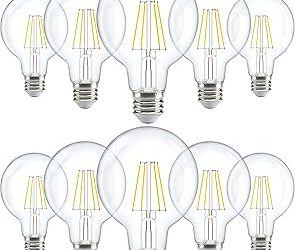
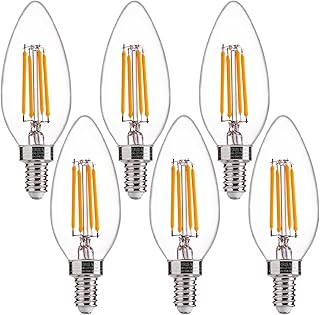
These clear B11 filament bulbs offer a useful balance of brightness, traditional appearance, and energy-conscious LED performance. Their 2700K soft-white output should complement dining rooms and entryways, while the dimmable E12 format makes them a practical choice for chandeliers used at both full and reduced brightness.
Best for Flame-Tip Style: E12 4W Flame Tip Candle Bulbs
The flame-tip profile gives this 12-pack a more candle-inspired silhouette than a standard tubular bulb. At 460 lumens per bulb, it is well suited to fixtures where the bulbs remain visible, and the 2700K tone should keep the light warm without appearing excessively amber.
Best for Extra-Warm Ambience: COLWATT 2500K Candelabra Bulbs
COLWATT’s 2500K color temperature is the standout feature here, producing a distinctly cozy glow for formal dining spaces, bedrooms, and accent lighting. The clear CA10 Type B design is versatile, though its 380-lumen output may be better for decorative warmth than for lighting a large room by itself.
Best High-Output LED Value: 12-Pack 450-Lumen B11 Bulbs
With a 40-watt equivalent rating, 450 lumens, and a familiar 2700K color, these bulbs are a sensible option for chandeliers that need noticeable illumination rather than merely decorative sparkle. The clear-glass filament construction preserves the classic exposed-bulb look while the larger pack can simplify replacement planning.
Best Compact Vintage Look: E12 470-Lumen B10 Bulbs
The B10 shape is slightly more compact than many B11 chandelier bulbs, which can help in tight multi-socket fixtures or smaller shades. Its 470-lumen output is comparatively strong for a 4-watt LED, and the warm-white filament styling should suit traditional, transitional, and vintage-inspired furniture.
Frequently Asked Questions
What bulb base does a chandelier usually use?
Many decorative chandeliers use an E12 candelabra base, but this is not universal. Check the existing bulb, fixture label, or owner’s manual before ordering; the correct base must match both the socket and the fixture’s rated voltage.
Is 2700K or 2500K better for a chandelier?
Choose 2700K for a warm but relatively versatile household light. Choose 2500K when you want a candle-like, amber-leaning atmosphere, particularly in a dining room or a chandelier used mainly for evening ambience.
How many lumens should chandelier bulbs have?
There is no single ideal number because the fixture, room size, shade design, and number of sockets all matter. Bulbs in the 380-to-470-lumen range provide a useful middle ground, while dimming lets you adjust the result for meals, entertaining, or general lighting.
Can LED chandelier bulbs be used with a dimmer?
Yes, when the bulbs are specifically marked dimmable and the dimmer is LED-compatible. If you notice flicker, buzzing, or a narrow usable dimming range, confirm the dimmer’s minimum load and compatibility list before replacing the fixture.
Final Thoughts
For a balanced everyday choice, the 60W-equivalent LED chandelier bulbs are a strong starting point. Choose the E12 flame-tip bulbs for a more decorative candle profile, or the COLWATT 2500K bulbs when a particularly soft, intimate glow matters most.