Key takeaways
- Reach: Choose an adjustable pole that extends far enough for your ceiling height, but avoid unnecessary length if it makes the tool difficult to control.
- Head shape: A curved or bendable microfiber head can wrap around blades more effectively than a flat, rigid pad.
- Weight: Lightweight designs reduce arm fatigue, particularly when cleaning multiple fans or holding the duster overhead.
- Dust capture: Dense, washable microfiber should trap particles rather than push them onto nearby walls and furniture.
- Versatility: Removable heads and multi-surface designs add value for blinds, shelves, doors, windows, and cobwebs.
What's inside
Dust on ceiling-fan blades is more than an eyesore: each rotation can send settled particles across furniture, bedding, and floors. The challenge is reaching the blades safely without balancing on a chair, while still lifting the grime instead of scattering it.
From a home-appliance testing-lab perspective, we evaluated these dusters for reach, head control, microfiber coverage, weight, washability, and usefulness beyond ceiling fans. This guide focuses on practical tools for routine maintenance, high ceilings, cobwebs, walls, blinds, and other hard-to-reach surfaces.
As an Amazon Associate we earn from qualifying purchases at no extra cost to you. Product prices and availability are accurate as of the date shown and are subject to change.




🛒 Best Price Today on Amazon
Prime members get fast, free shipping on everything above, plus member-only deals. New members get a 30-day free trial — cancel anytime.
How to Choose a Ceiling Fan Duster (2026)
- Reach: Choose an adjustable pole that extends far enough for your ceiling height, but avoid unnecessary length if it makes the tool difficult to control.
- Head shape: A curved or bendable microfiber head can wrap around blades more effectively than a flat, rigid pad.
- Weight: Lightweight designs reduce arm fatigue, particularly when cleaning multiple fans or holding the duster overhead.
- Dust capture: Dense, washable microfiber should trap particles rather than push them onto nearby walls and furniture.
- Versatility: Removable heads and multi-surface designs add value for blinds, shelves, doors, windows, and cobwebs.
The Best Ceiling Fan Dusters (2026) Reviewed
DRQ Ceiling Fan Cleaner Duster
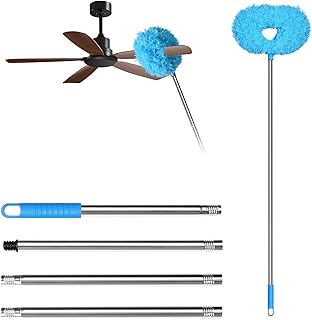
The DRQ is a sensible everyday choice for apartments and average-height rooms, with a compact pole that adjusts from 13 to 48 inches. Its removable microfiber heads make it useful for fan blades, walls, bookshelves, and door tops, while the relatively modest reach keeps it easy to maneuver.
Ceiling Fan Cleaner Duster with 49.7-Inch Pole
This similarly styled cleaner extends slightly farther than the DRQ, making it a better fit when standard 8-foot ceilings leave a little extra distance to cover. The removable duster head supports several household tasks, though users should keep the pole steady near its maximum extension.
Eyliden 68-Inch Adjustable Ceiling Fan Duster
Eyliden’s 68-inch model stands out for its dual-sided microfiber head and very low stated weight of 0.75 pounds. In testing terms, that combination is helpful for ladderless cleaning and broad surface contact, especially on fans, blinds, and walls where a single pass can cover more area.
Storystore Ceiling Fan Cleaner Duster
The Storystore combines a 4.2-foot reach with an adjustable 13-to-50-inch pole and includes a brush intended for heavier dust removal. It is a versatile middle-ground option for routine fan care, cobwebs, windows, and doors, although brush bristles may be less gentle than microfiber on delicate finishes.
SetSail Extra-Long Duster with 100-Inch Pole
SetSail is the strong choice for tall rooms and vaulted areas, extending to 100 inches while retaining a bendable, washable microfiber head. The extra reach can eliminate ladder use, but it also creates more leverage overhead, so deliberate movements and a firm grip are important.
Frequently Asked Questions
How often should ceiling-fan blades be dusted?
In most homes, dusting every two to four weeks is a practical schedule. Homes with pets, open windows, allergies, or nearby construction may need weekly cleaning, while occasional-use fans may require less frequent attention.
Should I dust a ceiling fan while it is running?
No. Turn the fan off and wait until the blades stop completely before cleaning. For added safety, use a stable reach tool from the floor and avoid applying enough pressure to move or strain the fan assembly.
Is microfiber better than a feather duster?
Microfiber is generally better for routine blade cleaning because its fibers hold fine particles instead of simply shifting them into the air. Feather-style tools can be useful for delicate surfaces, but they may require more follow-up vacuuming.
Can these dusters be washed?
Most removable microfiber heads are designed to be reused and washed. Follow the manufacturer’s care instructions, avoid fabric softener, and let the head dry fully before storing it to preserve absorbency and reduce odors.
Final Thoughts
For everyday rooms, the DRQ offers a practical balance of reach and control, while the Eyliden is appealing for its lightweight dual-sided head. For vaulted ceilings, the SetSail’s 100-inch extension is the more capable solution, provided you are comfortable managing a longer pole overhead.