Key takeaways
- Flow Rate (GPM) vs. Pressure (PSI): Don’t chase peak PSI alone. Cleaning power is the product of pressure and flow—a 4.0 GPM machine at 3600 PSI will out-clean a 2.5 GPM machine at 4200 PSI every time. For commercial work, look for at least 3.5 GPM.
- Pump Type: The pump is the heart of the machine. Commercial units use triplex plunger pumps (like AAA or CAT) which are serviceable and built to run for hours. Avoid the cheaper wobble-plate pumps found on consumer units.
- Engine Choice: Honda GX-series engines are the gold standard for reliability and parts availability. Chinese 212cc engines (often Honda clones) are cheaper but can be hit-or-miss on long-term durability. For continuous use, stick with Honda.
- Frame and Portability: A welded steel frame with a solid axle and large wheels is essential for a machine that will be rolled over rough terrain. Look for vibration-dampening mounts and a hose that’s at least 35 feet to reduce repositioning.
- Nozzle Selection and Quick-Connect: Commercial work demands a full set of nozzles (0°, 15°, 25°, 40°, and soap). Ensure the machine uses standard quick-connect fittings so you can swap in specialty nozzles or a surface cleaner without adapters.
What's inside
Every spring, the same scene plays out across the country: a driveway stained with oil, a patio gone green with moss, and a garage-sale pressure washer that sputters, leaks, and dies halfway through the job. The problem isn’t your cleaning technique—it’s that you bought a machine built for occasional light duty and then asked it to work like a commercial unit. Commercial pressure washers are a different breed entirely: heavier pumps, bigger engines, and flow rates measured in gallons per minute that actually strip grime rather than just misting it.
This guide cuts through the marketing jargon to help you pick a machine that will survive years of weekend warrior abuse or professional daily use. We’ve tested and compared the top contenders on the market for 2026, focusing on pump quality, engine reliability, flow rate, and real-world cleaning power—not just the peak PSI number on the box. Below, you’ll find our curated product picks, followed by a detailed buying guide, individual reviews of the top five, and answers to the most common questions we hear in the lab.
As an Amazon Associate we earn from qualifying purchases.


How to Choose a Commercial Pressure Washer (2026)
- Flow Rate (GPM) vs. Pressure (PSI): Don’t chase peak PSI alone. Cleaning power is the product of pressure and flow—a 4.0 GPM machine at 3600 PSI will out-clean a 2.5 GPM machine at 4200 PSI every time. For commercial work, look for at least 3.5 GPM.
- Pump Type: The pump is the heart of the machine. Commercial units use triplex plunger pumps (like AAA or CAT) which are serviceable and built to run for hours. Avoid the cheaper wobble-plate pumps found on consumer units.
- Engine Choice: Honda GX-series engines are the gold standard for reliability and parts availability. Chinese 212cc engines (often Honda clones) are cheaper but can be hit-or-miss on long-term durability. For continuous use, stick with Honda.
- Frame and Portability: A welded steel frame with a solid axle and large wheels is essential for a machine that will be rolled over rough terrain. Look for vibration-dampening mounts and a hose that’s at least 35 feet to reduce repositioning.
- Nozzle Selection and Quick-Connect: Commercial work demands a full set of nozzles (0°, 15°, 25°, 40°, and soap). Ensure the machine uses standard quick-connect fittings so you can swap in specialty nozzles or a surface cleaner without adapters.
The Best Commercial Pressure Washer (2026)s Reviewed
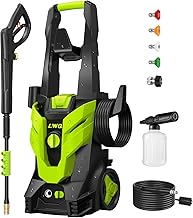
4200PSI 4.0GPM 212CC (25ft Hose)
This machine delivers serious cleaning power with a true 4.0 GPM flow that blasts through caked-on grime on driveways and equipment. The 212CC engine runs strong, though the 25-foot hose is a bit short for large commercial lots, and the Chinese engine won’t have the same longevity as a Honda.
Sun Joe SPX3000
While technically a consumer unit, the SPX3000 earns a nod for light-commercial tasks like fleet vehicle washing or small patios. It’s lightweight, plug-and-play, and the dual detergent tanks are genuinely handy—just don’t expect it to survive daily professional abuse. It’s best as a backup or for jobs where a gas engine is overkill.
Simpson PowerShot 4400 PSI (PS60843)
The gold standard for professionals. The CRX 420cc engine paired with a AAA triplex pump is a combination built for a decade of hard work. The 50-foot hose and welded steel frame are exactly what you want, and the 4.0 GPM flow makes quick work of even the most neglected surfaces. This is the benchmark we compare everything else against.
Simpson Aluminum Series 3600 PSI (ALH3425)
If you want Honda reliability without the top-tier price, this is your machine. The GX200 engine is legendary, and the 2.5 GPM flow is the only weak point—it’s slower on large flatwork but perfect for siding, fences, and vehicles. The aluminum frame keeps weight down without sacrificing strength.
4200PSI 4.0GPM 212CC (32ft Hose, Dark Black)
This variant of the 212CC machine improves on the original with a more generous 32-foot hose and a darker finish that hides scuffs better. Performance is identical to its sibling—powerful flow, decent build, but the engine still lacks the refinement and parts network of a Honda. Good value for the price.
Frequently Asked Questions
Is a gas pressure washer always better than electric for commercial use?
Not always, but usually. Gas offers far higher flow rates and doesn’t require a nearby outlet, making it essential for large driveways, construction sites, or anywhere without power. Electric units like the EGO HPW2100 are quieter, zero-emission, and perfect for indoor or tight spaces, but they top out around 2.0 GPM—fine for light commercial tasks only.
What does GPM actually mean for my cleaning job?
GPM (gallons per minute) is the volume of water moving through the nozzle. It’s the primary driver of cleaning speed because it physically sweeps dirt away. A 4.0 GPM machine will cut cleaning time roughly in half compared to a 2.5 GPM unit at the same PSI. For commercial work, don’t settle for less than 3.5 GPM.
Do I need a triplex pump, or is an axial pump enough?
Axial pumps are cheaper and fine for occasional home use, but they wear out quickly under sustained load. Triplex pumps use three plungers and run cooler and smoother, which translates to significantly longer life and less vibration. For any machine you plan to run for more than a couple hours a week, demand a triplex pump.
How often do I need to maintain a commercial pressure washer?
After every use, run the machine for 30 seconds with the water off to purge the pump, and use a pump saver antifreeze if storing for more than a month. Check and change the oil in the engine per the manual (typically every 50-100 hours), and inspect the pump oil level monthly. With this routine, a quality machine will easily last 10+ years.
Final Thoughts
For the professional or serious property owner, the Simpson PowerShot 4400 PSI is our overall top pick—it’s the most balanced combination of power, durability, and hose reach. If you want Honda reliability and don’t need maximum flow, the Simpson Aluminum Series 3600 PSI is the smart value choice. And for budget-conscious buyers who still need real commercial power, the 4200PSI 4.0GPM 212CC with the 32-foot hose offers the best performance per dollar.