Key takeaways
- Thermostat control: Choose a model that cycles automatically at a set temperature instead of running continuously. A thermostat can reduce energy use and limit overheating, but it is not a substitute for supervision or safe installation.
- Power and wiring: A 600-watt heater is usually easier to accommodate than a 1,000- or 1,500-watt model. Confirm the voltage, circuit capacity, plug type, and extension-cord restrictions before buying.
- Environment: Crawl spaces can be damp, dusty, and vulnerable to pests. Look for a purpose-built utility or pump-house heater, keep the unit off the floor where appropriate, and never use a heater in standing water or an area exposed to rain unless it is specifically rated for that location.
- Clearance and stability: Maintain the stated distance from wood, insulation, stored items, vapor barriers, and plumbing. A stable mounting or placement position is essential, particularly in a space that may be accessed infrequently.
- Safety provisions: Overheat protection and tip-over shutoff are useful features, while GFCI protection may be required by local rules. Inspect cords and plugs regularly, and avoid relying on a portable heater as permanent freeze protection without approval from a qualified professional.
What's inside
A crawl space heater has a difficult job: it must reduce freeze risk in a confined, often dusty area without creating an unacceptable fire, moisture, or electrical hazard. Wattage alone does not tell the full story. Thermostat behavior, enclosure design, installation clearance, power requirements, and suitability for unattended use matter just as much.
Our home-appliance testing approach looks at practical freeze protection rather than simply ranking the hottest unit. This guide compares compact utility heaters with larger workshop-style equipment, explains what to verify before installation, and identifies where each model makes the most sense. Always follow the manufacturer’s instructions and local electrical and building codes.
As an Amazon Associate we earn from qualifying purchases.


How to Choose a Crawl Space Heater (2026)
- Thermostat control: Choose a model that cycles automatically at a set temperature instead of running continuously. A thermostat can reduce energy use and limit overheating, but it is not a substitute for supervision or safe installation.
- Power and wiring: A 600-watt heater is usually easier to accommodate than a 1,000- or 1,500-watt model. Confirm the voltage, circuit capacity, plug type, and extension-cord restrictions before buying.
- Environment: Crawl spaces can be damp, dusty, and vulnerable to pests. Look for a purpose-built utility or pump-house heater, keep the unit off the floor where appropriate, and never use a heater in standing water or an area exposed to rain unless it is specifically rated for that location.
- Clearance and stability: Maintain the stated distance from wood, insulation, stored items, vapor barriers, and plumbing. A stable mounting or placement position is essential, particularly in a space that may be accessed infrequently.
- Safety provisions: Overheat protection and tip-over shutoff are useful features, while GFCI protection may be required by local rules. Inspect cords and plugs regularly, and avoid relying on a portable heater as permanent freeze protection without approval from a qualified professional.
The Best Crawl Space Heaters (2026) Reviewed
600W Utility Heater with Thermostat
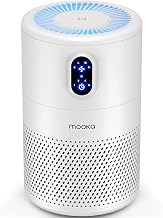
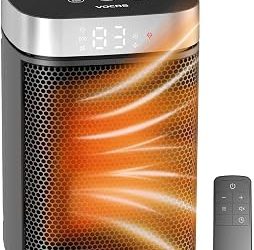
This 600W Utility Heater with Thermostat is the most purpose-built option in this group for a small crawl space, pump house, or well house. Its dual-screen display should make temperature monitoring straightforward, while the moderate output is less demanding on a circuit than a typical room heater. We would verify its environmental rating and required clearances before placing it near insulation or plumbing.
600W Pump House Heater with Thermostat
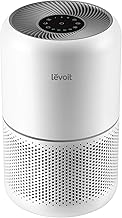
The 600W Pump House Heater with Thermostat takes a similarly focused approach to freeze protection, with a built-in thermostat intended to maintain a stable temperature during cold weather. It is a sensible candidate for a compact utility enclosure, but buyers should confirm that the thermostat’s operating range matches their climate and that the installation location remains dry and unobstructed.
KING U24100 Utility Pump House Heater
The KING U24100 Utility Pump House Heater delivers 1,000 watts at 240 volts, making it a substantially different proposition from plug-in 120-volt models. Its higher output may suit a larger or colder utility area, but the 240-volt requirement normally calls for dedicated wiring and professional installation. We would recommend it only where the electrical system and installation plan are already designed for this load.
Mr. Heater 125,000 BTU Forced-Air Unit Heater
The Mr. Heater 125,000 BTU Forced-Air Unit Heater is industrial-scale equipment, available for propane or natural gas, and dramatically oversized for most residential crawl spaces. It belongs in properly ventilated workshops, construction areas, or other approved spaces—not a confined crawl space—unless a qualified professional has designed the fuel, exhaust, ventilation, and safety systems. For ordinary freeze protection, its output and combustion requirements are excessive.
DREO 1500W Space Heater
The 2026-upgraded DREO Space Heater offers thermostat control, quiet operation, a timer, remote control, and several heat modes, but it is designed for indoor living spaces rather than crawl spaces. The 1,500W demand can also place considerable load on a household circuit. We would consider it for a monitored, clean, dry utility room—not an enclosed crawl space with combustible materials or limited access.
Frequently Asked Questions
What size heater is best for a crawl space?
There is no universal wattage recommendation because insulation, air leakage, space volume, climate, and plumbing layout all affect heat loss. Compact 600W utility heaters are generally easier to deploy for localized freeze protection, while larger units require more careful load calculations and wiring.
Can I leave a portable space heater running in a crawl space?
Portable heaters should not be treated as permanently unattended equipment unless the manufacturer expressly permits that use and the installation meets applicable codes. A purpose-built utility heater is generally a better starting point, but it still needs proper clearance, inspection, and protection from moisture and debris.
Is a propane heater safe in a crawl space?
Typically, no. Combustion heaters require appropriate ventilation and exhaust management, and a crawl space can allow dangerous gases or moisture to accumulate. The Mr. Heater forced-air model is not an ordinary residential crawl-space solution; consult a licensed professional before considering any fuel-burning equipment.
Could a 1,500W room heater protect pipes?
It might warm a monitored, dry utility room, but it is not automatically suitable for a crawl space. The DREO and BEYOND HEAT 1500W Milkhouse Space Heater are room-oriented products, so their clearances, controls, and environmental suitability should be evaluated before use near plumbing or insulation.
Final Thoughts
For most compact residential applications, the 600W Utility Heater with Thermostat and 600W Pump House Heater with Thermostat are the most relevant starting points. Choose the KING U24100 when a properly installed 240-volt system and higher output are justified; otherwise, prioritize insulation, air sealing, pipe insulation, and a professionally reviewed freeze-protection plan.