Key takeaways
- Table compatibility: Confirm the sled or runner dimensions match your saw’s miter slots. A 3/4-inch by 3/8-inch runner is common, but not universal.
- Runner adjustment: Look for UHMW polyethylene or aluminum runners with a way to remove side-to-side play without making the sled difficult to slide.
- Zero-clearance support: A tight throat opening supports small offcuts and helps reduce tear-out, but it must be aligned carefully with the blade path.
- Fence accuracy: The rear fence should remain square to the blade and resist flexing. For joinery, even a small angular error can compound across a project.
- Workpiece size: Compact sleds excel with trim, dowels, tenons, and narrow furniture components; larger panels require more surface area and support.
What's inside
Crosscut sleds promise cleaner, safer table-saw crosscuts, but buyers often encounter confusing compatibility claims, loose runners, limited cutting capacity, or a sled designed only for small stock. A poorly matched sled can introduce play in the miter slots, while a flimsy zero-clearance surface may not stay accurate after repeated use.
From a home-appliance testing lab perspective, we evaluate these jigs by the details that affect real furniture projects: runner fit, fence stability, zero-clearance support, adjustment potential, and the type of work each design handles best. The guide below separates ready-to-use small-part sleds from hardware kits intended for woodworkers who want to build or customize their own crosscut platform.
As an Amazon Associate we earn from qualifying purchases.


How to Choose a Crosscut Sled For Table Saw (2026)
- Table compatibility: Confirm the sled or runner dimensions match your saw’s miter slots. A 3/4-inch by 3/8-inch runner is common, but not universal.
- Runner adjustment: Look for UHMW polyethylene or aluminum runners with a way to remove side-to-side play without making the sled difficult to slide.
- Zero-clearance support: A tight throat opening supports small offcuts and helps reduce tear-out, but it must be aligned carefully with the blade path.
- Fence accuracy: The rear fence should remain square to the blade and resist flexing. For joinery, even a small angular error can compound across a project.
- Workpiece size: Compact sleds excel with trim, dowels, tenons, and narrow furniture components; larger panels require more surface area and support.
The Best Crosscut Sled For Table Saw (2026)s Reviewed
Rockler Small Parts Crosscut Sled
The Rockler Small Parts Crosscut Sled is the most purpose-built option here for cutting narrow stock, dowels, tenons, and other pieces that can be awkward to hold safely against a standard miter gauge. Its zero-clearance support is the key attraction, helping keep small parts from dropping into the blade opening. The compact format is useful in a furniture shop, although it is not intended to replace a full-size sled for cabinet panels or wide boards.
POWERTEC 71403 Crosscut Sled
The POWERTEC 71403 is a practical middle-ground choice for woodworkers who want a dedicated crosscut jig rather than a collection of loose components. Its hardware-kit design is aimed at repeatable cuts and straightforward setup, making it suitable for common furniture-building tasks. Before buying, check the dimensions and mounting arrangement against your saw, since a jig that fits one table configuration may need adjustment on another.
Small Zero-Gap Crosscut Sled
This Small Crosscut Sled for Table Saws is designed around precise 90-degree cuts in thin dowels, tenons, and decorative lines. Aluminum slide rails should provide a firm, low-friction feel when properly matched to the saw, while the zero-gap support is especially valuable for small workpieces. Its narrow focus is a strength for detail work, but buyers should not expect the same capacity as a large shop-built sled.
21P Table Saw Sled Kit
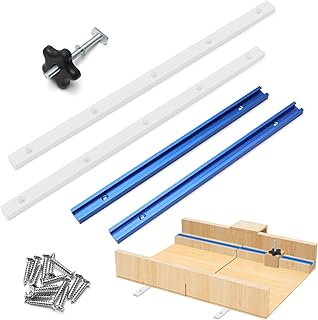
The 21P Table Saw Sled Kit is best viewed as a foundation for a custom sled rather than a finished cutting jig. It includes predrilled components, two aluminum T-tracks, UHMW miter bars, knobs, and screws, giving experienced woodworkers flexibility over sled size, fence height, and hold-down placement. The tradeoff is that final accuracy depends on the builder’s layout, assembly, and calibration.
UHMW Crosscut Sled Miter Bars
The UHMW Crosscut Sled Miter Bars are a useful choice for anyone building a sled or replacing worn runners. The four 3/4-inch by 3/8-inch by 17-inch bars can be cut and positioned for different jig designs, and UHMW is valued for its smooth movement and resistance to swelling. They are not a complete crosscut sled, so this pick makes sense only for buyers prepared to supply the sled body, fence, and hardware.
Frequently Asked Questions
Is a crosscut sled safer than a miter gauge?
It can be, particularly when cutting small or narrow parts. A sled supports the workpiece on both sides of the blade and can keep hands farther from the cutting area, but it still requires proper blade height, push technique, and guarding where compatible.
Does every crosscut sled fit every table saw?
No. Miter-slot spacing, slot dimensions, table size, and the position of the blade all vary. Measure your saw before purchasing, and allow room for the sled to travel fully past the blade without contacting the fence or surrounding hardware.
What is zero-clearance support?
Zero-clearance support means the sled surface closely surrounds the blade’s entry point. This supports small offcuts and can reduce tear-out, but the opening must be cut or installed for the correct blade position and should be inspected as it widens with use.
Should I buy a finished sled or a kit?
A finished sled is faster to put into service and usually the better choice for occasional furniture projects. A kit is more appropriate for experienced woodworkers who want a custom size, specialized fence, or replacement runners.
Final Thoughts
For small, detail-oriented cuts, the Rockler Small Parts Crosscut Sled and the Small Zero-Gap Crosscut Sled are the strongest focused choices. The POWERTEC 71403 is a sensible ready-made option for general work, while the 21P kit and UHMW bars suit builders who prefer to tune a sled to their own table saw.