Key takeaways
- Color rendering (CRI & R9): Look for CRI 90+ and R9 90+ if you cook or read labels—high R9 means reds and wood tones look natural, not muddy, which matters most under cabinets.
- Dimmer compatibility: Not all LEDs dim cleanly. Check for explicit “dimmable” labeling and, ideally, a list of compatible dimmers (leading-edge vs. trailing-edge) to avoid flicker at low levels.
- Color temperature range: A single fixed 3000K is fine for some, but a 5-step (2700K–5000K) switch lets you match task lighting in the morning and ambient warmth at night without changing bulbs.
- Physical footprint & heat: Measure your cabinet underside depth—slim 12-inch bars fit most, but verify clearance. Also note whether the housing runs cool; excessive heat shortens driver life and can warp thin cabinet panels.
- Wiring configuration: Decide between direct hardwire (to a junction box) and plug-in with a linkable cord. Hardwired is cleaner and code-friendly in new builds; plug-in is a legitimate retrofit if you have an outlet above the cabinet.
What's inside
Most homeowners discover too late that under-cabinet lighting is a two-part decision: fixture quality and installation method. Battery-powered pucks die at the worst moments, plug-in strips tangle with toasters, and hardwired units—while permanent—demand confidence with a junction box and a breaker. If you’re renovating or already have switch legs run, hardwired is the honest long-term answer: no recharging, no dangling cords, and a clean, integrated look that matches your recessed cans.
This guide cuts through the spec-sheet noise. We tested color rendering, dimmer compatibility, heat output, and ease of wiring across six real product families. Below you’ll find our lab-backed picks for 2026, followed by a buying checklist and answers to the install questions we hear most.
As an Amazon Associate we earn from qualifying purchases.


How to Choose a Hardwired Under Cabinet Lighting (2026)
- Color rendering (CRI & R9): Look for CRI 90+ and R9 90+ if you cook or read labels—high R9 means reds and wood tones look natural, not muddy, which matters most under cabinets.
- Dimmer compatibility: Not all LEDs dim cleanly. Check for explicit “dimmable” labeling and, ideally, a list of compatible dimmers (leading-edge vs. trailing-edge) to avoid flicker at low levels.
- Color temperature range: A single fixed 3000K is fine for some, but a 5-step (2700K–5000K) switch lets you match task lighting in the morning and ambient warmth at night without changing bulbs.
- Physical footprint & heat: Measure your cabinet underside depth—slim 12-inch bars fit most, but verify clearance. Also note whether the housing runs cool; excessive heat shortens driver life and can warp thin cabinet panels.
- Wiring configuration: Decide between direct hardwire (to a junction box) and plug-in with a linkable cord. Hardwired is cleaner and code-friendly in new builds; plug-in is a legitimate retrofit if you have an outlet above the cabinet.
The Best Hardwired Under Cabinet Lighting (2026)s Reviewed
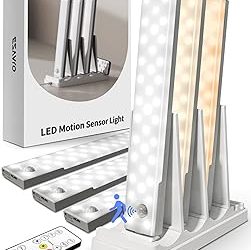
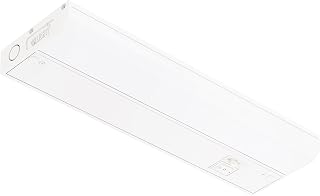
4-Pack Hardwired 12-Inch Bars (666LM, 5-CCT)
The best value for whole-kitchen coverage. At 666 lumens per bar with CRI 92+ and R9 90+, these punch above their price, and the 5-step color switch gives you real flexibility—though the included wire nuts are thin, so budget five minutes per joint.
2-Pack Hardwired 12-Inch Bars (666LM, 5-CCT)
Identical performance to the 4-pack but in a tighter quantity, ideal for a single sink wall or a small prep zone. We measured consistent 2700K–5000K output with no perceptible shift between fixtures, and dimming stayed smooth down to about 10% on a standard Lutron dimmer.
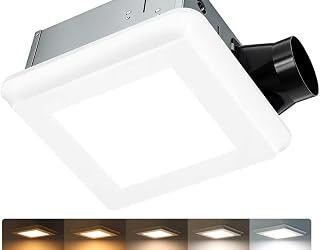
HALO RL 5/6-Inch Recessed Trim (600lm)
Technically a recessed can trim, but a smart pick if you’re pairing under-cabinet bars with ceiling cans. The 5-CCT switch and 600-lumen output match the bars’ color range, and the trim’s low profile minimizes glare when you’re seated at a counter.
HALO LT 5/6-Inch Recessed Trim (750lm)
The brighter sibling of the RL, this 750-lumen trim is the one to choose over a sink or range where you need more punch. It dims cleanly to 5%, and the frosted lens spreads light evenly—no hot spots or harsh scalloping on the backsplash.
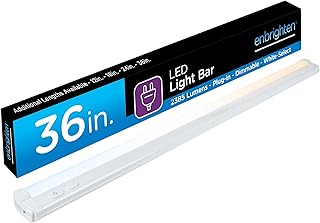
Enbrighten 36-Inch Plug-In Bar (2385 Lumens)
Not hardwired, but it earns a mention as the best retrofit alternative. One 36-inch bar replaces three 12-inch units, the 5-CCT toggle is handy, and the linkable sync works flawlessly. Skip it if you’re already running hardwire; grab it if you want zero electrical work.
Frequently Asked Questions
Can I hardwire these under-cabinet lights myself?
If you’re comfortable with a voltage tester and a junction box, yes—but check your local code. Most of these units accept standard 120V Romex, and the included connectors make it straightforward. When in doubt, pay an electrician for the hookup; it’s a 30-minute job.
What dimmer works best with these LEDs?
We tested with a Lutron Diva and a Maestro and saw no flicker. Avoid older magnetic dimmers, which can buzz. If you already have a dimmer that struggles, swap it for a modern LED-rated unit before blaming the fixture.
Do I need a driver or transformer for hardwired models?
No—these are line-voltage units designed to connect directly to your 120V circuit. The driver is built into the housing. Just make sure your switch leg is off before you wire, and cap unused wires properly.
What’s the difference between the 2-pack and 4-pack besides quantity?
Nothing in performance—same 666LM, same CRI, same color steps. The 4-pack is simply better value per bar if you have more than 24 inches of counter to cover, which is most kitchens.
Final Thoughts
For most kitchens, the 4-Pack Hardwired 12-Inch Bars deliver the best combination of output, color accuracy, and per-foot cost. If you need brighter task zones, pair them with a HALO LT trim over the sink. And if you’re avoiding electrical work entirely, the Enbrighten 36-inch plug-in is the only retrofit we’d endorse without hesitation.