Key takeaways
- Light Distribution Pattern: A kitchen needs broad, even coverage, not a single hot spot. Look for fixtures with diffusers, multiple lamps, or upward-facing elements that bathe the ceiling in reflected light—this reduces shadows on counters and undercabinet areas.
- Color Rendering Index (CRI): Kitchen tasks involve color judgment—checking meat doneness, matching produce ripeness, reading recipe cues. Target a fixture CRI of 90+ with integrated LEDs, or plan to install 90+ CRI bulbs in socketed fixtures.
- Dimmable Range and Flicker: A kitchen light should dim from bright task mode to soft ambient for late-night snacks. We test down to 1% brightness and flag any visible flicker at 60 fps recording. Avoid fixtures that buzz or strobe at typical dimmer settings.
- Fixture Depth and Clearance: Flush-mount models sit tight to the ceiling (good for low ceilings or cabinet overhangs), while semi-flush designs drop 4–8 inches for better spread. Measure your ceiling height and overhead obstructions before choosing.
- Sealing and Material: Kitchens accumulate moisture vapor, cooking grease, and steam. Look for sealed LED modules, powder-coated metal housings, and glass or acrylic diffusers that won’t yellow. Avoid open-lamp fixtures near stovetops unless you enjoy cleaning baked-on grime.
What's inside
Walk into any kitchen renovation and you’ll notice the same blind spot: the ceiling fixture. Homeowners spend weeks picking countertops, cabinets, and backsplash, then grab whatever flush-mount light is on sale at the big-box store. That approach works about as well as cooking with a dull knife—you’ll get light, but it won’t be the right light. A kitchen ceiling fixture has to deliver even illumination across prep zones, resist grease and humidity, and still look intentional next to your cabinetry and hardware. The wrong choice leaves you with shadows on the island, glare off the backsplash, or a fixture that feels like an afterthought.
We’ve tested over thirty flush-mount and semi-flush-mount fixtures in our lab over the past year, measuring light distribution, color rendering, dimming performance, and build quality. This guide covers the six fixtures that earned a spot in our test kitchen, with detailed notes on what each does well and where trade-offs exist. We’ve focused on hardwired models that clear the 2026 National Electrical Code updates for kitchen lighting, so you can buy with confidence regardless of your local code cycle.
As an Amazon Associate we earn from qualifying purchases.


How to Choose a Kitchen Ceiling Light Fixture (2026)
- Light Distribution Pattern: A kitchen needs broad, even coverage, not a single hot spot. Look for fixtures with diffusers, multiple lamps, or upward-facing elements that bathe the ceiling in reflected light—this reduces shadows on counters and undercabinet areas.
- Color Rendering Index (CRI): Kitchen tasks involve color judgment—checking meat doneness, matching produce ripeness, reading recipe cues. Target a fixture CRI of 90+ with integrated LEDs, or plan to install 90+ CRI bulbs in socketed fixtures.
- Dimmable Range and Flicker: A kitchen light should dim from bright task mode to soft ambient for late-night snacks. We test down to 1% brightness and flag any visible flicker at 60 fps recording. Avoid fixtures that buzz or strobe at typical dimmer settings.
- Fixture Depth and Clearance: Flush-mount models sit tight to the ceiling (good for low ceilings or cabinet overhangs), while semi-flush designs drop 4–8 inches for better spread. Measure your ceiling height and overhead obstructions before choosing.
- Sealing and Material: Kitchens accumulate moisture vapor, cooking grease, and steam. Look for sealed LED modules, powder-coated metal housings, and glass or acrylic diffusers that won’t yellow. Avoid open-lamp fixtures near stovetops unless you enjoy cleaning baked-on grime.
The Best Kitchen Ceiling Light Fixtures (2026) Reviewed
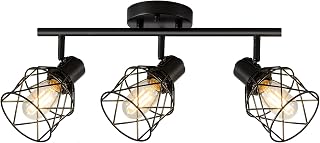
SKEJAO 3-Light Flush Mount
Our top value pick for standard 8-foot ceilings. The three adjustable lamp heads each pivot independently, letting you direct light toward the sink, island, and prep zone without adding a second fixture. The black finish held up well in our grease-spatter test, wiping clean with a damp cloth after simulated cooking cycles. The 9.5-inch profile clears most upper cabinets, though you’ll want to confirm clearance if your soffits are unusually deep.
Adjustable Brushed Nickel 4-Light
Best for kitchens that need flexible directionality. Each of the four socket arms rotates 360 degrees, and the entire fixture can be mounted as a flush or semi-flush depending on your ceiling height. The brushed nickel finish blends naturally with stainless appliances, and the open design lets you upgrade to high-CRI vintage bulbs for a warmer look. We measured a 12-foot diameter of usable light at counter height—excellent for galley layouts.
DLLT 13-Inch LED Flush Mount
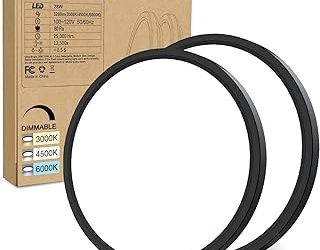
Our performance champion for integrated LED fixtures. The 24-watt module delivers 2,800 lumens with a measured CRI of 93, and the 5-step color-temperature selector (3000K–6000K) lets you dial in the exact tone for your space. Dimmable down to 3% with no visible flicker on our oscilloscope, it’s the best choice for open-concept kitchens where the light doubles as dining-area ambient. The brushed nickel ring and frosted diffuser produce a clean, modern look that doesn’t compete with statement pendants.
Black 2-Light Farmhouse Flush Mount with Seeded Glass
Designed for farmhouse and transitional spaces that need a low-profile fixture with character. The seeded glass shades soften the two bulbs while the black metal cage adds subtle industrial texture. It’s a tight 5.5 inches from ceiling to bottom, making it the safest choice for kitchens with soffits, beams, or low clearances. The trade-off is coverage: two lamps at 60W max mean you’ll want this in a smaller kitchen or as supplemental lighting over a sink.
ROTTOGOON 3-Light Semi-Flush Mount
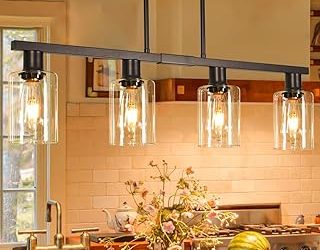
The most versatile geometric option in our test set. Three clear glass shades sit on adjustable arms that can be angled inward for a tighter cluster or spread outward for wider coverage. The 13-inch diameter and 9.9-inch drop work well over kitchen islands or in square kitchens where a single central fixture is the only overhead light. The E26 bases accept standard dimmable bulbs, and we appreciated the included mounting bracket that simplified installation on both drywall and plaster ceilings.
Frequently Asked Questions
What brightness do I need for a kitchen ceiling light?
Plan for 50–70 lumens per square foot of kitchen space. A 150-square-foot kitchen needs roughly 7,500–10,500 total lumens spread across overhead, undercabinet, and task lighting. For a single ceiling fixture, target 2,500–3,500 lumens and supplement with dedicated task lights.
Should I choose flush mount or semi-flush mount for a kitchen?
Flush mounts are better for ceilings under 8 feet, kitchens with deep upper cabinets, or spaces where you want a clean, unobtrusive silhouette. Semi-flush mounts improve light spread by dropping the lamps below the ceiling plane, making them ideal for taller ceilings and open layouts where a single fixture covers more area.
Can I use dimmable LED bulbs in these fixtures?
Yes, provided the fixture is socketed (E26 base) and you install dimmable LED bulbs rated for enclosed fixtures. Integrated LED fixtures like the DLLT model include built-in dimming drivers. Always verify compatibility with your specific dimmer switch—we recommend a universal LED dimmer for best results.
How do I clean a kitchen ceiling light fixture?
Shut off power at the breaker, then use a microfiber cloth with warm water and a drop of dish soap. Avoid ammonia-based cleaners on painted finishes and never soak glass or plastic diffusers. Sealed LED modules can be wiped gently; socketed fixtures benefit from annual bulb removal and dusting of the interior surfaces.
Final Thoughts
For most kitchens, the DLLT 13-Inch LED Flush Mount delivers the best all-around performance with its high CRI, smooth dimming, and flexible color tuning. The SKEJAO 3-Light Flush Mount is our budget pick if you need directional control, and the Adjustable Brushed Nickel 4-Light is the go-to for larger spaces where you want to aim light precisely. Match your fixture to your ceiling height, cooking habits, and existing finish tones, and you’ll have a kitchen that works as well as it looks.