Key takeaways
- Measure the cabinet opening, doorway, bar depth, and door-swing area.
- Confirm whether the unit is freestanding or approved for built-in installation.
- Count the shelf positions and check clearance for your tallest bottle.
- Choose compressor cooling for warm rooms, garages, and frequent use.
- Look for a published noise rating if the bar is near seating or a television.
- Prefer a reversible door when the refrigerator will sit beside a wall.
- Check whether the temperature range suits beer, wine, and perishable mixers.
- Make sure the outlet is grounded and accessible without an extension cord.
- Leave the specified ventilation gaps and keep the front grille clear.
The best mini fridges for a home bar are usually beverage refrigerators with adjustable shelves, a temperature range around 34–50°F, front ventilation for built-in installation, and enough vertical clearance for the bottles and cans you actually serve.
Quick picks by bar situation
| Your situation | Best refrigerator type | What to prioritize | Typical price range |
|---|---|---|---|
| Small apartment or condo | 24–30 inch freestanding beverage cooler | Low noise, reversible door, compact depth | $250–$600 |
| Custom cabinetry or island | Front-venting built-in beverage refrigerator | Ventilation, shallow depth, finished front | $500–$1,500+ |
| Wine, beer, and cocktail ingredients | Dual-zone beverage or wine-and-beverage unit | Separate temperature zones and flexible shelving | $400–$1,200 |
| Renters or occasional entertaining | Freestanding 3.1–4.5-cubic-foot refrigerator | Light weight, standard outlet, no cabinet modification | $180–$450 |
| Quiet lounge, office, or bedroom bar | Compressor beverage cooler with a published noise rating | Approximately 40 dB or less, stable leveling feet | $300–$900 |
What makes a mini fridge suitable for a home bar?
A food-storage mini fridge and a bar refrigerator are not interchangeable. A general compact refrigerator may have a freezer compartment, molded door bins, and one wire shelf designed for leftovers. A beverage refrigerator generally uses flatter shelves, a glass door, and a layout intended for cans and bottles.

BROTTAR Large Coffee Bar Cabinet with Fridge (Fridge Included)
Included for 'Best Mini Fridges for a Home Bar' as a relevant option in this category; details come from the product listing.
View on Amazon
EUHOMY 130 Can Mini Fridge, Beverage Refrigerator with Glass Door, Black
Included for 'Best Mini Fridges for a Home Bar' because the listing specifies Beverage Refrigerator with Glass Door and Black, details this guide uses to compare options.
View on Amazon
Electactic Mini Fridge 130 Can Beverage Refrigerator Cooler, 3.2 Cu.Ft Drink Fridge for Soda Wine Beer, Adjustable Temperature Control for Home Office, Black
Included for 'Best Mini Fridges for a Home Bar' because the listing specifies 3.2 Cu.Ft Drink Fridge for Soda Wine Beer and Adjustable Temperature Control for Home Office, details this guide uses to compare options.
View on Amazon
Feelfunn 126 Can Beverage Refrigerator, Glass Door Mini Fridge, 3.2 Cu.Ft
Included for 'Best Mini Fridges for a Home Bar' because the listing specifies Glass Door Mini Fridge and 3.2 Cu.Ft, details this guide uses to compare options.
View on AmazonFor a bar, measure the container heights before choosing a model. A useful interior should accommodate 12-ounce cans, standard beer bottles, 750-milliliter wine bottles, mixers, and cocktail garnishes without removing half the shelves. A shelf clearance of about 7 inches handles most cans and beer bottles; at least 12 inches of vertical space is more useful for wine or tall mixer bottles. Many beverage coolers advertise capacity in cans, but that figure assumes tight packing and does not tell you how many bottles fit upright.
Best mini-fridge features to compare
Bottle-friendly storage
Look for adjustable glass or coated-wire shelves rather than a fixed grid. Glass shelves contain spills and are easier to wipe, while wire shelves allow cold air to circulate more freely and may be easier to reposition around tall bottles. A dedicated horizontal bottle rack is convenient for wine, but it can reduce the space available for cans.
Check the door shelves carefully. Narrow plastic racks may hold cans but not heavy bottles once the door is opened repeatedly. A sturdy lower bin is useful for mixers, tonic water, and juice. If you serve craft beer in unusually shaped bottles, prioritize open shelves over tightly molded can slots.
Temperature control
A dial with “cold” and “colder” settings gives limited control. Digital controls are preferable when the refrigerator will hold beer, wine, and perishable garnishes, because you can set a specific target and see the temperature without opening the door.
Most home-bar beverage coolers operate roughly between 34°F and 50°F. Beer and soft drinks are commonly served cold around 36–40°F, while wine requirements vary by style. A cooler that can reach low temperatures may still fluctuate during a warm party or when the door is opened frequently. An interior fan, a well-sealed gasket, and an external thermometer can matter more than a large temperature range printed on the box.
Thermoelectric models can be quiet and have fewer moving parts, but they generally struggle more in warm rooms and are often better for smaller loads. Compressor refrigerators usually cool more consistently and are the safer choice for a garage, sunny room, or frequently used bar.
Door swing and access
A reversible door is particularly valuable in a narrow bar layout. Before buying, stand where the refrigerator will go and identify the side on which you will naturally reach for a drink. Allow the door to open at least 90 degrees, plus enough space to pull out shelves. A right-hinged door beside a wall may open, but the wall can prevent the shelves from sliding out fully.
Do not measure only the cabinet opening. A typical compact refrigerator may need 20–24 inches of clear width to open comfortably, even if its body is only 18–19 inches wide. If it sits under a counter, confirm that the hinge and handle do not collide with the countertop edge or adjacent drawer.
Noise and vibration
A compressor cycles on and off, so every compressor refrigerator makes some sound. For a living room or media room, seek a published noise specification near 40 dB or below and use adjustable feet to stop cabinet vibration. A refrigerator that is quiet on a hard floor may sound louder when installed against hollow cabinetry.
Leave space around the unit as directed by the manufacturer, and do not press its back against a wall. Poor airflow causes longer run times, more heat, and potentially more noise. Avoid placing it directly beside a subwoofer or on a flexible shelf that amplifies vibration.
Built-in versus freestanding: the ventilation decision
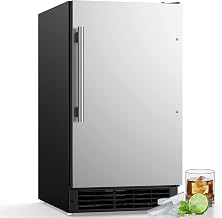
The most important installation distinction is where the refrigerator releases heat. Front-venting built-in models exhaust through a grille at the bottom or front, so they can be installed beneath a counter when the cabinet opening follows the specified dimensions. A freestanding refrigerator usually vents through the back or sides and needs open air around those surfaces.
| Installation type | Typical clearance guidance | Best use | Main risk |
|---|---|---|---|
| Freestanding | Often about 2–4 inches at the sides and rear; verify the manual | Open shelving, rented homes, movable bars | Overheating if enclosed in cabinetry |
| Front-venting built-in | Follow the cutout width, height, and depth exactly; keep the grille unobstructed | Under-counter bars and islands | Heat buildup if the toe-kick or grille is covered |
| Undercounter wine/beverage combo | Usually requires a precise cabinet opening and level floor | Permanent entertaining areas | Door, hinge, and countertop interference |
Never slide a freestanding unit into a tight cabinet simply because its exterior dimensions fit. The cooling system still needs a path for heat to escape. If the refrigerator is going inside a bar cabinet, select a model explicitly rated for built-in use and confirm whether the required opening includes a rear air channel.
How much space does your bar need?
For a compact bar serving two to four people, a refrigerator around 18–20 inches wide, 18–21 inches deep, and 32–34 inches high can be enough. A 3.1- to 4.5-cubic-foot unit typically fits drinks for a small gathering, but the usable capacity drops when you reserve space for bottles and garnishes.
For a 10-by-12-foot lounge, keep at least 30 inches of walking clearance in front of the bar and avoid placing the door swing into that main path. A 24-inch-wide beverage refrigerator leaves room for a 36-inch bar cabinet while preserving workable circulation. In a narrow galley layout, a shallow unit under 22 inches deep can be more practical than a larger refrigerator that forces people to turn sideways.
Most compact refrigerators weigh approximately 45–75 pounds before packaging. Check the cabinet’s weight rating, especially if the unit will sit on a rolling cart. A loaded refrigerator can exceed 100 pounds, and a glass-front model may be difficult to move through a doorway or up stairs. Measure the narrowest doorway, not just the room entrance, and remove shelves and the door only if the manufacturer permits it.
Which brands and formats are worth considering?
Danby offers compact refrigerators and beverage coolers in freestanding and built-in-oriented formats. NewAir is known for beverage refrigerators with can-focused interiors and digital controls. EdgeStar and Whynter offer compact beverage and wine-cooling formats, including models aimed at under-counter use. Frigidaire sells both basic compact refrigerators and beverage-center designs. These brands span budget and premium categories, so compare the installation rating and interior dimensions rather than choosing by brand alone.
Basic freestanding compact refrigerators usually cost about $180–$350. Better beverage coolers with glass doors, adjustable shelves, and digital controls commonly cost $300–$700. Front-venting built-in units and dual-zone models usually start around $500 and may exceed $1,500.
Buying checklist
- Measure the cabinet opening, doorway, bar depth, and door-swing area.
- Confirm whether the unit is freestanding or approved for built-in installation.
- Count the shelf positions and check clearance for your tallest bottle.
- Choose compressor cooling for warm rooms, garages, and frequent use.
- Look for a published noise rating if the bar is near seating or a television.
- Prefer a reversible door when the refrigerator will sit beside a wall.
- Check whether the temperature range suits beer, wine, and perishable mixers.
- Make sure the outlet is grounded and accessible without an extension cord.
- Leave the specified ventilation gaps and keep the front grille clear.
For most home bars, the safest all-around choice is a front-venting compressor beverage refrigerator with adjustable shelves, a reversible door, digital temperature control, and roughly 3–5 cubic feet of usable space. Choose a simpler freestanding compact refrigerator when portability and price matter more than presentation, and choose a dual-zone unit only when you will regularly store drinks that need different temperatures.