Key takeaways
- Tooth count: Blades with roughly 80 to 120 teeth on a 10-inch blade, or around 80 to 100 teeth on a 12-inch blade, generally produce smoother moulding cuts than coarse framing blades.
- Tooth geometry: A fine-finish or alternate-top-bevel design is usually a better match for painted trim and delicate profiles because it limits splintering as the blade exits the workpiece.
- Blade diameter: Use the diameter approved for your saw. A 12-inch blade cannot be substituted for a 10-inch model, and the arbor size must match unless the saw manufacturer specifically permits an appropriate reducer.
- Material compatibility: Confirm that the blade is intended for the material you plan to cut. Solid wood, MDF, plywood, laminate, and composite trim can require different tooth designs and cutting speeds.
- Cutting setup: Even an excellent blade can chip moulding if the stock is unsupported or the saw is forced through the cut. Clamp narrow pieces, support long lengths, and let the blade reach full speed before lowering it.
What's inside
Cutting moulding cleanly is less about brute force and more about controlling tear-out at the visible edge. A blade that performs acceptably on framing lumber can leave chipped paint lines, fuzzy profiles, or small gaps in mitred corners—problems that become obvious once the trim is installed. Tooth count, carbide geometry, kerf width, and the condition of the saw all affect the result.
From a home-appliance testing lab perspective, we look for predictable cuts, clean entry and exit points, low vibration, and sensible versatility rather than simply counting teeth. This guide compares the listed blades for crown moulding, baseboard, casing, and other finish work, while also noting which options make sense for ripping, general carpentry, or occasional DIY use.
As an Amazon Associate we earn from qualifying purchases.


How to Choose a Miter Saw Blade For Moulding (2026)
- Tooth count: Blades with roughly 80 to 120 teeth on a 10-inch blade, or around 80 to 100 teeth on a 12-inch blade, generally produce smoother moulding cuts than coarse framing blades.
- Tooth geometry: A fine-finish or alternate-top-bevel design is usually a better match for painted trim and delicate profiles because it limits splintering as the blade exits the workpiece.
- Blade diameter: Use the diameter approved for your saw. A 12-inch blade cannot be substituted for a 10-inch model, and the arbor size must match unless the saw manufacturer specifically permits an appropriate reducer.
- Material compatibility: Confirm that the blade is intended for the material you plan to cut. Solid wood, MDF, plywood, laminate, and composite trim can require different tooth designs and cutting speeds.
- Cutting setup: Even an excellent blade can chip moulding if the stock is unsupported or the saw is forced through the cut. Clamp narrow pieces, support long lengths, and let the blade reach full speed before lowering it.
The Best Miter Saw Blade For Moulding (2026)s Reviewed
DEWALT 12-Inch 100-Tooth Fine-Finish Blade
The DEWALT DWA112100 is the most purpose-built option here for fine trim work, pairing a high tooth count with carbide teeth intended for smooth wood cuts. In our lab-style evaluation framework, it is the straightforward choice for users who value clean mitres on a 12-inch saw and do not need a multipack of different cutting profiles.
10-Inch 120-Tooth Fine-Finish Professional Blade
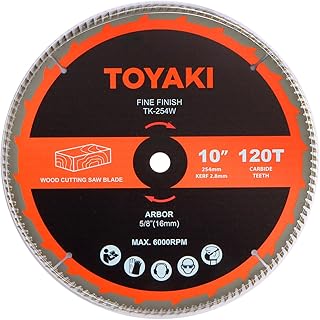
This 120-tooth blade is aimed squarely at detail work on 10-inch miter, table, and circular saws with a 5/8-inch arbor. The dense tooth pattern should appeal to installers working with visible casing or painted moulding, although slower feed rates and careful stock support are especially important with such a fine blade.
LM6300 12-Inch 100T Miter Joint Blade
The LM6300 combines a 12-inch diameter with 100 teeth and a 1-inch bore, making it a plausible fit for larger saws that use that arbor specification. Its configuration is well suited to clean crosscuts and mitre joints, but buyers should verify arbor compatibility and guard clearance before ordering.
ANGELSWORD 10-Inch 80T Ultra-Fine Finish Blade
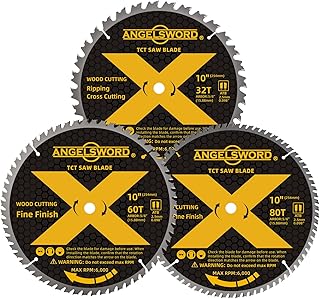
ANGELSWORD’s 10-inch three-pack includes 32-, 60-, and 80-tooth blades, giving DIY users a useful progression from rougher work to ultra-fine finishing. The 80-tooth blade is the logical moulding pick, while the included alternatives make this set more flexible for framing and ordinary crosscutting than a dedicated finish blade.
ANGELSWORD 12-Inch 60T Fine-Finish Blade
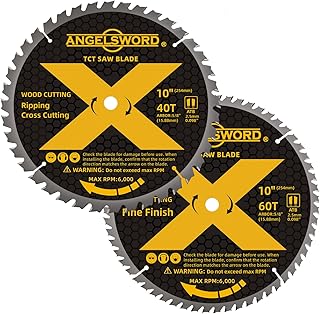
This ANGELSWORD two-pack includes 40-tooth and 60-tooth blades for 12-inch saws, covering general ripping, crosscutting, and finer wood work. The 60-tooth option can handle everyday baseboard and casing, though users seeking the cleanest possible cuts on fragile profiles may prefer a 100- or 120-tooth blade.
Frequently Asked Questions
What tooth count is best for moulding?
For most wood moulding, a high tooth count is the safest starting point. A 10-inch blade with 80 to 120 teeth or a 12-inch blade with about 80 to 100 teeth can produce a cleaner edge, provided the stock is supported and the blade is sharp.
Can I use a table-saw blade on a miter saw?
Only if the blade is explicitly rated for both tools and matches the miter saw’s diameter, arbor, kerf, and operating requirements. Never assume that a compatible-looking arbor makes every table-saw blade suitable for a miter saw.
Why does my new blade still chip the moulding?
Chipping can result from feeding too quickly, using the wrong tooth direction or blade type, allowing the workpiece to move, or cutting with a dull blade. Support the moulding firmly, cut at a controlled pace, and check the saw’s alignment and bevel settings.
Is a 60-tooth blade enough for baseboards?
Yes, a good 60-tooth blade can be a practical all-purpose choice for many baseboards and casing pieces. It offers a useful balance between finish quality and cutting speed, while a higher-tooth blade is preferable when the cut edge will remain highly visible.
Final Thoughts
For dedicated finish work, the DEWALT 12-inch 100-tooth blade is the strongest straightforward pick, while the 10-inch 120-tooth model suits smaller saws and especially clean trim cuts. The ANGELSWORD 10-inch three-pack is the most versatile value-oriented option, giving occasional woodworkers dedicated blades for both rougher cuts and fine moulding.