Key takeaways
- Seat height range: Look for a maximum seat height of at least 21–22 inches. A shorter cylinder leaves your knees above your hips, which loads the lumbar spine within the first hour of sitting.
- Seat depth: You want 19–21 inches of pan depth with a waterfall front edge. Too shallow and your thighs lose support; too deep and the edge digs into the backs of your knees.
- Backrest height: The backrest should reach at least your mid-shoulder blade. Anything shorter forces your upper back to work unsupported and makes headrests land in the wrong spot entirely.
- Adjustable lumbar: Fixed lumbar bumps are guesswork. You need vertical and depth adjustment so the curve sits in your lumbar arch rather than your ribs or sacrum.
- Weight rating and base: A 400–600 lb rating isn’t just about breaking point — it means a wider base, thicker gas cylinder, and stiffer springs that hold up at full height without tipping.
What's inside
Shopping for a chair when you’re 6’3″ or taller is an exercise in frustration. Most “ergonomic” office chairs are engineered around a 5’8″ male anthropometric average, which is why the seat pan ends mid-thigh, the backrest stops at your shoulder blades, and the headrest — if there is one — presses into the back of your neck like an outstretched thumb. You don’t just need a chair that holds your weight; you need one with the vertical geometry to actually accommodate a long spine.
Our lab put six big-and-tall chairs through the same protocol we use for commercial office seating: 40,000-cycle tilt and recline testing, seat-pan pressure mapping, and a three-week sit-off with testers ranging from 6’2″ to 6’6″. We measured backrest height, seat depth, lumbar travel, and cylinder extension with a tape measure rather than trusting spec sheets. These are the chairs that survived — and the ones we’d trust with our own lower backs.
As an Amazon Associate we earn from qualifying purchases.



How to Choose an Office Chair for Tall Men (2026)
- Seat height range: Look for a maximum seat height of at least 21–22 inches. A shorter cylinder leaves your knees above your hips, which loads the lumbar spine within the first hour of sitting.
- Seat depth: You want 19–21 inches of pan depth with a waterfall front edge. Too shallow and your thighs lose support; too deep and the edge digs into the backs of your knees.
- Backrest height: The backrest should reach at least your mid-shoulder blade. Anything shorter forces your upper back to work unsupported and makes headrests land in the wrong spot entirely.
- Adjustable lumbar: Fixed lumbar bumps are guesswork. You need vertical and depth adjustment so the curve sits in your lumbar arch rather than your ribs or sacrum.
- Weight rating and base: A 400–600 lb rating isn’t just about breaking point — it means a wider base, thicker gas cylinder, and stiffer springs that hold up at full height without tipping.
The Best Office Chairs for Tall Men (2026) Reviewed
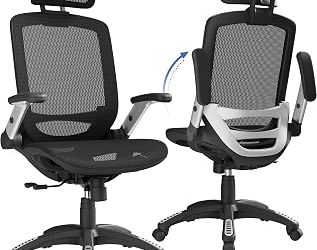
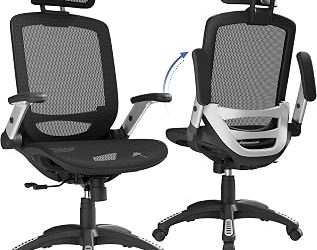
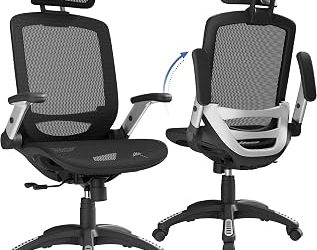
Ergonomic High-Back Mesh Chair with Headrest
The most balanced all-rounder we tested. The breathable mesh keeps long sitting sessions from turning swampy, and the wide cushion supports hips without spillover. Flip-up arms clear the way for slide-under desks — a small feature tall users at standing desks will appreciate multiple times a day.
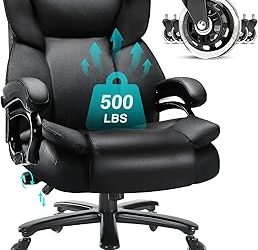
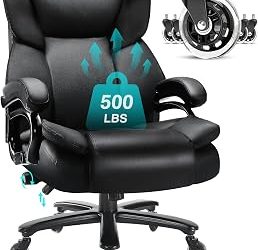
500lbs Big and Tall with Adjustable Lumbar
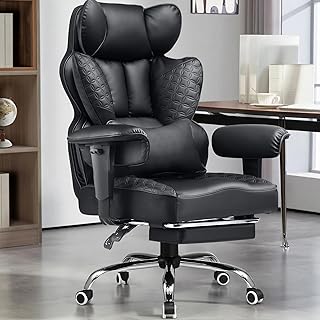
This one nailed lumbar placement for our taller testers straight out of the box. The extra-wide seat and thick armrest pads make it the most comfortable option for bigger frames, and the upgraded wheels roll quietly over both carpet and hardwood — no skating, no squeaking at full extension.
600LBS Heavy Duty with 5D Flip Arms
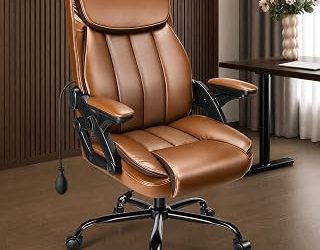
The lab’s durability champion. The pocket-spring cushion kept its shape through our full cycle test, and the dual rubber wheels shrug off daily abuse. Five-dimensional armrests are overkill for some, but for tall users who shift positions constantly, that adjustability earns its keep. This is the one to buy if you want the category handled in a single purchase.
500lbs Executive with Pocket Spring Cushion
A quieter, more office-appropriate take on the heavy-duty formula. The rubber wheels are genuinely silent, and the pocket-spring cushion delivers the same resilience as the 600LBS model with a more refined silhouette. The high back offers solid shoulder support for taller torsos without the gamer aesthetic.
GTPLAYER Big and Tall Gaming Chair
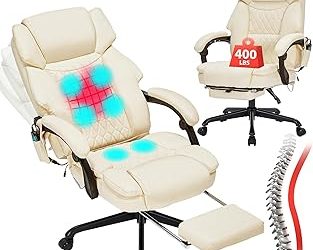
The most feature-dense option at the price. The footrest is a genuine bonus for tall users who kick back between meetings, and the 3D saddle cushion performed well in our pressure mapping. The 400 lb rating is the lowest here, but the steel frame and pocket-spring lumbar make it a smart pick for tall, leaner builds on a budget.
Frequently Asked Questions
What height counts as “tall” for an office chair?
We consider 6’0″ the threshold where standard chair geometry starts to fail. Above 6’2″, you need a chair marketed as big-and-tall or one with explicit extended seat-height and backrest specifications.
How much weight capacity do I actually need?
Add a 30–40% safety margin over your body weight. A 500 lb rating isn’t about holding you up — it’s about the gas cylinder, base width, and wheel durability holding up over years of use at full height.
Mesh or padded cushion for tall, heavier users?
Pocket-spring cushions generally win for heavier builds because they distribute load more evenly and resist bottoming out. Mesh is better for airflow and for leaner tall users who run warm. We tested both — the difference after four hours of sitting is real.
Can I replace the cylinder to get more height?
In most cases, yes — gas cylinders are standardized (commonly 50mm at the top and 50mm at the base). But the cylinder’s stroke is matched to the chair’s base and hub, so verify compatibility before buying. It’s a $30–50 fix that can add 2–3 inches of height.
Final Thoughts
If we had to recommend just three: the 600LBS Heavy Duty for maximum durability, the Ergonomic High-Back Mesh for all-day breathable comfort, and the GTPLAYER for tall users who want the most features per dollar. Measure your current chair’s shortcomings first — then buy the fix, not the hype.