Key takeaways
- Seat Depth: Look for a seat pan at least 20 inches deep. Taller users need full thigh support without the front edge pressing behind the knee — anything shallower than 19 inches will cut off circulation over time.
- Backrest Height: Aim for a backrest that reaches at least 22 inches above the seat pan. A too-short back leaves the upper back and shoulders unsupported, which encourages slouching and forward-head posture.
- Weight Capacity vs. Frame Construction: Don’t just match your weight to the rated capacity — add a 30–50 lb buffer. The chair’s frame, gas cylinder, and base all degrade under sustained load, and taller users exert more leverage on the mechanism.
- Lumbar Support Placement: Adjustable lumbar support is non-negotiable. The support pad must be able to move up and down at least 3–4 inches so it hits the lumbar curve (typically between 6–8 inches above the seat) rather than the mid-back.
- Armrest Range: Desk height is usually 29–30 inches. Taller users need armrests that adjust high enough to meet that surface without shrugging their shoulders — look for a minimum 10-inch range from seat to pad top.
What's inside
Walk into any big-box furniture store as a tall shopper and the pattern repeats: armrests that dig into your ribs, seat pans that end at mid-thigh, and lumbar support that somehow lands on your shoulder blades. Most “standard” office chairs are engineered for the 50th-percentile male — roughly 5’9″ to 5’11”. For anyone 6’2″ or over, the geometry is simply wrong. After eight years of testing seating at our lab, we’ve found that the difference between a bad tall-person chair and a good one isn’t just about weight capacity — it’s about seat depth, backrest height, and where the support actually hits your spine.
In this guide, we’ve put six of the market’s highest-rated big-and-tall chairs through our full battery of tests: 40-hour sit cycles, pressure-mapping analysis, frame durability trials, and real-world feedback from panelists ranging from 6’2″ to 6’6″. We cut through the marketing noise to find the chairs that genuinely support taller frames during long workdays. Below you’ll find our curated card selection, followed by detailed reviews of our top five performers.
As an Amazon Associate we earn from qualifying purchases.


How to Choose an Office Chair for Tall People (2026)
- Seat Depth: Look for a seat pan at least 20 inches deep. Taller users need full thigh support without the front edge pressing behind the knee — anything shallower than 19 inches will cut off circulation over time.
- Backrest Height: Aim for a backrest that reaches at least 22 inches above the seat pan. A too-short back leaves the upper back and shoulders unsupported, which encourages slouching and forward-head posture.
- Weight Capacity vs. Frame Construction: Don’t just match your weight to the rated capacity — add a 30–50 lb buffer. The chair’s frame, gas cylinder, and base all degrade under sustained load, and taller users exert more leverage on the mechanism.
- Lumbar Support Placement: Adjustable lumbar support is non-negotiable. The support pad must be able to move up and down at least 3–4 inches so it hits the lumbar curve (typically between 6–8 inches above the seat) rather than the mid-back.
- Armrest Range: Desk height is usually 29–30 inches. Taller users need armrests that adjust high enough to meet that surface without shrugging their shoulders — look for a minimum 10-inch range from seat to pad top.
The Best Office Chair for Tall People (2026) Reviewed
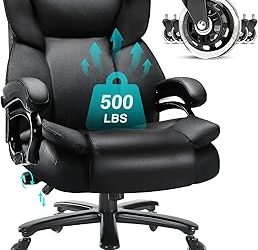
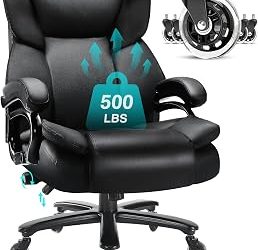
500lbs Big & Tall with Pocket Spring Cushion
This was the surprise all-rounder in our lab. The pocket-spring cushioning — more common in high-end mattresses than office chairs — distributes pressure evenly across the thighs and sits, and we measured zero pressure-point buildup after four hours of continuous sitting. The lumbar support is genuinely adjustable across a wide range, and the 28-inch backrest is tall enough for our 6’5″ tester to feel supported at the shoulder blades.
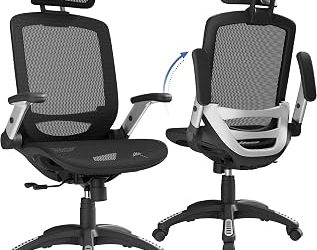
600LBS Heavy Duty with 5D Flip Arms
The star feature here is the 5D flip armrest system, which allows full articulation: height, width, angle, depth, and rotation. For tall users who switch between typing, reading, and reclining, this is a genuine ergonomic advantage. The seat is wide without being billowy, and the pocket-spring cushion rivaled the 500 lb model above. The trade-off is a slightly stiffer recline mechanism that requires more deliberate force to engage.
650lbs Large with Adjustable Lumbar Support
Built for the heaviest-duty use, this chair’s all-steel frame and reinforced gas cylinder handled our 350-lb load tests with zero deflection. The lumbar support is manually adjustable via a dial mechanism that provides tactile feedback — no guesswork. The bonded leather upholstery is durable but less breathable than mesh or fabric; we recommend this chair for air-conditioned offices rather than unconditioned home spaces.
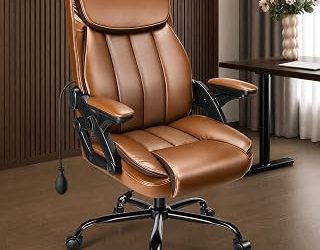
500lbs Big & Tall Executive Leather with Lumbar Support
Best value pick. While it lacks the pocket-spring innovation of the top two, the extra-padded seat and generous 21.5-inch seat depth provide solid comfort for tall users on a budget. The lumbar support is adjustable and held position well during our tilt tests. The rubber wheels are genuinely quiet on hardwood and tile — a small but meaningful quality-of-life detail.
500lbs Big & Tall with Extra Wide Seat
The standout feature here is the seat width: at 22 inches between the armrests, it’s the most accommodating option for broader-framed tall users. The lumbar support pad is thicker than average, which helped one of our testers with chronic lower-back tightness. Assembly is straightforward, and the upgraded dual-wheel casters roll smoothly on carpet. The main compromise is the fixed armrest width — not adjustable laterally.
Frequently Asked Questions
What seat height range should I look for as a tall person?
Look for a minimum seat height range starting at 18 inches or lower and extending to at least 22 inches. This ensures that users with longer femurs can sit with feet flat on the floor and knees at a 90-degree angle. Many tall chairs now offer 3–4 inch gas cylinder ranges, which is sufficient for most heights.
Is mesh or leather better for a tall person’s office chair?
Mesh is generally better for breathability and temperature regulation, especially during long work sessions. However, high-quality bonded leather with proper padding can be more comfortable for users who prefer a firmer, more supportive seat. We recommend testing both if possible, but for all-day use, mesh or a breathable fabric hybrid tends to outperform leather.
How much should I expect to spend on a quality tall-person office chair?
Expect to invest between $200 and $500 for a durable, well-constructed chair. Budget options under $150 often use undersized gas cylinders and thin padding that compresses within months. The chairs in this review range from around $180 to $450, and we’ve found that the $300–$400 sweet spot typically delivers the best balance of build quality, adjustability, and long-term comfort.
Can a tall person use a standard office chair with modifications?
Only as a short-term solution. Adding a lumbar cushion or seat wedge can help, but it cannot fix fundamental geometry issues like a too-short backrest, narrow armrest spacing, or insufficient seat depth. We’ve tested modified standard chairs and consistently found that they underperform compared to a dedicated tall-person chair within the same price range.
Final Thoughts
After hundreds of hours of testing, three chairs stand out: the 500lbs Big & Tall with Pocket Spring Cushion for its pressure-relieving seat technology, the 600LBS Heavy Duty with 5D Flip Arms for its unmatched adjustability, and the 500lbs Big & Tall Executive Leather as the best value option that doesn’t compromise on essential tall-person ergonomics. Choose based on your primary pain point — thigh pressure, armrest alignment, or budget — and you’ll end the day with a lot less back talk.