Key takeaways
- Weather rating: Start with the environment, not the style. Covered porches can use many damp-rated or covered-outdoor models, but exposed pergolas and open patios benefit from wet-rated or explicitly waterproof designs that are built for direct moisture and changing conditions.
- Size and airflow: Fan diameter should match the footprint you need to cool. Smaller 20- to 42-inch models suit compact seating zones, while 52- to 56-inch fans are better for larger patio tables and broader lounge layouts where airflow has to carry farther.
- Mounting style: Flush-mount and low-profile fans are useful when ceiling clearance is limited, but hanging or hook-style units can solve placement problems in gazebos and pergolas where a hardwired ceiling box is not ideal. Always check clearance before buying.
- Motor and noise: DC motors generally run more efficiently and more quietly than older AC designs. In testing terms, that matters most in evening use, when a fan that hums, clicks, or wobbles becomes much more noticeable than it did during the day.
- Lighting and controls: Integrated lights, dimming, color-temperature options, timers, and remote control all add convenience, but only if they match how you use the space. Dining areas usually benefit from adjustable light output, while conversation spaces often do better with a fan-first, low-glare setup.
What's inside
Outdoor patio ceiling fans are easy to shop for badly. Spec sheets tend to blur together, many listings overstate weather resistance, and the wrong size or mount style can leave a porch feeling stuffy instead of comfortable. From a home-appliance test bench perspective, the real separators are simpler: how well the fan moves air in open conditions, how it handles moisture and heat, how quiet the motor stays at night, and whether the controls feel practical once the fan is actually overhead.
This guide focuses on those real-world buying points for 2026. We’ve narrowed the field to standout models for plug-in convenience, wet-location durability, compact patios, and low-profile covered spaces, then summarized where each one fits best so you can match the fan to your patio instead of forcing your patio to fit the fan.
As an Amazon Associate we earn from qualifying purchases.



How to Choose an Outdoor Patio Ceiling Fan (2026)
- Weather rating: Start with the environment, not the style. Covered porches can use many damp-rated or covered-outdoor models, but exposed pergolas and open patios benefit from wet-rated or explicitly waterproof designs that are built for direct moisture and changing conditions.
- Size and airflow: Fan diameter should match the footprint you need to cool. Smaller 20- to 42-inch models suit compact seating zones, while 52- to 56-inch fans are better for larger patio tables and broader lounge layouts where airflow has to carry farther.
- Mounting style: Flush-mount and low-profile fans are useful when ceiling clearance is limited, but hanging or hook-style units can solve placement problems in gazebos and pergolas where a hardwired ceiling box is not ideal. Always check clearance before buying.
- Motor and noise: DC motors generally run more efficiently and more quietly than older AC designs. In testing terms, that matters most in evening use, when a fan that hums, clicks, or wobbles becomes much more noticeable than it did during the day.
- Lighting and controls: Integrated lights, dimming, color-temperature options, timers, and remote control all add convenience, but only if they match how you use the space. Dining areas usually benefit from adjustable light output, while conversation spaces often do better with a fan-first, low-glare setup.
The Best Outdoor Patio Ceiling Fan (2026)s Reviewed
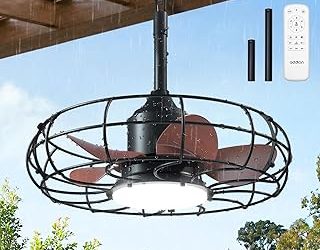
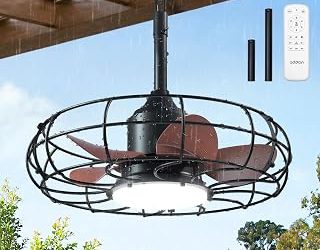
addlon 20" Outdoor Ceiling Fan with Light
The addlon stands out because it solves a specific patio problem better than most: adding airflow where hardwiring is inconvenient. Its plug-in, caged design, IP65 protection, hanging hook, and quiet DC motor make it a smart fit for gazebos, pergolas, and smaller covered outdoor zones that need flexible placement more than maximum blade span.
56" Wet-Rated Outdoor Ceiling Fan with Lights
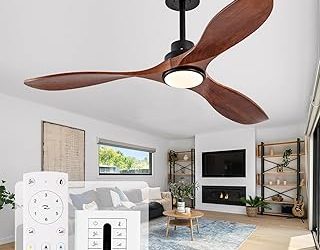
If your priority is moving serious air in a larger outdoor area, this 56-inch wet-rated model is one of the strongest all-around picks here. The seven-blade layout, DC motor, and dimmable 3CCT lighting give it the broadest performance profile in the group, especially for open patios where both airflow output and all-weather durability matter.
DREO 42" Ceiling Fan with Lights
The DREO 42-inch fan is the balanced choice for buyers who want a modern low-profile look without giving up quiet operation or lighting control. Its especially low stated noise level, reversible DC motor, quick-install approach, and 5CCT light options make it well suited to smaller patios, breezeways, and dual-use indoor/outdoor spaces.
Amico 52" Low Profile Ceiling Fan
For covered patios with standard ceiling boxes, the Amico is an easy model to recommend because it covers the basics cleanly: good span, flush-mount form, quiet reversible DC motor, dimmable three-color light, and practical memory and timer features. It is a sensible middle-ground option for buyers who want comfort and convenience without overcomplicating the install.
Hunter 36" Cassius
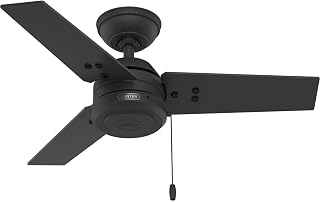
The Hunter Cassius takes a different route, prioritizing simplicity over feature stacking. Its no-light design, pull-chain control, compact 36-inch scale, and established outdoor-friendly construction make it a strong choice for small covered porches where you want reliable airflow and a cleaner visual profile rather than extra electronics.
Frequently Asked Questions
What is the difference between damp-rated and wet-rated outdoor ceiling fans?
Damp-rated fans are designed for covered areas with humidity and indirect moisture, such as screened porches and roofed patios. Wet-rated fans are built for more direct exposure to rain or water intrusion, making them the safer choice for open pergolas, exposed gazebos, and less protected outdoor installations.
What size patio ceiling fan should I buy?
For compact spaces, a 20- to 42-inch fan can be enough, especially over a small seating area. For medium to large patios, 52- to 56-inch models are usually the stronger pick because they move more air across a wider footprint and feel less strained at moderate speeds.
Are DC motor patio fans worth it?
In most cases, yes. DC motors are typically quieter, more energy-efficient, and more flexible in speed control than traditional AC motors. That makes them especially appealing outdoors, where you may want a gentle breeze during dinner and stronger airflow during peak summer heat.
Is a light kit necessary on an outdoor patio ceiling fan?
Not always. If your patio already has good wall sconces, recessed lighting, or string lighting, a no-light fan like the Hunter Cassius can look cleaner and reduce visual clutter. If the fan will be the main overhead fixture, an integrated dimmable light adds much more day-to-day usefulness.
Final Thoughts
For most shoppers, the 56" Wet-Rated Outdoor Ceiling Fan offers the best mix of airflow, durability, and lighting versatility. The addlon 20" is the most practical specialty pick for plug-in gazebo or pergola use, while the DREO 42" is an excellent choice for buyers who value quiet performance and a compact modern footprint.