Key takeaways
- Canopy ventilation: A vented top gives rising air a place to escape, reducing pressure beneath the canopy. Double-top and three-tier designs can offer more controlled airflow than a sealed canopy.
- Frame and rib strength: Look for sturdy ribs, a reinforced hub, and a pole that does not flex excessively during normal adjustment. Aluminum can resist corrosion, while heavier bracing generally improves stability.
- Base compatibility: The umbrella is only as stable as its support. Check the pole diameter and use a properly weighted base; table mounting alone may not be enough for larger canopies or exposed locations.
- Size and placement: Larger umbrellas catch more wind. Measure the area, keep the canopy clear of walls and railings, and choose a size that provides shade without creating an oversized sail.
- Controls and safety: Crank systems make opening easier, while tilt mechanisms help fine-tune shade. Close and secure the umbrella before strong gusts, storms, or leaving it unattended.
What's inside
Wind can turn a pleasant patio setup into a noisy, unstable liability. A canopy that feels solid on a calm afternoon may twist, lift, or tip when gusts hit from the side—especially if the base is too light or the umbrella is left open when conditions change. We evaluate wind-prone designs by looking beyond canopy size, examining frame construction, venting, rib support, adjustment hardware, and how easily each model can be secured.
This guide compares patio umbrellas suited to breezy decks, gardens, pools, and outdoor dining areas. Our focus is practical performance: how each design manages moving air, how convenient it is to open and reposition, and which setup details buyers must handle themselves. No patio umbrella is genuinely storm-proof, so a suitable weighted base and prompt closure remain essential.
As an Amazon Associate we earn from qualifying purchases.


How to Choose a Patio Umbrella For Windy Area (2026)
- Canopy ventilation: A vented top gives rising air a place to escape, reducing pressure beneath the canopy. Double-top and three-tier designs can offer more controlled airflow than a sealed canopy.
- Frame and rib strength: Look for sturdy ribs, a reinforced hub, and a pole that does not flex excessively during normal adjustment. Aluminum can resist corrosion, while heavier bracing generally improves stability.
- Base compatibility: The umbrella is only as stable as its support. Check the pole diameter and use a properly weighted base; table mounting alone may not be enough for larger canopies or exposed locations.
- Size and placement: Larger umbrellas catch more wind. Measure the area, keep the canopy clear of walls and railings, and choose a size that provides shade without creating an oversized sail.
- Controls and safety: Crank systems make opening easier, while tilt mechanisms help fine-tune shade. Close and secure the umbrella before strong gusts, storms, or leaving it unattended.
The Best Patio Umbrella For Windy Areas (2026) Reviewed
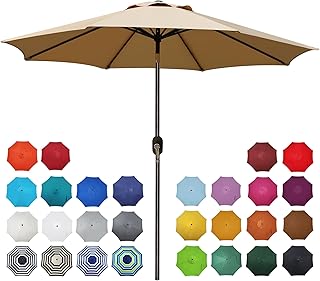
9-Foot Outdoor Market Umbrella with Tilt and Crank
This straightforward 9-foot model is a sensible choice for everyday patio tables, combining eight ribs with push-button tilt and crank opening. In our lab-style assessment, its appeal is ease of use and familiar construction rather than extreme-weather performance; buyers should pair it with a substantial base and close it when gusts build.
EliteShade USA 9-Foot 3-Tier Market Umbrella
The three-tier canopy is the standout feature here, creating additional escape paths for moving air while preserving useful shade. Its commercial-grade positioning, crank opening, and UPF 50+ protection make it attractive for exposed gardens and decks, although the umbrella’s real-world stability will still depend heavily on anchoring.
EliteShade USA 9-Foot Market Umbrella with Tilt
This EliteShade design offers a more conventional market-umbrella profile with crank operation, tilt adjustment, a vented top, and UPF 50+ protection. The Heather Beige finish is practical for bright outdoor spaces, while the adjustable canopy makes it easier to keep shade on seating as the sun moves.
10-Foot Patio Umbrella with Eight Ribs
With an extra foot of coverage, this crank-and-tilt umbrella suits larger tables or seating groups. The eight-rib frame and vented market-style canopy are helpful in moderate breezes, but its larger surface area also creates more wind load, making a heavy base and careful placement particularly important.
PURPLE LEAF 12-Foot Extra-Large Umbrella
This oversized PURPLE LEAF model is designed for broad coverage, with a wood-grain finish, aluminum construction, braced frame, and 240GSM fade-resistant fabric. It is the strongest conventional pick for large dining areas in this group, but its substantial canopy demands a genuinely heavy support system and should never be left open in changing weather.
Frequently Asked Questions
What is the best type of patio umbrella for windy conditions?
A vented canopy with strong ribs and a secure pole is generally preferable to a lightweight, sealed design. Three-tier or double-top umbrellas can help release trapped air, but no canopy eliminates the need for a properly weighted base and careful weather judgment.
Is a 12-foot umbrella suitable for a windy deck?
It can work in a sheltered location with robust anchoring, but the larger canopy catches more air than a 9-foot model. For an exposed deck, choose the smallest size that meets your shade needs and close it whenever wind increases.
Does a tilt mechanism make an umbrella more stable?
Not usually. Tilt is primarily a shade-positioning feature and may shift the canopy’s balance when angled. Use it for comfort, not as a substitute for a sturdy base, secure pole fit, or wind-safe operating habits.
What should I do with a patio umbrella before a storm?
Fully close the canopy, secure it with its tie or strap, and remove it from the base if severe weather is expected. For seasonal storms or prolonged absence, store the umbrella indoors or in a protected area rather than relying on its open position.
Final Thoughts
For breezy everyday patios, the EliteShade USA 9-Foot 3-Tier Market Umbrella offers the most wind-conscious canopy design, while the EliteShade USA 9-Foot Market Umbrella is a versatile conventional option. Choose the PURPLE LEAF 12-Foot model when broad shade matters most, but budget for serious anchoring and disciplined closure in windy weather.