Key takeaways
- Wind rating: Treat the published wind figure as a starting point, not a guarantee. Ratings depend on correct assembly, anchoring, surface conditions, and whether the roof is open or closed.
- Frame material: Thick aluminum resists corrosion and is relatively low-maintenance, galvanized steel offers substantial rigidity, and cedar provides a warm appearance but needs more upkeep.
- Anchoring: A pergola should be fixed to a suitable concrete slab, deck structure, or other approved foundation. Soil, pavers, and weak decking may require additional site preparation.
- Roof behavior: Louvered roofs can provide shade and rain control, but closed louvers present a larger wind surface. Look for secure mechanisms, strong beams, and a way to open the roof before severe weather.
- Site and maintenance: Measure clearance around walls, fences, trees, and utilities. Also check drainage, hardware access, corrosion protection, and the availability of replacement parts before installation.
What's inside
Choosing a pergola for a windy yard is less about appearance than how the structure manages uplift, racking, and repeated gusts. A light frame can look substantial in product photos yet shift, vibrate, or loosen when it is exposed to open terrain, coastal weather, or a roof that catches wind.
From a home-appliance and outdoor-equipment testing perspective, this guide focuses on structural materials, roof design, anchoring considerations, drainage, and stated wind ratings. The models below include wood, galvanized steel, and aluminum options, with both freestanding and wall-mounted designs for patios, decks, and gardens.
As an Amazon Associate we earn from qualifying purchases.




How to Choose a/an “Pergola” For High Winds (2026)
- Wind rating: Treat the published wind figure as a starting point, not a guarantee. Ratings depend on correct assembly, anchoring, surface conditions, and whether the roof is open or closed.
- Frame material: Thick aluminum resists corrosion and is relatively low-maintenance, galvanized steel offers substantial rigidity, and cedar provides a warm appearance but needs more upkeep.
- Anchoring: A pergola should be fixed to a suitable concrete slab, deck structure, or other approved foundation. Soil, pavers, and weak decking may require additional site preparation.
- Roof behavior: Louvered roofs can provide shade and rain control, but closed louvers present a larger wind surface. Look for secure mechanisms, strong beams, and a way to open the roof before severe weather.
- Site and maintenance: Measure clearance around walls, fences, trees, and utilities. Also check drainage, hardware access, corrosion protection, and the availability of replacement parts before installation.
The Best “Pergola” For High Winds (2026)s Reviewed
Backyard Discovery Beaumont Cedar Pergola
The Beaumont combines a traditional cedar structure with a trellis roof and a stated high-wind rating, making it a strong fit for buyers who want a permanent, furniture-like focal point. Its wood construction is visually forgiving in a garden setting, while the included PowerPort adds practical value for outdoor entertaining. Cedar does require periodic sealing or staining, and the substantial frame makes careful anchoring and a two-person installation plan essential.
Backyard Discovery Sarasota Steel Louvered Pergola
The Sarasota is the most weather-oriented option in this group, pairing a galvanized steel frame with an adjustable roof, gutter system, and stated high-wind rating. In testing terms, the integrated drainage is especially useful where rain protection matters as much as shade. Its steel construction should feel reassuringly solid, though buyers should inspect the finish and hardware periodically in salty or persistently damp climates.
PURPLE LEAF 11 x 15-Foot Aluminum Louvered Pergola
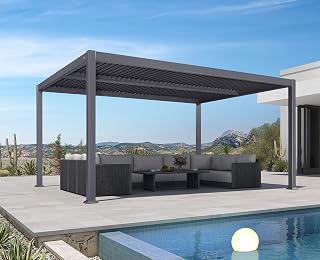
With a wide footprint, all-aluminum construction, thick 5.12-inch beams, and a listed 60-mph wind rating, this PURPLE LEAF model is well suited to combined dining and lounging areas. The adjustable roof offers flexible shade, but the generous span also increases the importance of a level foundation and correctly tightened connections. Its corrosion-resistant frame is a sensible choice for outdoor use where low maintenance is a priority.
PURPLE LEAF 10 x 16-Foot Independent-Roof Pergola
This model stands out for its independent roof design, thick aluminum posts, and stated ability to withstand winds up to 70 mph. The long 10-by-16-foot layout can divide naturally into seating and dining zones, while the separate roof sections may offer more control over shade. As with any large pergola, do not rely on weight alone: secure every post to a structurally appropriate base and follow the manufacturer’s severe-weather guidance.
AECOJOY 10 x 14-Foot Wall-Mounted Pergola
The AECOJOY is a practical solution when a house wall can provide useful support and the patio has limited floor space. Its adjustable-height design, hard metal roof, and wall-mounted format create a sheltered transition between indoors and outdoors. Installation quality is critical here: the wall must be structurally suitable, fasteners must match the substrate, and water should be directed away from the building envelope.
Frequently Asked Questions
What is the best pergola for high winds?
The PURPLE LEAF 10 x 16-foot model has the highest stated wind figure in this selection at 70 mph. However, the best choice for a particular property also depends on anchoring, exposure, roof position, and local weather conditions.
Should I leave a louvered pergola open during strong winds?
Usually, yes, if the manufacturer instructs you to do so. Open louvers generally present less surface area to gusts, but never assume this eliminates risk; secure the structure and follow the product manual before severe weather arrives.
Can a pergola be installed on pavers?
Many pergolas need a firm, structurally sound attachment point rather than loose pavers alone. A contractor may need to install concrete footings or reinforce the underlying deck, depending on the model and local building requirements.
Are aluminum pergolas better than wood in windy areas?
Not automatically. Aluminum is corrosion-resistant and often lighter to maintain, while a well-built wood pergola can be very stable. Beam dimensions, connection hardware, foundation quality, and engineering matter more than material alone.
Final Thoughts
For maximum stated wind resistance, the PURPLE LEAF 10 x 16-Foot Independent-Roof Pergola is a compelling choice, while the Sarasota is the better weather-management pick for shoppers who value steel construction and integrated drainage. The Beaumont remains appealing for a classic cedar look, provided its foundation and maintenance needs are treated as seriously as its design.