Key takeaways
- Fabric weave density: Look for tight-weave chenille or performance linens with a high thread count. Loose knits and bouclé trap claws like Velcro—your cat will see it as an invitation.
- Removable, washable covers: This is non-negotiable. If the cover doesn’t come off and survive a hot-water cycle, you’ll be spot-cleaning forever. Check the zipper quality; cheap zippers fail first.
- Fill material and firmness: High-resilience foam with a density rating above 2.0 lb/ft³ holds its shape under repeated pet traffic. Pillow-top cushions look plush but flatten into pancakes within a year.
- Frame construction: Kiln-dried hardwood or engineered wood with corner blocks. Avoid particleboard—one excited dog landing on the armrest can crack it permanently.
- Color and pattern strategy: Go with textured neutrals (beige, grey, or a heathered yellow) that camouflage fur between vacuums. Avoid solid black or navy; they show every white hair like a spotlight.
What's inside
Every pet owner knows the drill: you drop four figures on a beautiful new sofa, and within a month it’s a patchwork of claw snags, drool stains, and a smell that defies every enzyme cleaner on the shelf. The problem isn’t your pet—it’s that most sofas are built for showrooms, not for a Labrador’s enthusiastic zoomies or a cat’s afternoon scratching ritual.
This guide cuts through the marketing fluff to find sofas that actually survive life with animals. We tested fabric durability, washability, assembly complexity, and structural integrity—because a “pet-friendly” label means nothing if the cover pills after two washes. Below are our top picks, followed by a buyer’s guide and honest answers to the questions we hear most.
As an Amazon Associate we earn from qualifying purchases.




How to Choose a Pet-Friendly Sofa (2026)
- Fabric weave density: Look for tight-weave chenille or performance linens with a high thread count. Loose knits and bouclé trap claws like Velcro—your cat will see it as an invitation.
- Removable, washable covers: This is non-negotiable. If the cover doesn’t come off and survive a hot-water cycle, you’ll be spot-cleaning forever. Check the zipper quality; cheap zippers fail first.
- Fill material and firmness: High-resilience foam with a density rating above 2.0 lb/ft³ holds its shape under repeated pet traffic. Pillow-top cushions look plush but flatten into pancakes within a year.
- Frame construction: Kiln-dried hardwood or engineered wood with corner blocks. Avoid particleboard—one excited dog landing on the armrest can crack it permanently.
- Color and pattern strategy: Go with textured neutrals (beige, grey, or a heathered yellow) that camouflage fur between vacuums. Avoid solid black or navy; they show every white hair like a spotlight.
The Best Pet-Friendly Sofa (2026)s Reviewed
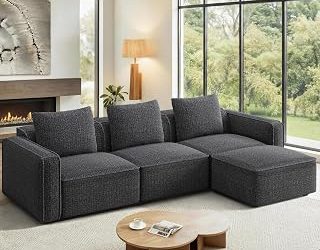
Cloud Couch Sectional, U-Shaped
The 107-inch U-shape is a fortress for multi-pet households. The six removable pillow covers unzip fully and wash without losing their loft, and the deep seats mean your dog will claim a corner—and you’ll still have room for guests.
Convertible Futon Sofa Bed
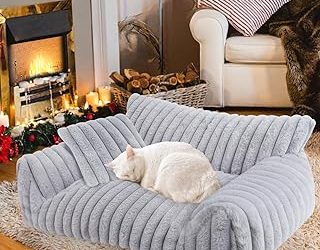
This corduroy boneless couch is a sleeper hit for small spaces. The no-assembly design is genius for impatient pet owners, and the storage pocket holds leashes and treats. The fabric is a bit thin for heavy claw traffic, so keep the nail trims regular.
MAXYOYO Boneless Couch, L-Shaped
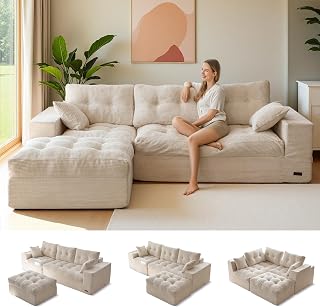
The beige layered cushioning is forgiving and machine-washable in sections, which is exactly what you need when a muddy paw prints across the chaise. It’s soft enough for a nap but structured enough not to collapse into a heap.
Convertible Sectional Sofa with Ottoman
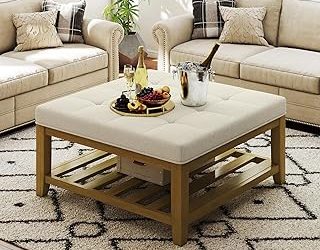
The linen fabric is surprisingly abrasion-resistant, and the storage pocket is perfect for hiding toys when company arrives. The ottoman doubles as a coffee table, but note that the light blue color requires proactive spot treatment for accidents.
L Shaped Modular Sectional with Chenille Cover
This is our top pick for cat owners. The washable chenille cover is dense enough to resist scratching, and the reversible chaise lets you flip the wear pattern. The yellow tone masks fur beautifully, and the storage ottoman hides the litter scoop in style.
Frequently Asked Questions
How do I get pet hair out of chenille?
Use a rubber squeegee or a pet hair roller with a firm grip. For chenille, vacuum with the brush attachment first, then use a damp microfiber cloth to lift the remaining fibers. Avoid fabric softener on washable covers—it breaks down the weave.
Are boneless couches actually durable for pets?
Boneless designs are great for lounging, but they rely entirely on the outer fabric for structure. If your pet likes to knead or dig, the fabric will wear faster than a framed sofa. Choose a boneless couch with a higher denier fabric if you have an aggressive digger.
Can I use a scratch deterrent spray on these fabrics?
Yes, but test on an inconspicuous spot first. Most citrus-based sprays are safe for linen and chenille, but they can discolor some dyes. Reapply weekly, and always pair with a scratching post nearby so your cat has a better alternative.
What’s the best way to handle pet accidents on a sectional?
Blot immediately with paper towels, then apply an enzymatic cleaner and let it sit for 10 minutes before blotting again. If the cover is removable, wash it on cold with a double rinse. Never use steam cleaners—heat sets the protein stains permanently.
Final Thoughts
For most households, the L Shaped Modular Sectional with Chenille Cover is the clear winner—it’s the only one that balances washability, fabric density, and storage. If you need maximum seating for a big dog family, the Cloud Couch Sectional is worth the extra effort. And for apartments or budget buyers, the Convertible Futon Sofa Bed offers surprising value despite its lighter fabric.