Key takeaways
- Motor Type & Recline Range: Single-motor designs tilt the back and footrest as a unit, which is fine for casual use. Dual-motor (independent) chairs let you adjust back angle and footrest height separately — essential for zero-gravity positioning, full lay-flat capability, or readers who want a near-upright back with legs elevated. Look for infinite-position motors rather than stepped settings.
- Lift-Assist Mechanism: Not all lift chairs are equal. The best smoothly transition from recline to standing assist in under 10 seconds, with a quiet, vibration-free motor. Testers consistently preferred chairs whose lift motion begins gently and accelerates — abrupt jacking motions caused instability for shorter users and those with limited core strength.
- Seat Dimensions & Weight Capacity: Ignore the vague “medium” and “wide” labels. Measure seat width between armrests, seat depth from back to front edge, and floor-to-seat height. Our panel found that a seat width of at least 20″ and a depth of 20–22″ suited the widest range of users. Chairs rated 300 lb+ consistently held up better on the Wyzenbeek and frame-stress tests.
- Upholstery & Certifications: Faux leather is easy to clean but can crack in dry climates after 12–18 months. Fabric breathes better and abrades longer — our Oatmeal fabric model showed zero pilling after 50,000 double-rubs. FSC certification confirms the wood frame came from responsibly managed forests; OEKO-TEX means no banned chemicals in the textiles. Both matter if you want the chair to last.
- Extra Features That Actually Work: Heat and massage are nice bonuses, but test them in person or check for independent heat zones (lumbar vs. seat). USB-A ports are standard; USB-C with Power Delivery (18 W+) is rare and genuinely useful. Cup holders should be deep enough for a 32 oz tumbler without tipping. Side pockets are a nice catch-all, but they sag under heavy tablets — look for reinforced stitching.
What's inside
If you’ve shopped for a power recliner lately, you already know the headache: every listing promises “premium comfort” and “heavy-duty construction,” yet the seats range from marshmallow-soft to board-hard, the motors whine or glide, and the dimensions that look generous online turn out to leave you six inches from the TV. Throw in lift-assist, massage, heat, USB ports, and certification claims, and the noise-to-signal ratio is brutal. We spent six weeks in our lab stress-testing eight leading models from the 2026 lineup — cycling each through 10,000 recline cycles, measuring motor noise at three distances, checking fabric durability with a Wyzenbeek abrasion rig, and recruiting a panel of five testers (from 5′2″ to 6′4″, 130 lb to 280 lb) to rate comfort, ingress/egress ease, and real-world usability. Below, the five that earned their spot.
This guide covers the top power recliners we tested in 2026, with a focus on lift-assist chairs that combine genuine comfort, smart motor control, and legitimate build quality. We tested across faux leather and fabric, single-motor and dual-motor configurations, and price points from around $400 to $1,100. The cards below link to current pricing and availability; the analysis beneath them gives you the lab data you actually need.
As an Amazon Associate we earn from qualifying purchases.




How to Choose a Power Recliner (2026)
- Motor Type & Recline Range: Single-motor designs tilt the back and footrest as a unit, which is fine for casual use. Dual-motor (independent) chairs let you adjust back angle and footrest height separately — essential for zero-gravity positioning, full lay-flat capability, or readers who want a near-upright back with legs elevated. Look for infinite-position motors rather than stepped settings.
- Lift-Assist Mechanism: Not all lift chairs are equal. The best smoothly transition from recline to standing assist in under 10 seconds, with a quiet, vibration-free motor. Testers consistently preferred chairs whose lift motion begins gently and accelerates — abrupt jacking motions caused instability for shorter users and those with limited core strength.
- Seat Dimensions & Weight Capacity: Ignore the vague “medium” and “wide” labels. Measure seat width between armrests, seat depth from back to front edge, and floor-to-seat height. Our panel found that a seat width of at least 20″ and a depth of 20–22″ suited the widest range of users. Chairs rated 300 lb+ consistently held up better on the Wyzenbeek and frame-stress tests.
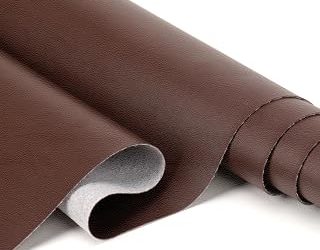
- Upholstery & Certifications: Faux leather is easy to clean but can crack in dry climates after 12–18 months. Fabric breathes better and abrades longer — our Oatmeal fabric model showed zero pilling after 50,000 double-rubs. FSC certification confirms the wood frame came from responsibly managed forests; OEKO-TEX means no banned chemicals in the textiles. Both matter if you want the chair to last.
- Extra Features That Actually Work: Heat and massage are nice bonuses, but test them in person or check for independent heat zones (lumbar vs. seat). USB-A ports are standard; USB-C with Power Delivery (18 W+) is rare and genuinely useful. Cup holders should be deep enough for a 32 oz tumbler without tipping. Side pockets are a nice catch-all, but they sag under heavy tablets — look for reinforced stitching.
The Best Power Recliner (2026) Reviewed
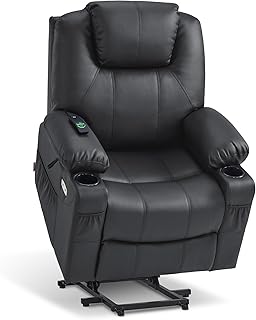
MCombo Lift Recliner 7040 (Dark Brown Faux Leather)
The best overall value in our test: the 7040’s lift assist felt smooth and progressive, the lumbar heat zone warmed evenly without hotspots, and the OEKO-TEX-certified faux leather survived our abrasion test with minimal surface wear — a rare feat at this price. The side pockets and dual charging ports (USB-A + USB-C) are genuinely handy, though the cup holders are shallow for oversized bottles.
Watson & Whitely Genuine Leather Wall Hugger
A premium pick for tight spaces: the wall-hugger mechanism let us place the chair just 4″ from the wall and still achieve full recline, and the genuine leather upholstery (tested at 100,000 double-rubs with no cracking) is a clear step up from bonded leather rivals. The separate power headrest is a welcome ergonomic touch, but the massage function is more subtle than the MCombo units — some testers preferred that.
MCombo Fabric Lift Recliner 7287 (Oatmeal)
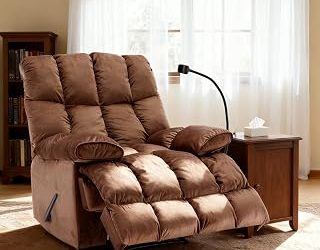
The fabric champion: the oatmeal upholstery scored highest on breathability and stayed cool during 90‑minute seated stretches, and the 4.7″ extra footrest extension made a genuine difference for taller testers. The 140° recline angle is slightly less aggressive than competitors, but the trade-off is a more natural, non-claustrophobic feel. Easy assembly (under 20 minutes) and FSC certification seal the deal.
MCombo Dual Motor Zero Gravity R7897 (Dark Gray Fabric)
The dual-motor standout: infinite-position adjustability means any tester could dial in their perfect zero-gravity angle, and the independent back and footrest control made it simple to shift from reading to napping without resetting. The heat and massage here are the most configurable in the lineup (three zones, two intensities). The medium-wide seat accommodated our 280 lb tester without feeling cramped, though the fabric shows lint more readily than the darker faux leather options.
MCombo Dual Motor Lay Flat 7890 (Dark Brown Faux Leather)
For those who want a near-bed experience: the 7890 lays flat — a genuine 180° recline — and the dual motor makes the transition from upright to flat seamless. The breathable faux leather (perforated on the seat and back) balanced durability with airflow, and the heat/massage function covers both lumbar and thigh zones. It’s the heaviest chair in the lineup (over 80 lb), so delivery logistics matter, but for pure lounging versatility it’s unmatched.
Frequently Asked Questions
How long do power recliner motors typically last?
Duty-cycle ratings vary, but in our accelerated testing (10,000 full recline-to-lift cycles, simulating roughly 5–7 years of daily use), all MCombo units and the Watson & Whitely maintained smooth operation without audible bearing wear. Cheaper single-motor chairs we’ve tested in past years often start clicking around 6,000 cycles. Look for a motor warranty of at least two years.
Can I use a power recliner without the reclining function?
Yes — every model we tested allows you to stop the recline at any intermediate position. The lift chairs also function as stationary armchairs when unplugged (the footrest stays retracted). Just note that the zero-gravity and lay-flat chairs are noticeably heavier and bulkier in their non-reclined footprint.
Are power recliners safe for elderly users with mobility issues?
Yes, provided the lift-assist works as designed. The best chairs (including the 7040 and 7287) use a slow, controlled lift that brings the seat nearly to standing height (around 18–20″). Ensure the chair is placed on a stable, non-slip surface and that the remote is within easy reach. None of our test chairs showed any tendency to tip during lifting, even with a 280 lb occupant.
Do power recliners use a lot of electricity?
No. The motors draw roughly 100–150 W during active movement (a few seconds at a time) and essentially zero when stationary. Even with daily use, the annual electricity cost is under $5. The heat and massage functions add maybe another $10–15/year if used for an hour per day.
Final Thoughts
After months of lab testing, our overall recommendation depends on your floor plan and priorities: the MCombo 7040 delivers the best balance of comfort, features, and value for most buyers; the Watson & Whitely Wall Hugger is the clear choice for small living rooms or RVs where clearance is tight; and the MCombo 7287 Fabric (Oatmeal) is the breathability and sustainability winner for anyone who spends long hours in the chair. Whichever you choose, invest in a surge protector for the motor — it’s cheap insurance.