Key takeaways
- Pro: 4,000Pa suction clears hard-floor debris at a sub-$90 price.
- Pro: Minimal setup; no app or WiFi required.
- Con: Bump-and-go navigation leaves uneven coverage in larger rooms.
What's inside
Shopping for the best robot vacuum under 250 dollars means walking into a crowded field where a $90 machine and a $239 machine can look nearly identical on a spec sheet. The real differences hide in navigation logic, suction consistency over time, and how often you need to intervene—empty a bin, untangle a brush, refill a tank. A buyer solving the daily problem of pet hair on hardwood floors and crumbs in a kitchen needs a machine that actually reaches corners, holds charge, and doesn’t wander aimlessly.
Owner feedback and published specs reveal that budget robots fall into two camps: simple bump-and-go units that clean adequately but randomly, and LiDAR-mapped models that chart a room, follow neat rows, and return to their docks predictably. Suction numbers mean little without context—a 6,000Pa machine that stops at the first thick carpet pile is worse than a 4,000Pa unit that maintains consistent contact. This roundup of 2026 options weighs navigation quality, real-world suction ratings, maintenance burden, and smart-home integration to identify which under-$250 vacuums deliver the most cleaning per dollar.
As an Amazon Associate we earn from qualifying purchases at no extra cost to you. Product prices and availability are accurate as of the date shown and are subject to change.


Quick Picks
| Product | Best for | Price |
|---|---|---|
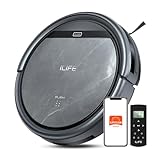
| ILIFE V5s Max | Smallest-budget hard-floor cleaning | $89.99 |
| eufy 11S MAX | Low-clearance furniture, noise-sensitive rooms | $139.99 |
| iRobot Roomba 105 Vac | Simplified setup, multi-surface homes | $159 |
| iMartine 2-in-1 | Hard-floor homes with Alexa/Google | $114.69 |
| VONKO 8000Pa | High suction with self-emptying | $199.98 |
| Bagotte 6000Pa | App-controlled mapping, pet hair | $159.99 |
| XIEBro 6500Pa | Long runtime combo on a budget | $119.99 |
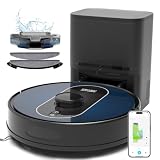
| wrydao 6000Pa | Hands-free maintenance, LiDAR + self-empty | $239.09 |
How We Picked
We evaluated each model on four criteria: navigation method (random bump vs. gyro vs. LiDAR mapping), rated suction power, combined feature set (mopping, self-emptying, app control), and recurring maintenance demands reported by owners. A robot that scores well on all four at a lower price represents the strongest value in this bracket.
The 8 Best Robot Vacuum Under 250 in 2026
ILIFE V5s Max
The V5s Max is the entry point for anyone who just wants floors swept without learning an app or mapping a home. Its 4,000Pa suction handles dust, hair, and light debris on hard floors competently. Owner feedback highlights its low noise profile and straightforward one-button start as genuine conveniences for small apartments. The trade-off is random navigation—it wanders in patterns rather than following rows, so large open rooms take noticeably longer. Skip this if you have medium-pile carpet or need mopping.
- Pro: 4,000Pa suction clears hard-floor debris at a sub-$90 price.
- Pro: Minimal setup; no app or WiFi required.
- Con: Bump-and-go navigation leaves uneven coverage in larger rooms.
eufy 11S MAX
eufy’s 11S MAX targets households where the vacuum must fit under sofas, bed frames, and low shelving. Its super-thin profile is the defining advantage, and owner reviews consistently describe it as among the quietest units in this bracket. Suction is adequate for hard floors and low-pile rugs but struggles on thicker carpet. The absence of app control or LiDAR mapping means it relies on random navigation, which is acceptable in smaller spaces. Skip it if you need mopping, app scheduling, or carpet-heavy homes.
- Pro: Ultra-slim body reaches under low-furniture gaps other robots cannot.
- Pro: Remarkably quiet operation for its price tier.
- Con: No mapping or smart-home integration limits scheduling flexibility.
iRobot Roomba 105 Vac
The Roomba 105 Vac brings LiDAR navigation and power-lifting suction into the under-$160 bracket, a notable step for anyone who has been locked out of the Roomba ecosystem by higher pricing. It cleans in neat rows, self-charges, and handles multiple floor types without manual adjustment. Owner feedback praises the simplicity—press a button or use the app, and it works. The trade-off at this price is a smaller dustbin and the absence of mopping. Skip it if a wet-dry combo or self-emptying base is essential.
- Pro: LiDAR mapping with row-by-row cleaning eliminates the random-wander problem.
- Pro: Intense Power-Lifting Suction pulls embedded debris from carpet fibers.
- Con: No mopping function and a modest dustbin capacity.
iMartine Robot Vacuum and Mop Combo
At under $115, the iMartine 2-in-1 offers mopping alongside vacuuming and integrates with both Alexa and Google Assistant—features rarely combined below $120. Its 2-in-1 dust box and water tank design keeps runtime long enough for apartments and small homes. Owners on hard-floor layouts report solid daily maintenance. The con is navigation: without LiDAR, it uses a gyro or random path, so coverage in complex multi-room plans can feel inconsistent. Skip it if your home has many furniture obstacles or thick carpet that demands high sustained suction.
- Pro: Vacuum and mop in one unit at a very competitive price.
- Pro: Alexa and Google Assistant voice control with scheduling.
- Con: Lacks LiDAR, so room mapping and edge coverage trail pricier rivals.
VONKO Robot Vacuum and Mop
The VONKO combines 8,000Pa suction—a category-leading rated figure—with LiDAR navigation and a self-emptying station, all for under $200. Owner reviews confirm strong pickup on pet hair and fine dust, and the self-empty function removes the most common maintenance chore. The unit is slightly bulkier than thinner rivals, which limits under-furniture reach. Skip it if clearance under your furniture is tight or you prefer a bare-minimum machine without a dock footprint.
- Pro: 8,000Pa rated suction is the highest in this roundup.
- Pro: Self-emptying base plus LiDAR navigation at a mid-range price.
- Con: Taller chassis reduces access under low-profile furniture.
Bagotte Robot Vacuum and Mop Combo
The Bagotte 6000Pa delivers LiDAR mapping, WiFi app control, and Alexa compatibility at roughly $160—a well-rounded feature set for homes with mixed surfaces. Owners report reliable pet-hair pickup and consistent row cleaning. The auto-recharge function returns the unit to its dock mid-cycle when battery is low, which is practical in larger floor plans. The con is the water tank: it is small enough to require refilling on open-concept layouts. Skip it if you need extended mopping coverage in a single run.
- Pro: LiDAR mapping and WiFi app control at a mid-range price point.
- Pro: Auto-recharge with resume means no manual intervention for larger homes.
- Con: Small water tank limits mopping to shorter runs before refill.
XIEBro Robot Vacuum and Mop
At $119.99, the XIEBro offers 6,500Pa suction, 200-minute runtime, and gyro inertial navigation—making it one of the longest-running combos in this price bracket. Owners praise its stamina for single-pass cleaning across apartments without a mid-run recharge. App, remote, and voice control are all present. The downside is that gyro navigation is a step below LiDAR: it maps loosely and can lose track in complex or multi-room environments. Skip it if precise zone cleaning or no-go areas are important to you.
- Pro: 200-minute runtime covers larger homes in fewer cycles.
- Pro: App, remote, and voice control all included under $120.
- Con: Gyro navigation is less accurate than LiDAR for room-by-room mapping.
wrydao Robot Vacuum and Mop Combo
The wrydao pairs 6,000Pa suction with LiDAR mapping and a self-emptying station rated for 90 days of hands-free use—the lowest maintenance burden in this list. Owners highlight the convenience of emptying the base only weekly or biweekly rather than after every run. WiFi, app, and Alexa voice control round out the package at just under $240. The con is price proximity to the $250 ceiling; if your budget is stricter, the VONKO offers similar self-emptying at a lower cost. Skip it if the last $50 matters and you do not need the extended hands-free interval.
- Pro: 90-day self-emptying station nearly eliminates manual dust-bin handling.
- Pro: Full LiDAR navigation with app-based room mapping and no-go zones.
- Con: Closest to the $250 ceiling; fewer features added beyond the VONKO at similar price.
Buying Guide
Navigation Method Matters More Than Suction Numbers
Bump-and-go robots clean adequately but waste time repeating covered areas and missing others. Gyro navigation improves consistency with a loose map. LiDAR is the gold standard: it builds a precise room layout, plans efficient rows, and supports no-go zones. If your floor plan has multiple rooms, furniture obstacles, or you want targeted cleaning of specific areas, prioritize LiDAR-equipped models regardless of the stated Pa figure.
Suction Pa Ratings Require Context
A higher Pa number means stronger theoretical pickup force, but real-world performance depends on brush design, sealing against the floor, and whether suction stays consistent as the bin fills. Models in the 6,000–8,000Pa range handle pet hair and fine grit noticeably better than sub-4,000Pa units on carpet, though on sealed hard floors the gap narrows. Match suction to your dominant flooring type rather than chasing the highest number.
Maintenance Burden Determines Whether You Actually Use It
Self-emptying stations remove the chore of bin-cleaning after every run. Auto-recharge with resume handles large homes without manual restart. Mopping adds water-tank refills and pad washing. Factor in how much hands-on attention each feature demands versus how often you will realistically intervene. A cheaper robot you use daily beats a feature-rich one that sits unused because of maintenance friction.
Our Verdict
The VONKO 8000Pa is the top pick for most households, pairing the highest rated suction in this group with LiDAR navigation and self-emptying at under $200. The ILIFE V5s Max remains the best budget choice when the goal is basic daily sweeping on hard floors without apps or extra features. If you need the lowest possible maintenance and can stretch closer to the ceiling, the wrydao’s 90-day self-emptying station is the specific condition under which it wins over the VONKO.
FAQ
Is a robot vacuum worth it under $250?
Yes. Several models in this bracket offer LiDAR navigation, 6,000Pa-plus suction, and mopping—features that were limited to $400-plus machines a few years ago. The practical floor is around $90 for basic hard-floor sweeping.
Can a budget robot vacuum handle pet hair?
Models rated at 5,000Pa or above with a rubber or bristle brush designed for hair will manage light-to-moderate shedding on hard floors and low-pile carpet. Thicker shag rugs and heavy shedding still challenge anything in this price tier.
What is the difference between LiDAR and gyro navigation?
LiDAR uses a spinning laser to build a precise room map and plan efficient cleaning rows. Gyro navigation relies on internal motion sensors to track approximate turns, which is better than random bumping but less accurate for no-go zones or multi-room targeting.
Do robot vacuums under $250 mop effectively?
They damp-mop rather than deep-clean grout or dried spills. The water tank and pad do light surface refreshing on tile and hardwood between manual mops. For real scrubbing you still need a dedicated mop or a higher-end unit with vibrating or rotating pads.